Matinyarare, Maponga Clash Over Tagwirei Anti-Sanctions Millions
Activist Rutendo Matinyarare and philosopher, Joshua Maponga, trade accusations over payments from businessman, Kuda Tagwirei, for anti-sanctions work with conflicting figures of 8.8 million and 14.2 million rand at the centre of the public row.
 Harry Taruva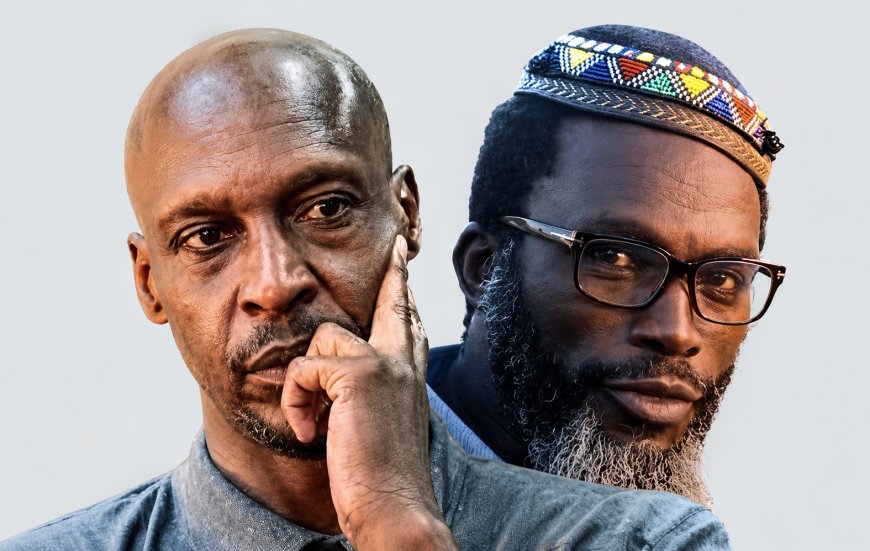
Harare – A public dispute between activist, Rutendo Matinyarare of the Zimbabwe Anti-Sanctions Movement, and philosopher, Joshua Maponga, has erupted over millions in payments linked to anti-sanctions advocacy work allegedly commissioned by businessman Kudakwashe Tagwirei.
The exchange, which played out through video statements and audio recordings circulated on social media, centres on claims of funds disbursed for legal efforts against international sanctions and subsequent disputes over accountability.
In a video response, Matinyarare expressed disappointment at having to rebut his “once good friend and elder brother” Maponga.
He stated that the conflict arose after their organisation engaged with a billionaire who promised financial support for anti-sanctions initiatives.
“You know it really hurts me to wake up in the morning like this to make a video to rebut my once good friend and elder brother Joshua Maponga and all this is happening because we met a billionaire who said I love your guy's talent come and work with my organisation and you'll be millionaires within a year. It didn't happen,” Matinyarare said in the recording.
Matinyarare accused Maponga of shifting figures regarding payments made to the Zimbabwe Anti-Sanctions Movement for work that included preparations for legal action in South Africa against entities implementing sanctions.
He referenced an earlier audio clip from two months prior in which Maponga reportedly discussed payments of 7.5 million rand and a subsequent 1.3 or 1.4 million rand.
In that earlier recording played by Matinyarare, Maponga is heard responding to questions about an invoice.
“...if you want to throw the invoice that's incorrect Rutendo. Can you bring the entire invoice... the initial payment which was 7.5 and the next payment which was 1.3 or 1.4 million then put the two together...”
Matinyarare contrasted this with Maponga’s more recent claim during a clarification video.
In the recent recording, Maponga stated that Matinyarare was given the money but did not relay it to where it was supposed to go.
“It is not true that Benson (Matinyarare) was not paid for the services that he had claimed to give to the country.
"He was paid 14.2 million and he did not pay the lawyers. Lawyers need to come for another inquest altogether," he accused.
Maponga had earlier explained his intervention following a conference call with Hopewell (Chin'ono) and Matinyarare aimed at resolving tensions.
“It was a three-way call between myself, Hopewell and Benson. It was out of that phone call that I later on made a follow-up call to Rutendo to advise him the way I thought best he would be able to handle himself and go forward,” Maponga said in his clarification video.
Matinyarare also played an audio recording he attributed to a conversation with Tagwirei from approximately two years ago, in which the businessman reportedly promised to clear part of the money promised.
“I'll see what I can do but I definitely will do a hundred thousand equivalent tomorrow, I'll see what I can do," the alleged phone call audio recording of Tagwirei is heard.
According to Matinyarare’s account, the engagement with Tagwirei stemmed from earlier anti-sanctions efforts.
He claimed that after the United Nations Human Rights Council visited Zimbabwe and issued a report on sanctions following advocacy work, President Emmerson Mnangagwa’s son, Mnangagwa Junior, facilitated contact with Tagwirei.
The group then received presidential approval to pursue legal routes, including potential action at the International Court of Justice.
Matinyarare maintained that initial payments were made, including 1.5 million rand handled by lawyer Simba Chitando, with the balance directed through Maponga, but that lawyers went unpaid for two years thereafter.
He linked the work to broader outcomes, including marches against sanctions, the United Nations visit, engagement by the United States Congress, and eventual removal of certain sanctions measures.
Maponga, in his statements, defended the handling of funds and challenged Matinyarare to produce full documentation, including deposit slips and comprehensive invoices covering accommodation at Meikles Hotel, vehicle hire and housing in Borrowdale.
The public back-and-forth has drawn attention to internal frictions within circles that advocated against Western sanctions, with both men referencing recorded conversations to support their positions.
Matinyarare justified recording calls by citing dishonesty in dealings, particularly among Zimbabweans.
Matinyarare further alleged that Maponga had threatened his family over his recent stance on the Constitutional Amendment Bill (CAB3).