Kariba Boat Accident Death Toll Rises to 84
The death toll from the overloaded RIDA Mbuya Nehanda ferry that capsized on Lake Kariba on August 11, 2026, has climbed to 84 as search and recovery operations continue. Seventy-seven people survived the tragedy, which is Zimbabwe’s deadliest maritime disaster, with the vessel carrying far more than its 90-passenger capacity. Authorities confirm ongoing body retrievals, identification efforts and government support for affected families.
 Delicious Mathuthu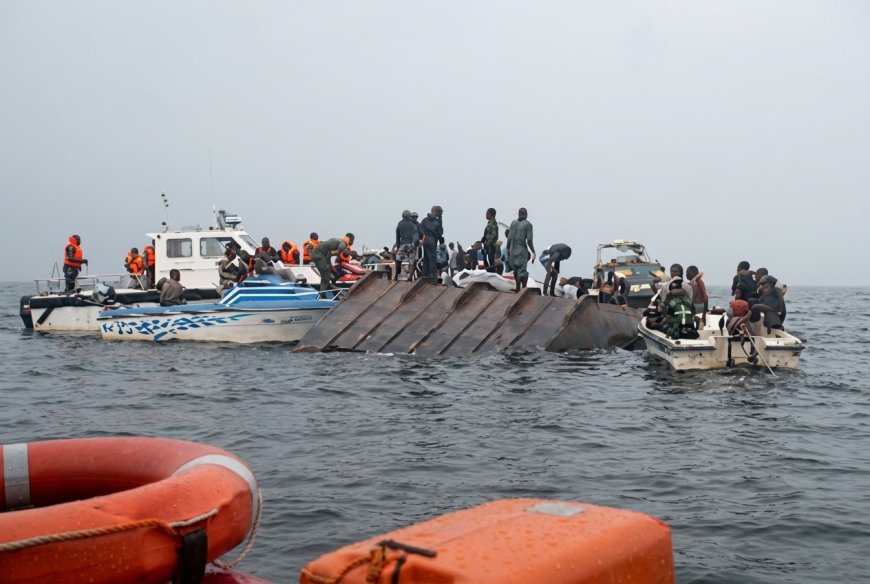
Kariba — The death toll from the catastrophic capsizing of the Rural Infrastructure Development Agency (RIDA) passenger ferry Mbuya Nehanda on Lake Kariba has risen to 84, with recovery teams continuing their grim work on the vast waters that form the border with Zambia.
Authorities confirmed the latest figures on Sunday, August 17, after additional bodies were retrieved, highlighting the scale of what is widely regarded as Zimbabwe’s deadliest maritime disaster in recent memory.
The vessel, which set out from Kariba town side on the afternoon of Tuesday, August 11, bound for Chalala fishing camps and surrounding rural communities, overturned in windy conditions near Long Island.
Officials have established that the ferry, authorised to carry 90 passengers, was heavily overloaded.
Reports say ticket records indicated 114 adult passengers and five crew members, with an unspecified number of children below ticketing age also aboard.
A surviving RIDA security officer, Earnmore Chambati (also referred to in some accounts as Anymore Chambati), who was responsible for checking passenger receipts, told the state broadcaster ZBC that he counted 153 people, including infants and crew, on board before the tragedy unfolded.
“People were screaming as water started getting into the boat. Luggage was falling into the water, and everyone was trying to find a way to survive.
"We could not locate the machine we use to drain water; it might have fallen off as well,” Chambati recounted of the chaotic final moments.
He and a colleague survived by climbing onto the overturned hull while waiting for rescue.
The Civil Protection Unit has reported that 77 people were rescued in the immediate aftermath, many of whom reached a nearby islet before being evacuated by boats.
Combining the confirmed deaths with the survivors points to at least 161 people having been on the vessel.
The Zimbabwe Republic Police have issued successive updates as bodies continue to surface.
On Saturday, recoveries pushed the toll to 72.
By early Sunday afternoon the figure stood at 80 following the retrieval of eight more bodies. Later reports confirmed it had reached 84.
“The Kariba RIDA boat accident death toll is now 80 following the recovery of eight more bodies on 16th August 2026,” Zimbabwe Republic Police Spokesperson national spokesperson, Commissioner Paul Nyathi stated in one update.
A subsequent statement noted the recovery of further remains the same afternoon, bringing the total to 84, with search efforts ongoing and guided by information from relatives of the missing.
Two of the earlier bodies were found by local fishermen.
Authorities have indicated that no remains have yet been located beneath the wreckage, which was towed to a nearby island days after the incident.
Identification of the newly recovered bodies remains in progress at Kariba District Hospital, where hundreds of anxious family members have queued in recent days.
Among the confirmed dead is the ferry’s captain, Sign Patsikadova (59).
At least 18 children have been identified among the victims so far, many under the age of 10, including toddlers as young as 14 months.
The passengers were predominantly villagers, fish traders and residents from communities around the lake, for whom the Mbuya Nehanda provided a vital transport link to Kariba town, approximately 280 kilometres northwest of Harare.
The ferry’s loss has left many without reliable access, compounded by the poor state of alternative roads in the area.
President Emmerson Mnangagwa has declared the tragedy a national disaster under the Civil Protection Act, enabling the mobilisation of additional national resources for search, recovery and humanitarian support.
Local Government and Public Works Minister, Honourable Daniel Garwe, conveyed the President’s commitment at a memorial service held at Nyamhunga Stadium in Kariba.
“The President has said don’t be heartbroken or get worried over how you will travel now that the reliable boat has sunk.
As a caring leader, and in the spirit of leaving no one and no place behind in terms of assistance and development, he has pledged to find a replacement vessel so that businesses and livelihoods continue,” Hon. Garwe said.
The President has also directed the urgent rehabilitation of the impassable road linking Kariba, Siakobvu and Chalala.
Government has announced US$100 assistance for registered next of kin of the victims, with the Civil Protection Unit stating that further support will be provided as available.
Minister of State for Mashonaland West Provincial Affairs and Devolution, Marion Chombo, has been on the ground engaging stakeholders and affected families as recovery operations persist.
Search teams comprising police divers, military personnel, local fishermen and other responders continue to scour the lake.
Police and military personnel have expressed confidence that remaining bodies will eventually surface.
Investigations into the precise circumstances, including overloading, weather conditions involving strong winds known locally as the Binga Wave, and operational decisions, are ongoing.
The disaster has plunged Kariba and surrounding communities into mourning, with memorial services and burials already taken place, yet many families still wait for news of missing relatives.