
Australians Face Generational Gaps in Sun Safety Knowledge, Cancer Council Poll Finds
By Harry Taruva — Cancer Council Australia polling has exposed generational gaps in sun protection, with nearly half of Australians reporting limited knowledge of the UV Index and younger people facing pressure to tan.
 Harry Taruva
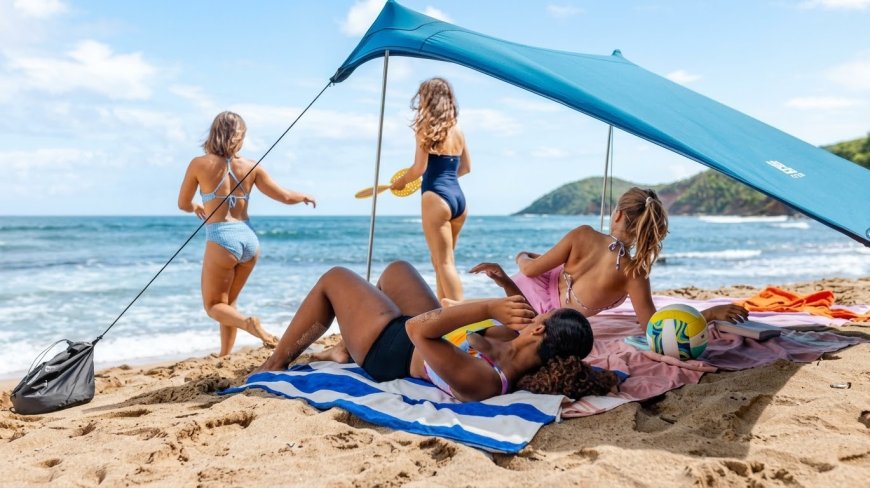
Sydney — Cancer Council Australia has warned that gaps in sun safety knowledge and behaviour persist across all generations, with new polling revealing differences in how Australians understand and protect themselves against harmful ultraviolet (UV) radiation.
The findings, released on Sunday, November 15, ahead of National Skin Cancer Action Week to be held from 15–22 November, come as the organisation marks 45 years of its iconic Slip! Slop! Slap! sun protection campaign.
The YouGov survey found that 48% of Australians have only basic or limited knowledge of the UV Index, a key tool for determining when sun protection is necessary.
However, the research revealed distinct weaknesses across generations, with younger Australians more exposed to tanning pressures while older Australians were less consistent in their sunscreen use.
Gen Z respondents were the most likely to say they had become more deliberate about sun protection over the past year, at 55%.
However, 27% said suntanning content from social media influencers made them want a tan, while 26% reported feeling pressure from friends, family or social media to have one during warmer months.
Millennials were more likely than other generations to seek scientific evidence when researching sunscreen and sun protection online, with 38% saying they looked for scientific research.
This compared with 26% of Gen X and 27% of Baby Boomers.
Despite this, only 49% of Millennials reported an adequate or strong understanding of the UV Index, with just 11% describing their knowledge as strong.
Gen X and Gen Z recorded the highest levels of adequate or strong understanding, both at 54%.
The survey also found that Baby Boomers were the most likely to report not using sunscreen at all in the previous eight months, at 17%, compared with 5% of Gen Z, 4% of Millennials and 7% of Gen X.
Cancer Council Australia Chief Executive Officer, Jacinta Reddan, said the findings demonstrated the need for continued sun safety education across all age groups.
“This research shows that every generation has its own sun safety blind spot,” Reddan said.
“While Australians are broadly aware of their skin cancer risk, many still have knowledge gaps that could increase their exposure to harmful UV radiation," she said.
She said establishing sun protection habits early could reduce future skin cancer risks, noting that research showed 50% of lifetime UV exposure occurred before the age of 20.
Reddan added that children were 12 times more likely to use sunscreen and three times more likely to wear a hat when they saw their parents doing so.
President of the Australasian College of Dermatologists, Dr. Adrian Lim, warned that the renewed interest in tanning was concerning despite encouraging signs of increased sun protection among younger Australians.
“The skin cancers dermatologists diagnose today are often the result of sun exposure from decades ago.
“There’s no such thing as a safe tan. A tan is your skin’s response to UV damage, not a sign of health," Lim said.
He urged Australians to monitor changes in their skin and promptly consult a general practitioner if they noticed anything unusual.
Meanwhile, Cancer Council National Skin Cancer Committee chair, Sally Blane, said understanding the UV Index was essential in preventing excessive exposure to harmful radiation.
She warned that UV radiation could damage the skin even on cool or overcast days because it could neither be seen nor felt.
Blane encouraged Australians to check the UV Index daily and adopt sun protection measures whenever it reached three or above.
Cancer Council Australia said two in three Australians would be diagnosed with skin cancer during their lifetime, while about 2,000 die from the disease annually.
The organisation recommends five sun protection measures whenever the UV index reaches three or above; wearing protective clothing, applying broad-spectrum SPF50 or SPF50+ sunscreen, wearing a broad-brimmed hat, seeking shade and wearing sunglasses.
The research was conducted online by YouGov between 15 and 22 September 2026 among 1,060 Australian adults aged 18 and above.
The results were weighted by age, gender and region to reflect the Australian population.