
Zimbabwe’s Rural Poor Sit on Land They Cannot Use?
1/5 An analysis of Zimbabwe’s communal land tenure system and the economic disenfranchisement of the rural poor. The article examines the "land paradox" where state ownership and lack of title deeds prevent citizens from converting land into capital. Featuring regional comparisons with South Africa, Namibia and Ghana, it advocates for legislative reform of the Communal Lands Act to transform ritual inheritance into bankable, sovereign ownership.
 Harry
Harry
By Wellington Muzengeza
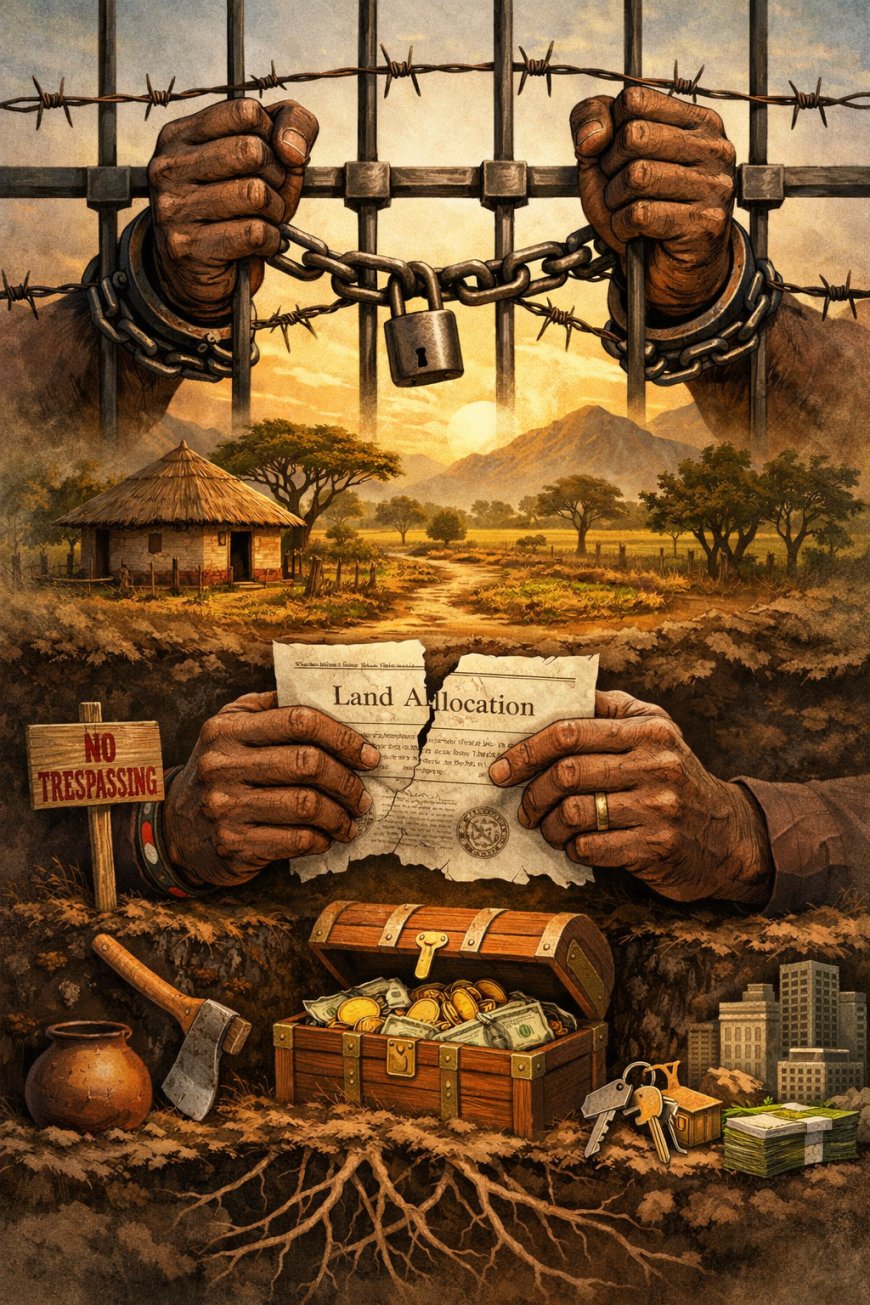
Zimbabwe’s land paradox is not merely troubling; it is grotesque, a wound that festers at the very heart of sovereignty.
Two‑thirds of its citizens inhabit rural landscapes, yet they do so as tenants of the State, not as sovereign owners.
Their plots are dispensed through the ritual of allocation, policed by traditional leaders, and inherited in distant memory rather than in law. What masquerades as ownership is in fact captivity, land without freedom, inheritance without capital, tenure without sovereignty.
This captivity is not benign; it is systemic disenfranchisement. Without title deeds, rural families are denied the instruments of modern wealth.
They cannot mortgage, leverage, or securitise their land; in other words, they cannot transform abundance into prosperity. Instead, they remain ensnared in dependency, condemned to recycle subsistence across generations.
The unfinished revolution of independence lies precisely in the failure to recalibrate rural tenure from symbolic inheritance to sovereign capital, and until Zimbabwe confronts this betrayal, poverty will not be an accident of circumstance but the architecture of policy itself.
The Colonial Afterlife of Land
Colonial conquest was never simply about land; it was about the alchemy of title.
By stamping deeds onto soil that they did not own, colonialists transformed territory into collateral, collateral into capital, and capital into empire.
The title was the instrument that converted abundance into sovereignty, and it remains the architecture of modern wealth.
Zimbabwe’s independence, however, failed to recalibrate this system. Instead of dismantling the colonial property regime, it preserved communal tenure as ritual, leaving millions symbolically rich in land but materially impoverished in capital.
The tragedy is not that Zimbabweans lack land; indeed, they inhabit vast ancestral plots. They lack the legal instruments to convert that land into prosperity.
The State lingers as the ultimate landlord, traditional leaders as custodians, and rural citizens condemned to eternal nominal holders of “valueless” inheritance.
What passes for ownership is captivity: tenure without sovereignty, inheritance without capital, abundance without empowerment.
Redistribution Without Tenure
The Fast Track Land Reform Programme of 2000–2002 was conceived as a radical rupture, a dismantling of colonial property regimes and a redistribution of land to the dispossessed majority.
It succeeded in shattering the monopoly of white commercial farmers, yet faltered at the deeper structural threshold of tenure.
Instead of sovereign ownership, A1 and A2 farmers were handed permits and offer letters, tokens of access rather than instruments of capital.
What emerged was a new paradox: resettled farmers possessed land but lacked collateral, while rural villagers remained bound to communal tenure under the Communal Lands Act, their inheritance trapped in ritual rather than law.
Redistribution without tenure reform became a theatre of symbolic empowerment, a revolution that promised justice but entrenched dependency, leaving millions materially excluded even as they were nominally enfranchised.
COMALISO and the Advocacy for Reform
Civil society has refused to remain mute in the face of Zimbabwe’s unfinished revolution. Organisations such as the Coalition for Market and Liberal Solutions (COMALISO) have emerged as uncompromising voices, demanding that the state confront the structural betrayal of communal tenure.
In January 2026, COMALISO petitioned Parliament to extend title deeds beyond the A1 and A2 resettled farmers to the millions of rural villagers still trapped in ceremonial ownership.
Their argument was stark: communal tenure is not heritage but captivity, a system that perpetuates poverty by denying citizens the instruments of capital.
Earlier on, they pressed the Parliamentary Portfolio Committee on Lands and Agriculture to revisit the Communal Lands Act, a statute that entrenches state landlordism and strips villagers of collateral value, thereby binding them to subsistence farming and fragile informal credit systems.
COMALISO’s advocacy has also insisted on compensation mechanisms for dispossessed citizens, warning that without equitable distribution, Zimbabwe risks deepening its poverty abyss.
For them, tenure reform is not a technocratic adjustment but a sovereign imperative, encapsulated in their uncompromising dictum: land without title is land without freedom.
South Africa’s Stalled Expropriation Debate
Zimbabwe’s unfinished revolution is mirrored across the region, most starkly in South Africa, where the promise of land expropriation without compensation has become a theatre of delay.
Constitutional amendments have been drafted, debated, and deferred, exposing the same unresolved tension between redistribution and tenure security.
The rural poor, like their counterparts in Zimbabwe, remain bound to communal systems under traditional authorities, inhabiting land they cannot collateralise and wealth they cannot unlock.
What is staged as radical reform risks collapsing into ritual, for redistribution without structural tenure recalibration merely reproduces the paradox: land without title, ownership without capital, abundance without empowerment.
Namibia’s Pilot Reforms
Namibia offers a striking counterpoint to Zimbabwe’s paralysis. Through the Communal Land Reform Act of 2002, the Namibian state initiated pilot programmes designed to recalibrate customary tenure into legally recognised rights.
Rural households in selected regions were issued certificates of customary land rights, documents that, while falling short of full title deeds, nonetheless conferred legal recognition and a measure of security.
These certificates allowed families to defend their holdings in court and begin edging into the formal credit system, thereby transforming ritual inheritance into embryonic capital.
The Namibian experiment demonstrates that reform is not utopian but possible: communal tenure can be incrementally formalised, bridging the divide between heritage and modernity.
For Zimbabwe, the lesson is urgent: move beyond ritual allocation and embrace bankable rights, lest abundance remains trapped in symbolism; and sovereignty continues to be deferred.
Ghana’s Land Administration Project
Ghana provides another instructive counterpoint in the continental struggle over tenure.
Through the Land Administration Project (2003–2018), the state sought to formalise customary land rights by establishing customary land secretariats tasked with documenting and registering communal holdings, gradually weaving them into the national land registry.
Though the process was marred by overlapping claims, bureaucratic inertia, and political contestation, it nonetheless demonstrated that customary tenure can be recalibrated into legal recognition without eroding cultural identity.
Rural households, once invisible to the formal system, were granted instruments of recognition that enabled them to defend their rights and begin accessing credit.
Ghana’s experiment proves that communal tenure need not remain ceremonial; it can be transformed into bankable ownership through deliberate policy and institutional innovation.
For Zimbabwe, the lesson is clear: sovereignty lies not in ritual allocation but in the capacity to convert heritage into capital, and gradual reform is both possible and necessary.
The Questions Zimbabwe Must Confront
At the core of Zimbabwe’s paradox lies a series of questions too uncomfortable to ignore yet too urgent to defer.
Who, in truth, determines the value of land? The State, the market, or the citizen who tills it?
Why, decades after independence, does the State still monopolise rural tenure, clinging to colonial scaffolding under the guise of sovereignty?
Why do citizens, seated on hectares of ancestral soil, remain trapped as nominal holders while outsiders extract wealth from titled concessions?
Why has the government delayed the issuance of title deeds, preserving ritual in place of empowerment, ceremony in place of sovereignty?
These questions expose the intellectual fraud of post‑colonial governance: a refusal to recalibrate ownership, a cowardice that clings to ritual instead of reform, and a betrayal that converts liberation into dependency.
Breaking Rural Captivity
If Zimbabwe is to dismantle the colonial afterlife of communal tenure, reform must be deliberate and uncompromising.
The Communal Lands Act must be amended to transfer ownership from the State to households, replacing ritual allocation with inheritable, bankable title deeds.
Pilot programmes should issue deeds in selected districts, supported by rural land registries that document, digitise, and defend ownership against corruption.
Customary rights must be integrated into formal systems, as Ghana has shown, preserving cultural custodianship while granting legal capital.
Financial inclusion must follow, with banks and microfinance institutions designing collateral‑based credit products and literacy campaigns to anchor responsible borrowing.
Civil society, led by organisations like COMALISO, must oversee implementation to prevent elite capture, while regional lessons from Namibia’s pilots and South Africa’s paralysis remind Zimbabwe that reform must be legislated, implemented, and defended. Only then can rural land move from ritual inheritance to sovereign capital.
Liberation Through Title
Zimbabwe’s rural captivity is not the accident of history but the architecture of policy.
Two thirds of its citizens remain bound to communal tenure, denied the instruments of capital and condemned to ritual dependency.
The unfinished revolution of independence lies precisely here: in the refusal to transform symbolic inheritance into sovereign ownership.
Issuing title deeds is disruptive yet deceptively simple; it is the hinge between abundance and empowerment, the weapon against poverty, the dismantling of colonial afterlife, and the foundation of sovereignty itself.
Zimbabwe must confront its paradox: a nation rich in land yet impoverished in capital. Until rural tenure is recalibrated into bankable rights, poverty will persist as design rather than destiny.
The revolution is overdue, and the hour to liberate land from captivity is not tomorrow but now.
 Wellington Muzengeza is a Political Risk Analyst and Urban Strategist offering incisive insight on urban planning, infrastructure, leadership succession and governance reform across Africa’s evolving post‑liberation urban landscapes.