
Zimbabwe Assures Diaspora Investors on Capital Repatriation, Property Rights and Investment Protection
Visiting Zimbabwean officials have assured potential Diaspora Investors in Australia of full capital repatriation, 100% foreign ownership, property rights protection, streamlined investment procedures and improved macroeconomic stability as the Government seeks to attract greater investment from Zimbabweans living in Australia.
 Harry Taruva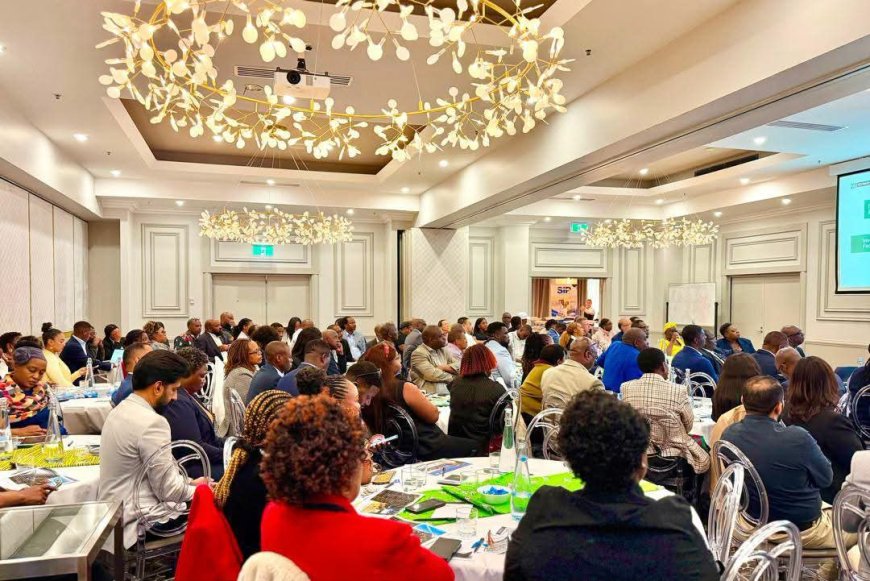
Sydney — Zimbabwean government officials are directly addressing longstanding concerns over investment security, capital repatriation and policy certainty, assuring Zimbabweans living in Australia that reforms now allow foreign investors to freely move capital into and out of the country while retaining full ownership of their businesses.
The assurances came as representatives from the Reserve Bank of Zimbabwe (RBZ), the Zimbabwe Investment, Development Agency (ZIDA) and the Ministry of Finance sought to persuade diaspora investors that Zimbabwe's investment environment had undergone significant reforms aimed at restoring investor confidence.
Speaking during the forum, July 15, 2026, an RBZ representative said diaspora Zimbabweans investing from abroad are treated as foreign investors and enjoy the same protections available to international investors.
"Zimbabweans living in the diaspora or non-resident Zimbabweans, we also treat you as foreign investors," the official said, adding "Capital in, capital out."
The RBZ said foreign investors who bring investment capital into Zimbabwe through the formal banking system are entitled to repatriate both their original investment and any profits generated without requiring exchange control approval.
"Remittability of profits and dividends, they are 100% fully remittable," the official said.
"If you brought in one million dollars and you make another one million dollars in profit, you can take out the one million you brought in and you can also take out the one million profit," he said.
Officials stressed, however, that investment capital must be registered through Zimbabwe's banking system when it enters the country.
"If you simply send money informally and invest it, you may struggle to prove that it was foreign capital when you later want to disinvest," the RBZ warned, encouraging diaspora investors to channel investments through registered financial institutions.
The central bank also announced that foreign investors can borrow up to US$20 million from offshore lenders without prior RBZ approval, provided the borrowing is reported through Zimbabwean banks.
The measure, officials said, was intended to simplify investment financing and reduce administrative delays.
Seeking to reassure investors about broader macroeconomic stability, the RBZ said annual inflation had fallen into single digits, remaining below five percent since January, while the exchange rate had stabilised under the willing-buyer willing-seller foreign exchange system.
The official said Zimbabwe had recorded US$10.7 billion in foreign currency receipts compared with US$7.3 billion during the corresponding period last year, supported by exports and diaspora remittances.
The RBZ also said diaspora remittances reached US$1.5 billion between January and June, with Australia accounting for 6.4 percent of officially recorded inflows, making it Zimbabwe's fourth-largest source market after the United Kingdom, South Africa and the United States.
The official said the Government was actively engaging Zimbabweans living in Australia because diaspora investment represented an opportunity for both investors and the national economy.
"She's not begging you to invest," the RBZ representative said in reference to guest speaker at the engagement forum, Tourism and Hospitality Industry Minister, Hon. Barbara Rwodzi.
 Tourism and Hospitality Industry Minister, Honourable Barbara Rwodzi (in green) with some members of the Zimbabwe Diaspora during the Sydney engagement meeting.
"She's advising you to do that so that you can make money. It is yourselves who are going to make money," the RBZ representative said.
Zimbabwe Investment Development Agency (ZIDA) Chief Executive Officer, Tafadzwa Chinamo, told delegates that one of the agency's principal responsibilities was to improve Zimbabwe's investment climate by identifying obstacles faced by investors and lobbying government departments to remove unnecessary regulatory barriers.
"We work actively to improve the ease of doing business," Chinamo said.
"We pick up investors' pain points and motivate government to improve laws and conditions for business," he said.
He said ZIDA's role extends beyond promoting investment opportunities to facilitating projects from company registration through licensing, establishment and post-investment support.
"We are there with you from the moment you incorporate a company. We also carry out what we call aftercare, where we check what is hindering your business and help resolve those issues," he said.
Addressing concerns over property rights and investment security, issues repeatedly raised by members of the diaspora during the Sydney forum, Chinamo said licensed investors are protected under Zimbabwe's investment framework.
"No one in Zimbabwe right now, if you do it through the proper channels, is going to come and say, 'I want that property; I'm taking that.'"
He acknowledged that disputes had occurred in some mining claims but said Government was addressing those through the introduction of a digital mining cadastre and the digitisation of title deeds to improve certainty over ownership.
Chinamo also reiterated that Zimbabwe allows 100% foreign ownership, dismissing suggestions that foreign investors are required to partner politically connected local individuals.
"Don't ever be fooled by someone saying that you need a local partner," he said, "That is entirely your business decision."
ZIDA said the agency has issued nearly 4,000 investment licences since its establishment and has not received complaints from licensed foreign investors being unable to repatriate legitimately invested capital.
The agency said its One Stop Investment Services Centre now includes officials from the Reserve Bank, enabling investors to complete licensing, exchange control registration and related regulatory processes through a single institution.
The investment presentations formed part of Zimbabwe's Australian diaspora engagement programme led by Minister of Tourism and Hospitality Industry, Honourable Barbara Rwodzi.
The engagement marked the culmination of the delegation's Australian tour, which included engagements in Melbourne and meetings with Zimbabwean professionals, businesspeople and community leaders.
The programme was designed to deepen economic ties with the diaspora, promote Zimbabwe as a tourism and investment destination, and encourage Zimbabweans living in Australia to play a greater role in the country's economic growth through investment, skills transfer and business partnerships.
The multi-agency delegation included representatives from ZIDA, the Reserve Bank of Zimbabwe, the Zimbabwe Tourism Authority, the Mosi-oa-Tunya Development Company and Zimbabwe's Ambassador to Australia, His Excellency Joe Tapera Mhishi.
The mission sought to mobilise diaspora investment, strengthen tourism and trade links and encourage Zimbabweans living in Australia to participate more actively in the country's economic development.