
‘Judicial Power Comes From the People’, Chief Justice Warns Judges
By Dumisani Ndlovu — Chief Justice Elizabeth Gwaunza has warned 15 new High Court judges to exercise judicial power with humility, integrity and fidelity to Zimbabwe’s Constitution.
 Dumisani Ndlovu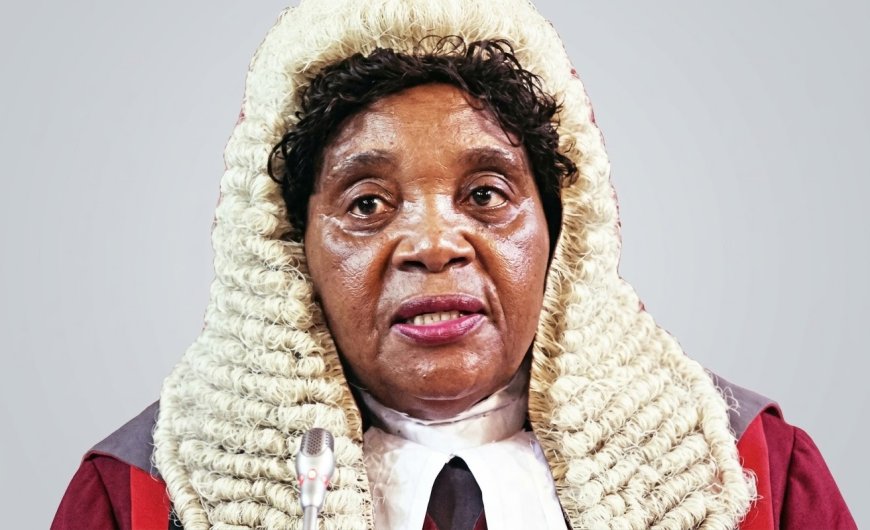
Gweru — Chief Justice Elizabeth Gwaunza has reminded 15 newly appointed High Court judges that the sweeping authority they will exercise does not belong to them personally, but is derived from the people of Zimbabwe and must be exercised with humility, restraint and unwavering fidelity to the Constitution and the law.
Addressing the judges during a three-day induction workshop in Gweru, Chief Justice Gwaunza said the judiciary's authority is rooted in Section 162 of the Constitution, making judges custodians of a public trust rather than holders of personal power.
“That provision deserves reflection. The authority which you exercise is formidable,” Chief Justice Gwaunza said.
“You will determine disputes involving property and livelihoods. You will determine questions concerning liberty.
"You will make orders binding individuals, corporations and institutions of the State.
"In appropriate cases, you will determine questions concerning constitutional rights.
“However, that authority is not personal authority. It derives from the people," she said.
The 15 judges are part of what was described as the largest simultaneous appointment of High Court judges in the country’s history.
Chief Justice Gwaunza said the newly elevated judges, despite coming from different professional and legal backgrounds, must build a common judicial culture anchored on constitutionalism, integrity, competence and the efficient delivery of justice.
She said appointment to the High Court should not be viewed as a claim to intellectual perfection or personal superiority.
“A judgeship is not a declaration of infallibility. You were not appointed because you know every answer. No judge does,” she said.
Chief Justice Gwaunza said the justice system contains safeguards, including appeals and reviews, which allow judicial errors to be corrected.
She also stressed the importance of the constitutional requirement that judges must be fit and proper persons, saying judicial office demands high standards of integrity, discipline, punctuality and humility both inside and outside the courtroom.
Judicial Service Commission secretary, Dr. Walter Chikwana, said the induction programme was designed to equip the new judges with the knowledge and institutional grounding required to promote the fair and efficient administration of justice.
The Chief Justice’s remarks come at a time when sections of civil society, legal practitioners, human rights groups and opposition political figures have continued to raise concerns about the independence and impartiality of Zimbabwe’s judiciary.
Critics have alleged that some high-profile decisions involving opposition politicians, electoral disputes and politically sensitive matters have raised questions about whether the courts are sufficiently insulated from executive and political influence.
Rights organisations and opposition figures have also criticised some bail decisions, prolonged detentions and rulings in politically sensitive cases, arguing that these developments have contributed to public scepticism about judicial independence.
The Government and judicial authorities have, however, consistently maintained that Zimbabwe’s courts operate independently and that judicial officers are bound by the Constitution and the law.
Chief Justice Gwaunza said the expansion of the High Court bench must strengthen the administration of justice and improve the delivery of quality justice to citizens.