ZESA Debt Threatens Gweru Water Supply
By Delicious Mathuthu — Gweru City Council’s electricity debt to ZESA has risen to ZiG334 million, with monthly payments of ZiG6 million falling short of its current ZiG12 million bill. The growing arrears are adding pressure on municipal operations, particularly water pumping, as the city explores solar power projects to reduce its dependence on the national grid.
 Delicious Mathuthu
Gweru — City of Gweru's electricity debt to the Zimbabwe Electricity Supply Authority (ZESA) has risen to ZiG334 million (about US$12.5 million), with the local authority struggling to clear its arrears while paying only ZiG6 million (US$225 000) a month against a current electricity bill of approximately ZiG12 million (US$451 000).
The figures, disclosed during a council meeting, highlight growing financial pressure on the city’s water pumping operations, which rely on electricity from the national grid.
Ward 11 Councillor Tanyanyiwa Rumbe raised concerns over the electricity bill, questioning why the reported debt had increased from ZiG322 million in August to ZiG334 million in September.
He asked whether the council was failing to meet its monthly electricity obligations.
Gweru Mayor, Councillor Martin Chivhoko, said the council was making instalment payments towards its arrears but continued to receive new electricity bills, making it difficult to reduce the outstanding balance.
City Finance Director, Michael Verenga, said the council’s current electricity bill was about ZiG12 million, while the payment arrangement negotiated with the Zimbabwe Electricity Transmission and Distribution Company (ZETDC) required the local authority to pay ZiG6 million a month.
“Paying ZiG6 million against a bill of ZiG12 million means the other ZiG6 million goes to arrears,” he said.
Finance Committee Chairperson, Councilor Hlupheko Marufu, had referred to monthly payments of ZiG600 000, but this figure differed from the ZiG6 million monthly instalment arrangement subsequently outlined by Verenga.
Mayor Chivhoko also told councillors that the council faced an additional ZiG18 million in monthly instalments towards its accumulated debt, an amount he said the local authority could not afford alongside its current electricity bill.
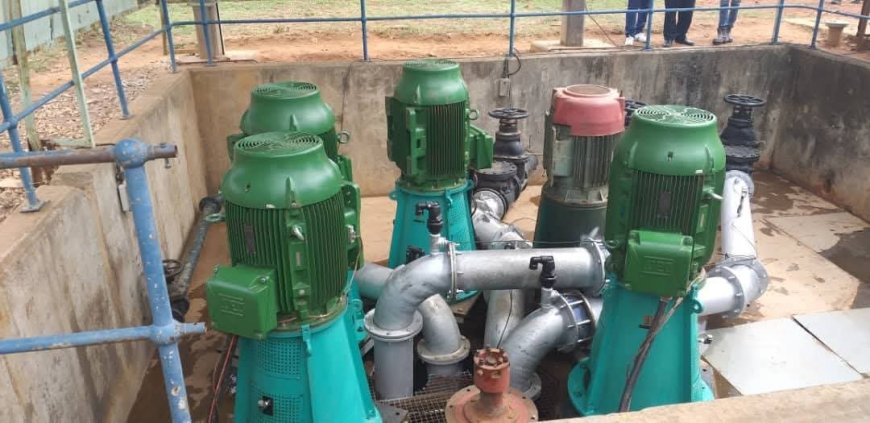
Councillor Marufu said the city consumed substantial amounts of electricity, particularly at its Gwenhoro water pumping station, where ageing pumps were contributing to high operating costs.
He warned that the debt would continue to grow unless the council found alternative sources of power or reduced its electricity expenditure.
Sometime in January 2022, ZESA disconnected electricity to the council’s water treatment plants at White Waters and Gwenhoro over unpaid bills, leaving residents without running water for three consecutive days until a payment plan was made.
Ageing and deteriorating electricity infrastructure also threatens the city’s water supply, with power lines frequently collapsing, particularly during the rainy season.
In January this year, water supplies were disrupted after three poles supplying the Gwenhoro pumping station collapsed, affecting water abstraction, treatment and pumping for several days.
Ward 6 Councillor, Lovemore Choto, urged council officials to engage ZETDC over the commercial tariffs charged for electricity used at Gwenhoro, saying council should receive favourable rates because it provides essential public services rather than operating solely for profit.
Verenga, however, said the tariff issue had been raised through the Urban Councils Association of Zimbabwe (UCAZ), but ZETDC continued to charge commercial rates, with Councillor Marufu appealing to Members of Parliament to take up the matter as it affected local authorities across the country.
However, the Government ruled out compelling ZETDC to supply electricity to councils at below-cost tariffs, arguing that the utility requires sufficient revenue to maintain its operations and provide reliable power.
The issue is not new, having been raised in the National Assembly by Mkoba South legislator, Honourable John Kuka, who asked the Minister of Energy and Power Development about the Government’s plans to enable local authorities to purchase electricity or pay bills at non-commercial rates.
Hon. Kuka argued that councils should qualify for preferential tariffs because they are non-profit-making entities.
In response, Deputy Minister of Energy and Power Development Yeukai Simbanegavi said ZETDC was still recovering from years of operating under non-cost-reflective tariffs and could not afford to supply electricity to local authorities below the cost of production.
Minister Simbanegavi said possible relief measures included an advanced netmetering programme under which councils would provide land for solar power plants at pumping stations in exchange for tariff incentives of up to 12%.
She said the programme would be complemented by free energy-efficiency audits.
The Government also said it was considering a proposal for the Ministry of Local Government and Public Works to cover 50% of councils’ electricity costs, with local authorities responsible for paying the remainder.
Ward 18 Councillor, William Mazango, questioned why the council was not receiving payments from ZESA for wayleaves and land used for electricity infrastructure, including power lines and base stations, arguing that revenue from such arrangements could help offset part of the council’s electricity obligations.
City Finance Director, Verenga, said the council had stopped billing ZESA for wayleaves because the dispute was dragging on, while the charges were increasing the council’s debtors’ figure.
Ward 14 Councillor, Danny Ndava, however said the matter had previously been handled through UCAZ and that he understood the association had lost the case in court.
City Mayor, Councilor Chivhoko, said the council needed an alternative source of electricity for Gwenhoro, identifying solar power as one possible solution.
The local authority has previously indicated that it was engaging the private sector to address crippling electricity costs and power supply challenges through major solar energy initiatives.
Council Economic and Business De-
velopment Manager, Rodwell Musiiwa, confirmed to the media that negotiations were advancing for a 200-megawatt (MW) solar power joint venture intended to supply electricity to municipal operations.
In addition, Gweru City Council is reportey partnering with Clover New Energy on a 20MW solar power plant valued at US$20 million.
Local ferrochrome producer, Jinan Group, has also announced a phased solar power rollout in the area, beginning with a 50MW plant costing US$25 million, as part of efforts to reduce reliance on the national grid.
The local authority is currently failing to satisfy the city's water demand with expanding residential areas, currently pumping between 60 to 65 megaliters and a demand of 125 megaliters.
Most residential suburbs around the city are getting running tap water for one and a half to two days a week, provided no technical or infrastructure failures accur during scheduled days.