Kenya Reports Eighth Ebola Case Linked to Congo Outbreak
Kenya has confirmed its eighth Ebola Bundibugyo case linked to the Congo outbreak as of Sunday, October 18 2026. Index patient died after travel from DRC via Uganda.
 Kwedu News
By Own Correspondent
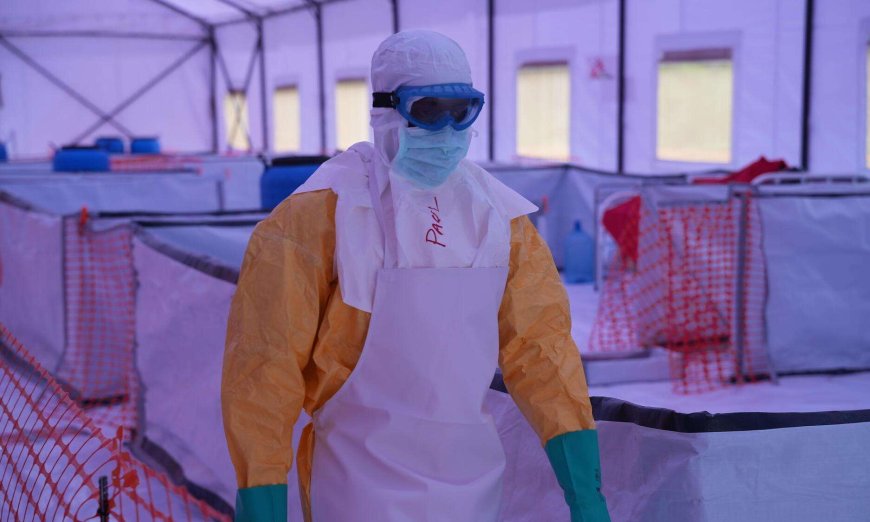
Nairobi — Kenya has confirmed its eighth case of Ebola caused by the Bundibugyo virus, health officials announced Sunday, as authorities continue intensive contact tracing and quarantine measures to prevent wider spread.
All secondary infections have so far been identified among known contacts already under monitoring and the Ministry of Health maintains there is no evidence of community transmission.
The latest patient is a 49-year-old man who worked as a patient attendant, cleaning utensils and linens.
He is believed to have been exposed to Kenya’s index case and developed fever, headache and muscle pain.
He was isolated after symptoms appeared and tested positive on Sunday.
Director-General for Health Dr. Patrick Amoth confirmed the case in an interview with the media, noting that 38 people were tested on the day.
The outbreak in Kenya began with an imported case. A 40-year-old Kenyan man who had lived in the Democratic Republic of the Congo for about seven years fell ill around mid-September while in the DRC.
After seeking care there, he traveled by road through Uganda and flew into Nairobi’s Jomo Kenyatta International Airport on October 3.
A relative took him to a Nairobi hospital, where he was isolated.
He died on the night of October 5. Laboratory confirmation of Bundibugyo virus disease followed on October 6, marking Kenya’s first officially recorded case of the disease.
Subsequent cases emerged among close contacts already under quarantine.
On October 14, authorities confirmed a second case in a 39-year-old male relative of the first patient.
A third case, a 65-year-old woman who is also a relative, was confirmed on October 16 after she developed symptoms while quarantined since October 6.
On October 17, four additional cases were announced; three healthcare workers, two men aged 29 and 35, and a woman aged 32, who had treated the index patient between October 3 and 4, and another male relative.
These brought the total to seven before the eighth confirmation on October 18. One death has been recorded.[](
Ministry officials report that roughly 130 contacts of the index patient were identified. By mid-to-late October, 128 or more—well above the 85 percent global benchmark often cited for interrupting transmission—had been traced and placed in quarantine. Remaining contacts continue to be sought. Officials have cautioned that additional cases may still appear among those under the standard 21-day monitoring period. Patients currently under care are receiving supportive treatment and, according to the ministry, are mostly stable.[](
Kenya’s cases are directly linked to a large ongoing epidemic of Bundibugyo virus disease in the Democratic Republic of the Congo, declared in May 2026. That outbreak—the second-largest Ebola epidemic on record—has surpassed 9,000 cases and more than 4,000 deaths. It has affected multiple provinces and recently reached an eighth province, North Ubangi. No approved vaccines or specific treatments exist for the Bundibugyo strain.
Kenyan authorities have intensified border and airport screening.
By mid-October, more than 685,000 travelers had been screened since the regional outbreak began.
The country remains open for travel, trade, and public gatherings, with officials emphasising that the risk to the general public is low because transmission requires direct contact with the blood or other bodily fluids of an infected or deceased person.
Ebola is not airborne.
The Ministry of Health, supported by partners including the World Health Organisation and Africa Centre for Disease Control (Africa CDC), has urged the public to remain calm but vigilant.
Anyone experiencing fever, unusual fatigue, muscle or joint pain, vomiting, diarrhea or unexplained bleeding is advised to seek care promptly.
Safe burial protocols were followed for the index patient.