Political Clash as CAA3 Sparks Heated Debate Over Judges and Senators
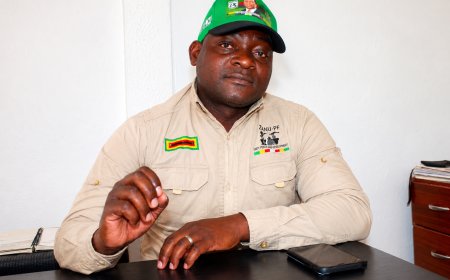
Opposition CCC member Privilege Desmond and ZANU-PF's Yemurai Takudzwa Guvheya recently clashed on Midlands' 98.4 FM radio over the Constitutional Amendment Act No.3 (CAA3) judicial appointments and Senate reforms.
 Dumisani Ndlovu
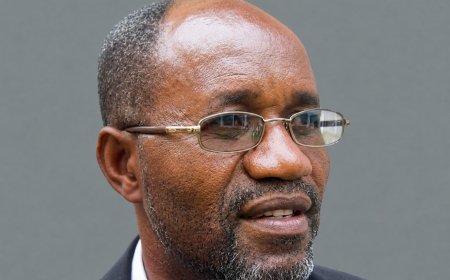
Gweru — A heated live debate on 98.4 FM Midlands radio descended into fiery exchanges as human rights activist and opposition Citizens Coalition for Change (CCC) member Privilege Desmond and ZANU-PF Youth League member Yemurai Takudzwa Guvheya clashed over the implementation of Constitutional Amendment Act No.3 (CAA3), leaving host Tinaani Nyabereka with a torrid time trying to keep the discussion under control.
The confrontational edition of Inside Politics, held under the theme “CAA3 Implementation: Appointment of Judges and Senators, Assessing Checks and Balances on Power,” exposed deep divisions over judicial independence, presidential powers, the composition of the Senate, and the state of governance in Zimbabwe.
Nyabereka repeatedly intervened as the two panellists challenged each other and spoke over one another, eventually adopting a diplomatic approach to keep the discussion focused and allow both sides to put forward their arguments.
At the centre of the dispute was the constitutional change to the process of appointing judges, particularly the removal of the requirement for public interviews of shortlisted judicial candidates and the increased role of the President following consultation with the Judicial Service Commission (JSC).
Desmond argued that removing public interviews weakened transparency and risked concentrating excessive authority in the executive.
"The office of the judiciary has to be protected. From who? And by who? Why is it the power only vested on one individual person?" Desmond said.
He questioned whether presidential control over judicial appointments could undermine the independence of judges, particularly in circumstances where court orders were allegedly ignored.
"The strongman is the one who is appointing the very people who should be independent," he said.
Desmond called for greater institutional independence, arguing that the JSC should be able to operate without political interference.
"Let the Judicial Commission stand on its own.
"Let our government stand on its own outside political circles. If we can't see the process, how do we hold anyone accountable?" Desmond argued.
Guvheya on the other hand strongly defended the President's constitutional role, arguing that judicial appointments should focus on professional qualifications, competence and integrity rather than public scrutiny of candidates.
He said Zimbabwe has an elected President entrusted with protecting the Constitution and the gains of the liberation struggle.
Guvheya also rejected comparisons between judicial appointments and political patronage, maintaining that candidates are drawn from a pool of legally qualified professionals.
He questioned the need for public interviews, arguing that some questions previously put to judicial candidates were personal and potentially compromised the dignity of people being considered for high judicial office.
"The law is about academics. It's not about sycophants or bootlicking. It's about merit.
"The police commissioners are appointed by the President. The army commanders are appointed by the President... So why are you conflicting yourself?" Guvheya asked.
The debate turned even more contentious when the panellists examined changes affecting the Senate under CAA3, including provisions expanding the chamber by 10 seats.
Guvheya argued that expanding the Senate provided a broader pool from which experienced professionals and technocrats could contribute to national governance.
"It's just broadening the spectrum from which the President can choose technocrats for further appointments within the government," Guvheya said.
He also defended the government's record, citing infrastructure development, electricity generation, inflation management and efforts to improve fuel supplies as evidence that there was no basis for the level of opposition directed at the administration.
Desmond, however, argued that the changes risked weakening Parliament's oversight role.
He maintained that the Senate should provide an effective check on executive power and warned that senators perceived as politically beholden to the appointing authority could find it difficult to independently scrutinise government decisions.
"It weakens the Senate. Section 119 says Parliament must ensure government is accountable," said Desmond.
He also challenged claims of economic progress, arguing that official statistics and government announcements did not always reflect the daily experiences of ordinary citizens.
"He talks facts. I talk reality. People live in reality," Desmond said on Guvheya's arguments.
Desmond cited municipal challenges, housing demolitions, water shortages and broader socio-economic pressures as proof of a divide between government narratives and ground reality.
The argument over governance soon spilled into a wider disagreement over the existence and effectiveness of political opposition in Zimbabwe, with Guvheya maintaining that the government's performance left little room for genuine opposition.
Desmond rejected that stance, emphasising that constructive critique of state policy should never be automatically conflated with partisan opposition.
As the noise level mounted, Nyabereka repeatedly stepped in to maintain order, re-orient questions, and keep the dialogue focused on constitutional principles.
The broadcast concluded with both panellists firmly locked in their positions.
The debate brought into sharp focus the broader national dilemma surrounding CAA3, whether the amendments represent pragmatic structural adjustments designed to streamline administration, or a constitutional drift that risks compromising institutional checks and balances.