An Open Letter to the British Prime Minister Keir Starmer
A critical analysis of Prime Minister Keir Starmer’s recent decision to challenge Donald Trump’s administration, specifically regarding tensions in the Middle East. It examines the shift in the UK's traditional "Special Relationship" with the United States and questions the underlying motivations for this rare instance of British dissent
 Harry Taruva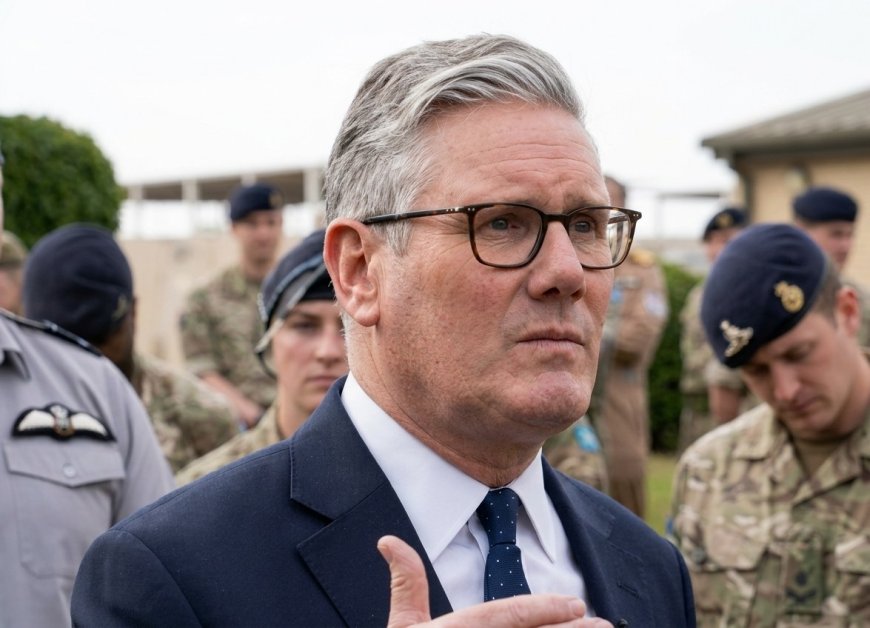
Keir Starmer vs. Donald Trump: A New Era of British Sovereignty or Geopolitical Convenience?
Dear Prime Minister Sir Keir Starmer,
I am writing to you today as Harry Taruva, a journalist dedicated to investigating the intersections of global power and British foreign policy.
Having closely observed the evolution of the United Kingdom’s diplomatic posture, I find your administration's current trajectory regarding Washington to be of significant public and historical interest.
Your recent declaration, the blunt admission that you are "fed up" with Donald Trump, marks a startling departure from the usual "Special Relationship" script.
To hear a British leader publicly push back against Washington on the looming threat of war with Iran, the destabilisation of Lebanon and the volatility in the Strait of Hormuz is, for many, a long-overdue breath of fresh air.
On the surface, your stance appears principled, courageous even, given the immense pressure to remain a loyal subaltern to American interests.
However, as a journalist tasked with looking behind the rhetoric, I must ask: why now?
For decades, the UK has been the silent partner in what many global observers call blatant barbarism. Where was this "principled stand" during the systematic destruction of Libya, or while Venezuela was being strangled by unilateral sanctions? For over sixty years, the United States has maintained a cruel, illegal economic blockade on Cuba, a policy that flies in the face of international law, yet British governments have largely remained quiet, choosing complicity over conscience.
It is difficult to ignore the timing. You’ve spoken up now because American policy is finally hitting "your people", threatening British economic stability and regional security interests.
This raises a haunting question: are human rights and international sovereignty universal, or are they negotiable based on British proximity to the pain?
If Trump’s policies weren't directly inconveniencing the UK, would you still be breaking ranks, or would you be standing shoulder-to-shoulder in the next "coalition of the willing"?
While the British Parliament has often been a lone voice for truth, the executive branch has historically functioned as the primary enabler of an American foreign policy that has used starvation, subjugation and military force in dozens of nations since 1945, Trump may be a volatile figure, but he is merely a symptom.
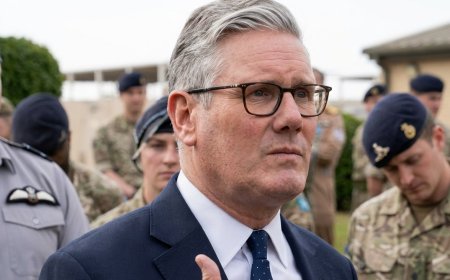
 British Prime Minister Keir Starmer during a recent visit to the Middle East
The "lunacy" resides in a bipartisan American foreign policy that seeks global hegemony at any cost, a policy the UK has endorsed through unlawful millitary interventions.
Looking behind the rhetoric, I must ask: But Why now, Mr Prime Minister?
The timing suggests this is less about a newfound moral compass and more about the cold reality of economic fallout. To be clear.
The Price of Principle: Experts at Cornwall Insight warn that the Iran conflict has already pushed gas markets to three-year highs, with typical household energy bills forecast to jump to £1,972 a year from July.
Petrol prices have spiked to 158.3p a litre, and diesel to 191.5p, after the longest run of consecutive rises on record.
You have admitted you want a country where people are not "at the mercy of events abroad," but it seems your "principled stand" only emerged once "your people" began paying the bill for American volatility.
Internal Rebellion:
You are not acting in a vacuum. Your own backbenchers are increasingly vocal about your selective application of international law.
Members of Parliament from the left of the Labour party have condemned your "hedging" after the U.S. raid on Venezuela, with some calling your refusal to explicitly denounce the abduction of its leadership "unlawful and wrong".
Furthermore, members of the All-Party Parliamentary Group (APPG) on Cuba have implored you to treat Trump’s military threats against Cuba as a "red line", yet you have largely remained silent on these cases of blatant aggression.
We are at a crossroads. Is this the moment the United Kingdom finally emerges as a sovereign voice for real justice in the 21st century? Or is this merely a temporary shock, a brief spat between allies that will end the moment a more "polite" imperialist takes the Oval Office?
For the first time since the Second World War, we see a major Western ally and United Nations Security Council member breaking ranks, not out of an alliance with Russia or China, but out of an apparent realisation that the current path is unsustainable .
The eyes of the public and the international community are on you, Prime Minister.
We are waiting to see if you possess the political courage to truly decouple British interests from an increasingly volatile foreign policy machine, or if this is simply a momentary pivot of convenience.
I look forward to your administration’s actions matching the gravity of your rhetoric.
Respectfully,
Harry Taruva( Founder and Editor in Chief of Hericom Media, the producers of Kwedu News and Kwedu Classics)