Joshua Nkomo Peace Marathon Sparks Reflection on Meaning of Peace: Baya
Joshua Nkomo Peace Marathon sparks debate on the meaning of peace, with writer Raisedon Baya urging Zimbabweans to see peace as justice, opportunity, and livelihoods—not silence or mere stabilit
 Dumisani Ndlovu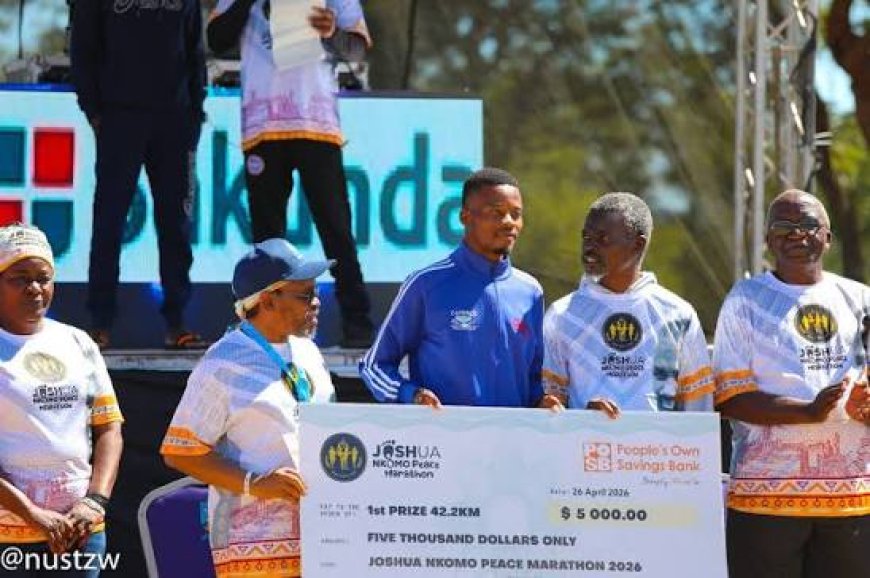
Bulawayo - The inaugural Joshua Nkomo Peace Marathon, held on 26 April 2026 at the National University of Science and Technology (NUST), has sparked a broader national conversation on the meaning of peace beyond the race itself.
The event, which attracted hundreds of participants from across Zimbabwe, honoured the legacy of liberation icon Joshua Nkomo and marked the first edition of the marathon dedicated to promoting unity and coexistence.
Seasoned writer, Raisedon Baya, who participated in the race, said the significance of the event went far beyond competition, describing it as a symbolic act of national unity.
“It was never about winning. We would not win any race anyway… Just running in his honour was enough,” he said.
However, Baya used the platform to raise deeper questions about the meaning of peace in everyday life, particularly in the context of economic hardship.
“What peace? Whose peace? What benefit is peace when people are hungry? When people are jobless? When people are fleeing the country in search of greener pastures?” he asked.
He challenged conventional definitions of peace as simply the absence of conflict, arguing that such an interpretation is incomplete.
“Is peace the absence of violence? The absence of war? Is it the absence of noise? Is peace silence?” He questioned, before rejecting silence as a form of peace.
“Peace is not silence. Because silence is actually the absence of peace. Silence is the sound of people too afraid or too tired to speak.”
Instead, Baya described peace as something active and visible in society.
“Peace is the sound of markets, the roaring sound of factories, the sound of schools… Peace is the presence of justice, food, and opportunity,” he said.
He added that the marathon represented a rare moment of social unity, where people from different backgrounds shared the same space and experience.
“A race is one of the few places where a Chief Executive Officer, a student and an unemployed youth occupy the same space… It’s a temporary blueprint for how a society could work,” he noted.
Baya said his participation was driven by broader aspirations for national progress.
“I was running for the dreams of young people to live, to flourish, to soar… I was running for unemployment to end.”
He concluded that while the marathon celebrated unity and remembrance, it also underscored the need for peace to be reflected in improved livelihoods, opportunity, and social justice for all citizens.