
Botched Nkomo Statue Exposes Deep Flaws in Governance and Cultural Policy
Controversial Joshua Nkomo statue in Maphisa removed after public outrage, revealing governance failures, weak oversight, and renewed calls for accountability in Zimbabwe’s cultural policy.
 Dumisani Ndlovu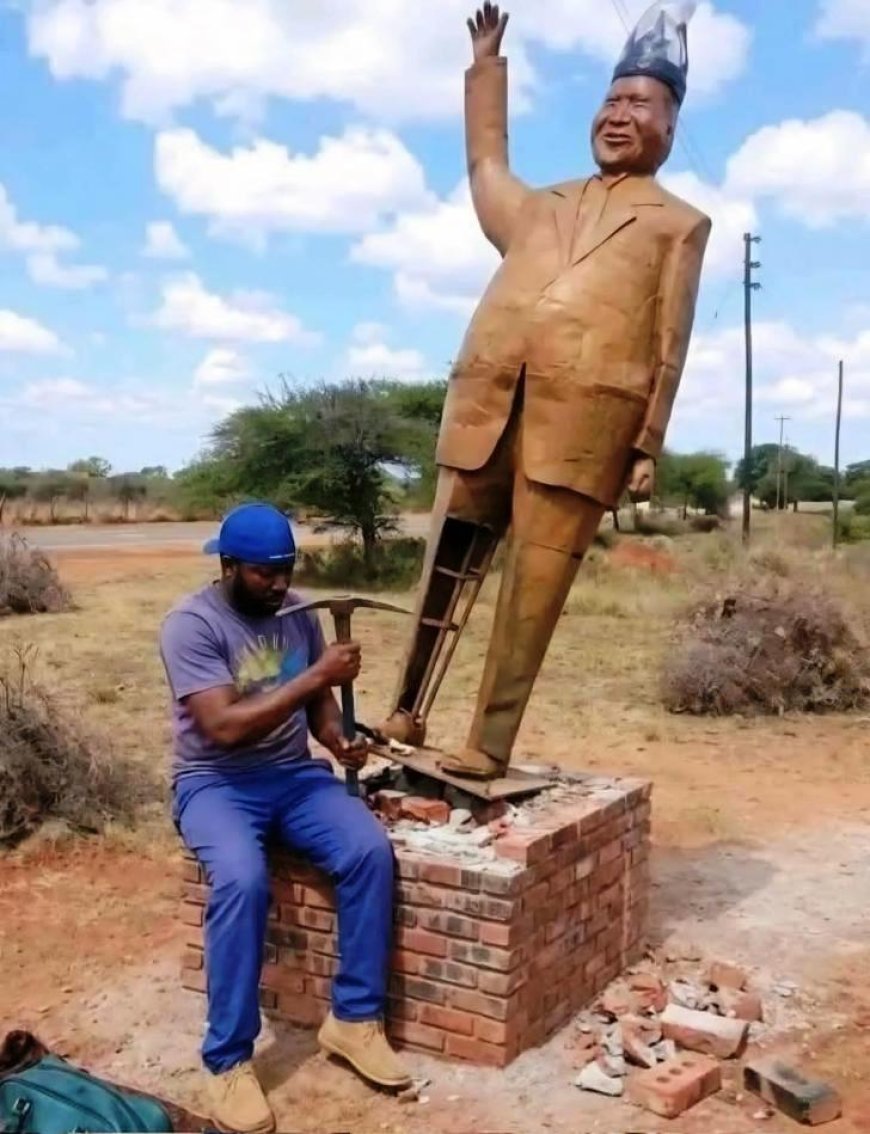
Maphisa - The controversial erection, and rapid removal, of a substandard statue of Joshua Nkomo in Maphisa has evolved from a local embarrassment into a broader indictment of governance systems, procurement practices, and cultural policy in Zimbabwe.
What was seemingly intended as a tribute to one of the country’s most revered liberation icons instead triggered widespread outrage, with residents and local leaders condemning the statue’s poor craftsmanship and lack of resemblance.
The backlash ultimately forced authorities to act, leading to the structure’s removal just days after it mysteriously appeared ahead of Independence Day commemorations.
Crucially, Matabeleland South Minister of State for Provincial Affairs and Devolution, Albert Nguluvhe, confirmed that the statue had not been officially approved, revealing that authorities themselves were unaware of its origins.
“We don’t even know who had built and erected it there. It was put there at night. That’s why it was removed,” Nguluvhe said.
His remarks underscore a troubling reality: the installation had bypassed all government-sanctioned processes, raising serious concerns about compliance with national protocols governing public monuments. From a governance perspective, this shifts the issue beyond poor artistry to a fundamental breakdown in oversight.
Public monuments, particularly those honouring figures of the stature of Joshua Nkomo, are typically subject to formal approval procedures involving planning authorities, procurement systems, and administrative checks. The fact that such a structure could be erected overnight in a public space suggests either weak enforcement of these systems or the ability of actors to operate outside them without detection.
While public anger initially focused on the statue’s aesthetic shortcomings, widely described as a “national embarrassment” by critics including Mqondisi Moyo, the deeper concern lies in the absence of accountability.
Key questions remain unresolved: who commissioned the statue, who funded it, and how it was installed without scrutiny. Authorities have yet to indicate whether investigations will be launched to identify those responsible.
The controversy has also reignited long-standing sensitivities in Matabeleland regarding representation and inclusion.
For many in the region, the issue is not only that the statue was poorly executed, but that it appeared without community involvement in an area where Nkomo’s legacy carries profound cultural and historical significance.
This has reinforced perceptions of centralised decision-making in matters of national symbolism.
These concerns are shaped by a complex historical backdrop, including events such as the Unity Accord, which sought to reconcile divisions involving Nkomo’s political base. In such a context, symbolic gestures carry deep meaning, and missteps risk exacerbating rather than healing historical tensions.
The Maphisa episode also reflects a recurring pattern. Previous attempts to memorialise Nkomo have faced similar criticism, notably in 2010 when a statue in Bulawayo was rejected and later replaced. That such controversies persist suggests a failure to institutionalise consistent standards for public memorialisation.
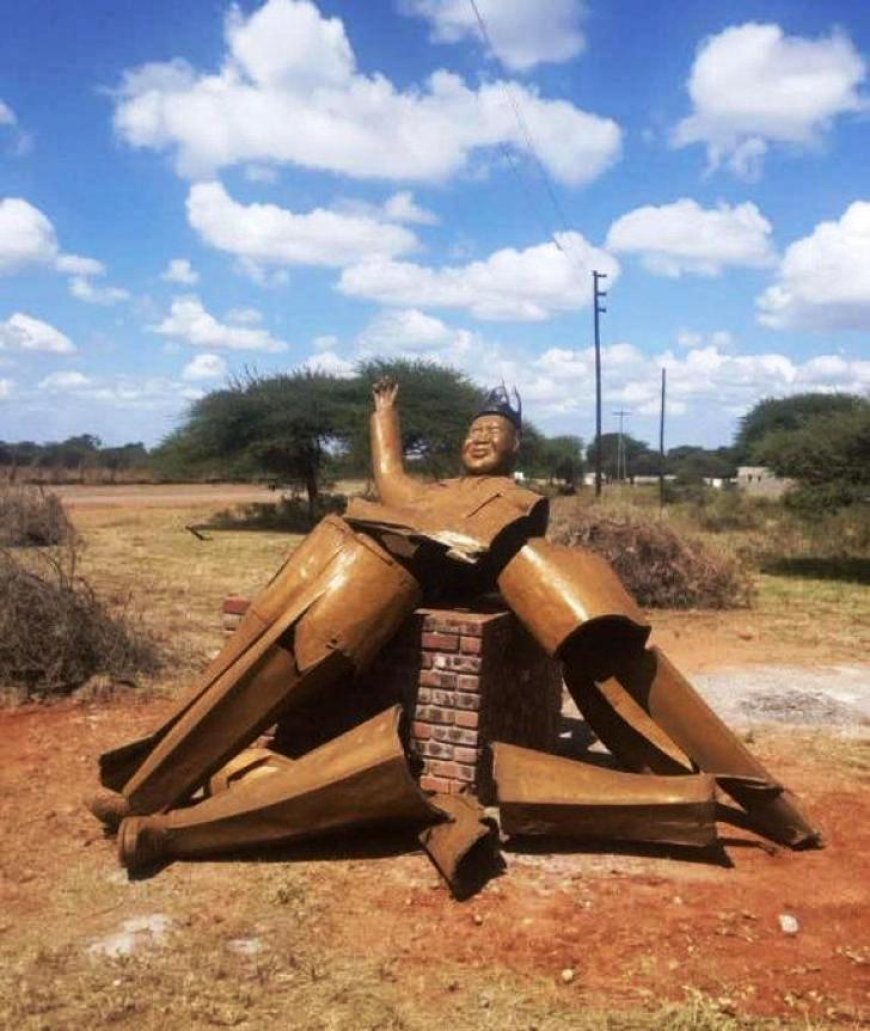
Ultimately, does the removal of the statue does not resolve the issues it has exposed or instead highlights the need for stronger oversight, transparent processes, and greater accountability in the management of public monuments. As Zimbabwe continues to shape its national identity under the leadership of His Excellece President Emmerson Mnangagwa, the stewardship of its historical legacy demands more than symbolic gestures—it requires systems that are both credible and functional.
Because in the end, the controversy is not simply about a statue that failed to resemble a national hero. It is about whether the institutions responsible for preserving that hero’s legacy are themselves upholding the standards expected of them.