Stronger Smarter Institute Expands Education Model Into National Leadership Dialogue
The Stronger Smarter Institute hosts the Stronger Smarter Together Summit in Brisbane (May 7–8), expanding its education philosophy into national leadership, policy and social development. Featuring Chris Sarra, Peter Yu and Terri Janke, the event explores “relational sovereignty,” Indigenous leadership, and themes of identity, belonging and inclusion.
 Dumisani Ndlovu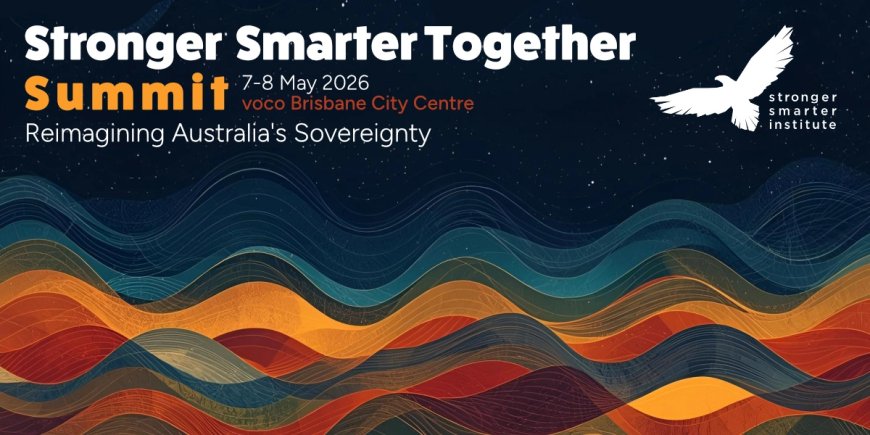
BRISBANE – The Stronger Smarter Institute is broadening its long-established education philosophy beyond the classroom, positioning it within national conversations on leadership, policy and social development.
Founded by Chris Sarra following his tenure at Cherbourg State School—where student attendance rose from 62 percent to 94 percent—the institute has, over 21 years, trained more than 5,700 school and community leaders and delivered nearly 400 professional development programs nationwide.
The organisation’s work has largely focused on disadvantaged communities, with 78 percent of partner schools falling within the lower half of the Index of Community Socio-Educational Advantage (ICSEA), and 63 percent located in regional or remote areas.
The institute will convene the Stronger Smarter Together Summit: Reimagining Australia’s Sovereignty in Brisbane on May 7–8, bringing together educators, policymakers and industry leaders to examine how its “high-expectations relationships” model can be applied across multiple sectors.
The event will take place at voco Brisbane City Centre and will explore themes of identity, belonging and national direction, particularly within the context of Indigenous leadership and participation.
Sarra has framed the next phase of the institute’s work around what he terms “relational sovereignty,” an approach focused on strengthening interpersonal and institutional relationships across systems such as education, governance and community leadership.
The summit program extends beyond education into areas including science, technology and sport.
A panel led by the Young Indigenous Women’s STEM Academy will explore the role of First Nations women in shaping Australia’s scientific and technological future, while another session will examine how principles of leadership and identity are expressed in sport.
Keynote speakers include Chris Sarra, Peter Yu and Terri Janke, recognised for their contributions to Indigenous leadership, governance and cultural rights.
Cultural and Community Engagement
The summit will also feature cultural elements, including a gala dinner hosted by Kevin Kropinyeri, live music from Adam James and a live art installation by Dylan Sarra, reflecting the evolving dialogue throughout the event.
Organisers say the summit will also recognise educators who supported the Stronger Smarter approach in its early stages, before its wider national adoption.
Sarra said the initiative now seeks to translate lessons from the classroom into broader systems of leadership.
“Relational sovereignty is about how Australians engage with one another within the structures that shape everyday life,” he said, adding that the next challenge is applying these principles across institutions nationwide.
The summit comes at a time of ongoing national reflection in Australia on identity, inclusion and the role of Indigenous knowledge in shaping future policy and development.
BRISBANE – The Stronger Smarter Institute is broadening its long-established education philosophy beyond the classroom, positioning it within national conversations on leadership, policy and social development.
Founded by Chris Sarra following his tenure at Cherbourg State School—where student attendance rose from 62 percent to 94 percent—the institute has, over 21 years, trained more than 5,700 school and community leaders and delivered nearly 400 professional development programs nationwide.
The organisation’s work has largely focused on disadvantaged communities, with 78 percent of partner schools falling within the lower half of the Index of Community Socio-Educational Advantage (ICSEA), and 63 percent located in regional or remote areas.
The institute will convene the Stronger Smarter Together Summit: Reimagining Australia’s Sovereignty in Brisbane on May 7–8, bringing together educators, policymakers and industry leaders to examine how its “high-expectations relationships” model can be applied across multiple sectors.
The event will take place at voco Brisbane City Centre and will explore themes of identity, belonging and national direction, particularly within the context of Indigenous leadership and participation.
Sarra has framed the next phase of the institute’s work around what he terms “relational sovereignty,” an approach focused on strengthening interpersonal and institutional relationships across systems such as education, governance and community leadership.
The summit program extends beyond education into areas including science, technology and sport.
A panel led by the Young Indigenous Women’s STEM Academy will explore the role of First Nations women in shaping Australia’s scientific and technological future, while another session will examine how principles of leadership and identity are expressed in sport.
Keynote speakers include Chris Sarra, Peter Yu and Terri Janke, recognised for their contributions to Indigenous leadership, governance and cultural rights.
Cultural and Community Engagement
The summit will also feature cultural elements, including a gala dinner hosted by Kevin Kropinyeri, live music from Adam James and a live art installation by Dylan Sarra, reflecting the evolving dialogue throughout the event.
Organisers say the summit will also recognise educators who supported the Stronger Smarter approach in its early stages, before its wider national adoption.
Sarra said the initiative now seeks to translate lessons from the classroom into broader systems of leadership.
“Relational sovereignty is about how Australians engage with one another within the structures that shape everyday life,” he said, adding that the next challenge is applying these principles across institutions nationwide.
The summit comes at a time of ongoing national reflection in Australia on identity, inclusion and the role of Indigenous knowledge in shaping future policy and development.