
UNSW Launches National Hub to Tackle Solar Panel Waste
Australia’s UNSW has launched the ARC Hub for Photovoltaic Solar Panel Recycling and Sustainability, a national initiative funded by a A$5 million ARC grant. The hub aims to tackle end-of-life solar panel waste, predicted to reach 100,000 tonnes annually by 2030, by developing recycling technologies, strengthening policy frameworks, and building a circular economy. By recovering valuable materials like glass, silicon, silver, and copper, the hub seeks to reduce landfill, create jobs, and enhance Australia’s clean energy sector.
 Dumisani Ndlovu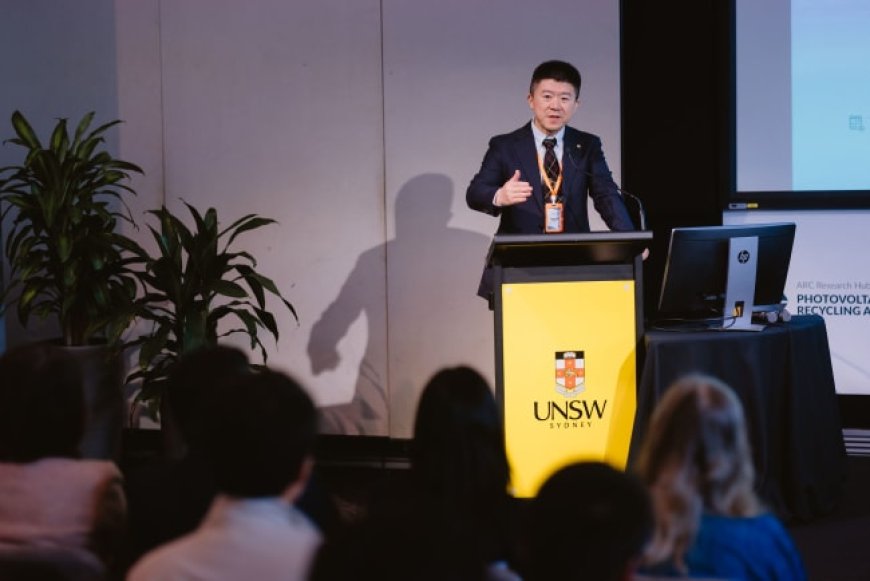
SYDNEY – University of New South Wales (UNSW) has launched a national research initiative aimed at addressing the growing challenge of end-of-life solar panel waste, as Australia accelerates its transition to renewable energy.
The ARC Hub for Photovoltaic Solar Panel Recycling and Sustainability, funded through a A$5 million grant from the Australian Research Council (ARC), was officially opened on Wednesday. It is the first initiative of its kind in the country focused on developing a circular economy for solar technologies.
UNSW Deputy Vice-Chancellor for Research and Enterprise, Bronwyn Fox, said the hub underscores the university’s commitment to solving critical global challenges through research and industry collaboration.
“Photovoltaic waste in Australia is predicted to reach 100,000 tonnes annually by 2030,” Fox said. “As we move towards a net-zero future, we must ensure the technologies enabling that transition are themselves sustainable.”
The hub will bring together engineers, scientists, policymakers and industry stakeholders to develop solutions that transform discarded solar panels into reusable resources, supporting a circular economy and strengthening Australia’s clean energy sector.
Hub Director Yansong Shen said the initiative comes at a critical time, with millions of solar installations expected to reach the end of their lifespan in the coming decade.
“End-of-life solar panels contain valuable materials such as glass, silicon, silver and copper,” Shen said. “Our goal is to divert these panels from landfill and recover those materials for reuse.”
Current projects include improving technologies to separate and recycle panel components, enhancing material recovery processes, and redesigning panels to make them easier to recycle. The hub will also support policy development to strengthen the solar recycling value chain.
Shen said success would be measured by the establishment of a viable recycling industry that creates jobs and enhances energy security.
“We want solar panel waste to be seen not as a problem, but as part of a sustainable system,” he said.
The hub was officially opened by Matt Thistlethwaite, Assistant Minister for Immigration and Assistant Minister for Foreign Affairs and Trade, who highlighted the broader economic and environmental benefits of the initiative.
“If we get this right, there will be less landfill, new domestic supply chains, a more resilient energy sector, and new industries and jobs,” Thistlethwaite said.
He added that Australia, a global leader in solar technology development, was well positioned to lead efforts in solar panel recycling.
The initiative comes as Australia grapples with the environmental implications of rapid solar adoption, with an estimated 3.5 million installations nationwide expected to generate significant waste in the years ahead.