CAB3 Undermines President’s Obligation to Citizens, Democracy Has No Price Tag — Hon. Kuka
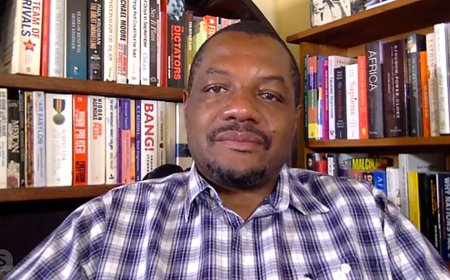
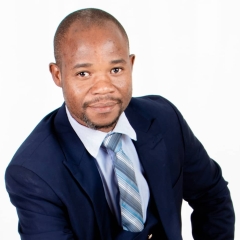
Mkoba South legislator Hon. John Kuka has strongly condemned the proposed Constitution of Zimbabwe Amendment (No. 3) Bill in Parliament, arguing that replacing the popular direct presidential vote with a parliamentary election breaks accountability bond and distances the Head of State from ordinary grassroots citizens.
 Delicious Mathuthu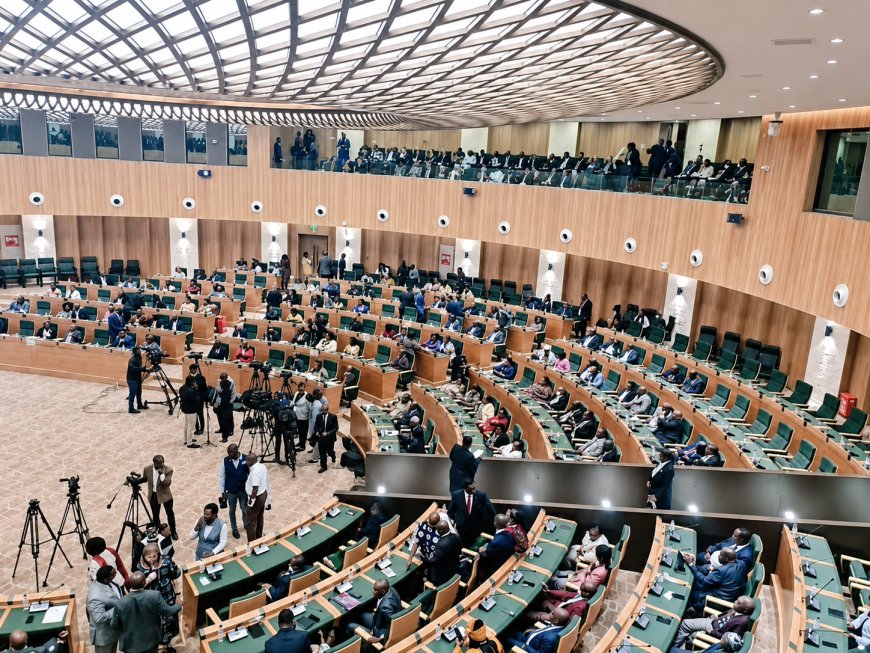
Gweru - Mkoba South legislator Hon. John Kuka has vigorously opposed the Constitution of Zimbabwe Amendment (No. 3) Bill [H.B. 1, 2026], currently before the National Assembly, warning that changing the method of electing the President from a popular direct election to a Parliamentary ballot severely diminishes popular sovereignty and weakens democratic accountability.
Contributing to a highly charged Second Reading debate in the August House recently, the lawmaker opposed the proposed bill that also seeks to extend the term of the president and elected governance structures.
Hon. Kuka said the right of citizens to directly select their Head of State is an unalterable democratic cornerstone that must never be bartered away under the guise of administrative or fiscal convenience.
Hon. Kuka also expressed deep dissatisfaction with the structural implementation of the public outreach programmes, noting that a vast majority of ordinary citizens in his constituency were systematically disenfranchised from making submissions due to the physical distance and centralised nature of the Parliamentary consultation venues.
Moving directly into the substance of the Bill, the Mkoba South representative rejected the Joint Portfolio Committee’s contention that the transition to an indirect Parliamentary election is justified by the massive financial costs associated with conducting nationwide presidential voting cycles.
“While cost efficiency is important, democracy should never be measured solely by financial considerations,” Hon. Kuka argued, adding that “the right of citizens to directly elect their Head of State is a fundamental democratic principle that cannot be sacrificed merely to reduce electoral expenditure”.
He further pointed that a direct contest forces presidential aspirants to leave the comfort of the capital, confront the grassroots population, defend their policy frameworks and earn a genuine mandate from the millions of citizens whose lives their governance will affect.
The lawmaker dismissed the legislative rationale that indirect elections of the president would eliminate political polarisation and seasonal civil unrest, countering that saying localised political violence and administrative disputes have historically also manifested within parliamentary and local authority elections.
He maintained that shifting the electoral architecture fails to address the operational root causes of electoral violence, which can only be eradicated through the institutional strengthening of law enforcement and the impartial execution of the law against all perpetrators, regardless of political affiliation.
“A handful of Members of Parliament cannot substitute the collective will of millions of Zimbabwean citizens,” Hon. Kuka said.
"The sovereign authority of the people must remain supreme in the selection of the President," he said.
He warned that electing the President through a joint session of the National Assembly and the Senate would reduce the office to a mere administrative appointment, thereby crippling the direct accountability that a sitting Head of State owes to the broader electorate.
Turning to Clause 21 of the Bill, which seeks to amend Section 281 to permit traditional leaders to participate in partisan politics, Hon. Kuka said the authority of chiefs is hereditary and derived from ancestral custom rather than popular ballot.
He argued that the constitutional demand for traditional neutrality is paramount, warning that public alignment with political parties will permanently erode the community trust required for chiefs to discharge their customary judicial and dispute-mediation roles.
“Like judges who must remain impartial, chiefs exercise judicial functions that require fairness and public trust. Political affiliation compromises that trust,” Hon. Kuka said.
He cautioned that allowing chiefs to join the political fray risks corrupting the distribution of state development resources, agricultural inputs and critical food aid along narrow, partisan lines.
The legislator also strongly opposed the proposed repeal of Section 246, which seeks to dissolve the standalone Zimbabwe Gender Commission and absorb its specialised legal mandate into the Zimbabwe Human Rights Commission.
He noted that the Gender Commission has achieved historic milestones, including the 2022 national inquiry into child marriages and ongoing legal frameworks for a national sex offenders register, which would be severely diluted or starved of resource allocation if subsumed under a generalised human rights framework.
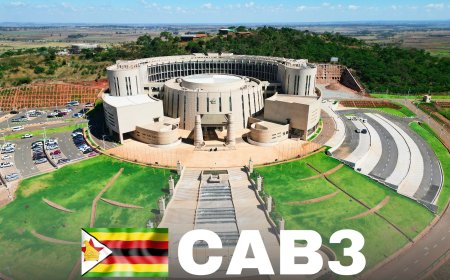
The ongoing parliamentary debate on the Constitution of Zimbabwe Amendment (No. 3) Bill [H.B. 1, 2026], popularly referred to as CAB 3, represents a watershed moment in the nation's post-independence legislative history.
Introduced by the Minister of Justice, Legal and Parliamentary Affairs, Hon. Ziyambi Ziyambi, the comprehensive Bill seeks to alter fundamental aspects of Zimbabwe's constitutional architecture, drawing both fierce defense from ruling party benches and vehement resistance from opposition legislators.
The legislative package introduces a wide array of structural transformations, chief among them being Clause 2, which transfers the responsibility of voter registration and database maintenance from the Zimbabwe Electoral Commission back to the Civil Registration System under the Registrar General's Office.
Furthermore, Clause 3 seeks to transition the election of the Head of State from a popular direct franchise to a joint parliamentary vote, while Clauses 4, 9, and 10 seek to expand the term of office for the Presidency, Parliament and local councillors from five to seven years, applying explicitly to the continuation in office of the incumbent executive.
Proponents of the Bill, including Hon. Ziyambi, Hon. Catherine Masvingise and Government Chief Whip Hon. Pupurai Togarepi, among others, have mounted a coordinated defense centered on the principles of institutional efficiency, macroeconomic predictability and political stability.
Citing historical Jeffersonian perspectives on constitutional flexibility and drawing international parallels to parliamentary systems in South Africa, Botswana, Germany and India, the lawmakers in defense argue that a seven-year cycle eliminates seasonal political toxicity, protects long-term infrastructure investment and stops the financial drain of continuous campaigning.
Conversely, opposition lawmakers such as Hon. James Chidakwa, Hon. Corban Madzivanyika, Hon. Ropafadzo Makumire, among others, have attacked the Bill as an unconstitutional attempt to entrench power and strip citizens of their fundamental democratic rights.
The members have raised procedural objections, arguing that extending term limits to benefit an incumbent violates Section 328 of the Constitution, which requires a national referendum for such amendments.
They contend that the Bill ignores the root causes of economic underperformance and structural corruption, warning that bypassing the direct popular vote will widen the rift between the governing class and the struggles of ordinary citizens.