Senator Zvidzai Slams Passed Constitutional Amendment Bill No. 3 as 'Half-Baked Cake'
Senator Sesel Zvidzai attacks CAB 3 in Parliament, calling it a "half-baked cake" and warning that the proposed constitutional amendments threaten democracy, electoral independence and the separation of powers.
 Dumisani Ndlovu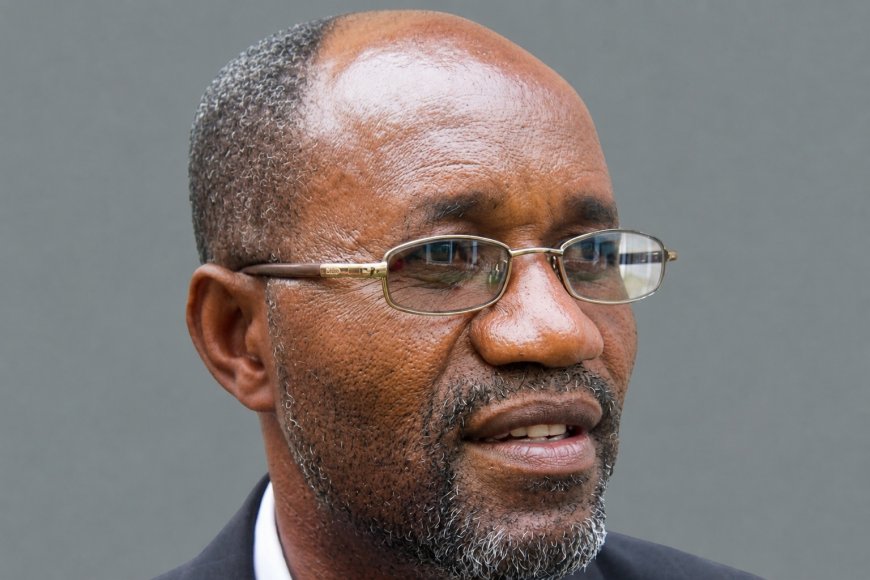
Harare –Former Deputy Minister of Local Government and Urban Development and current opposition Senator, Sesel Zvidzai, has delivered a critique of Constitutional Amendment Bill No. 3 (CAB 3) in the Senate, describing the proposed changes as a "half-baked cake" that risks distorting Zimbabwe's democratic architecture while expanding executive influence over the legislature.
Contributing to debate on the controversial Bill, Senator Zvidzai said that while some aspects of the proposed amendments may be well-intentioned, the overall package falls short of the standards expected of constitutional reform.
"It is very difficult for me to vote for a half-baked cake. The recipe is good, but the cooking is poor. Let's have a fully-baked cake and enjoy it," he said before it passed.
Zimbabwe’s Senate passed the highly contentious Constitutional Amendment Bill No. 3 (CAB3) on Wednesday, 24 June 2026, clearing its second test in the Senate from Parliament.
The Bill was approved by 75 Senators, against 4 opposing, easily crossing the required two-thirds majority of 54 votes in the 80-member Upper House.
Significant support also came from opposition Citizens Coalition for Change (CCC) Senators aligned to the Sengezo Tshabangu faction.
Senator Zvidzai argued that CAB3 lacks democratic legitimacy because it seeks to make significant constitutional changes without first obtaining the consent of the people through a referendum.
Invoking a historical comparison, Zvidzai said constitutional amendments of such magnitude should be subjected to direct public scrutiny and approval.
"Even the colonialists had the decency to go back to the people," he said, insisting that Zimbabweans should be afforded the opportunity to determine the future of their Constitution.
One of the key proposals he challenged relates to changes in the electoral framework.
Senator Zvidzai rejected arguments that presidential elections are responsible for political violence, describing such reasoning as misguided.
"It creates a democratic distortion. The argument that presidential elections are the midwives of violence in our electoral systems is sad. It's very sad that we think like that," he said.
Drawing on his own political experience, Zvidzai argued that violence is not inherent in elections themselves but stems from the conduct of individuals and political actors.
"I participated in an election in the year 2000, and there are bombs scattered throughout the country arising from killings where there was no president.
"Let's not push and blame the highest office of the land," he said.
"It's unfair to say the violence that happened in 2000 was a result of President Mugabe, or to say any violence that may happen again in the future is a result of President Emmerson Mnangagwa.
"No, that's wrong. Let's not do that. Let's all agree that we don't want violence in our electoral systems.
"It's not elections that are violent; it's people who participate in elections that are violent," Senator Zvidzai said.
He also opposed proposals to transfer voter's roll management responsibilities from the Zimbabwe Electoral Commission (ZEC) to the Registrar-General's Office, arguing that electoral processes should remain under the control of independent constitutional institutions.
However, his strongest criticism was reserved for provisions that would empower the President to appoint additional Senators.
"This is one thing that I outrightly disagree with. It's extreme executive overreach into the legislature," he said.
According to Zvidzai, the President already exercises substantial authority over the Executive arm of government, making further influence over Parliament unnecessary and potentially dangerous.
"The President already exercises extensive powers over the Executive. Giving the President the power to appoint additional legislators further blurs the separation of powers and increases executive influence over Parliament," he argued.
He warned that presidentially appointed Senators could find themselves conflicted when called upon to scrutinise government actions.
"It creates a conflict of interest. Appointed senators may feel indebted and may actually not want to exercise their oversight over the Executive.
"Parliament's role is to hold the Executive accountable, not to be populated by the Executive," he said.
Zvidzai noted that Zimbabwe had previously moved away from such arrangements and questioned the rationale for reintroducing them.
"In fact, it's something that we had which we have rejected," he said.
Senator Zvidzai's remarks add to growing debate surrounding CAB3, with supporters arguing that the Bill addresses governance and succession concerns, while critics contend that it weakens democratic accountability, diminishes public participation and concentrates power in the Executive.