MSU Law Relocation Sparks Transport, Housing Outcry as Students and Parents Face Fresh Costs
The relocation of Midlands State University’s Faculty of Law to Kwekwe has sparked concern among students and parents over transport, accommodation and rising costs after the University’s planned shuttle service was suspended. MSU says it is working with private transport operators to establish affordable routes between Kwekwe town and the new law school.
 Dumisani Ndlovu
Gweru — The much-anticipated relocation of Midlands State University’s Faculty of Law to the E.D. Mnangagwa Law School in Kwekwe has triggered growing concern among students and parents over transport, accommodation, affordability and the university’s preparedness for the move.
The relocation, billed as a major investment in legal education and infrastructure, has instead left some families facing unexpected costs after the university’s earlier plan to provide a shuttle service between Kwekwe town and the new law school was shelved.
At the centre of the controversy is the University’s earlier assurance that students would be provided with shuttle transport while arrangements for on-campus accommodation were being finalised.
That assurance influenced some students’ decisions on where to secure accommodation.
However, days before the relocation, students were informed through a notice from the Student Representative Council (SRC) that the proposed University shuttle would not be available "at the moment" due to resource constraints.
Students were instead directed to use public transport from a designated pick-up point opposite Pick n Pay in Kwekwe while the University, working with the local authority, establishes a taxi loading and offloading bay.
Some students say they had already secured accommodation in areas far from the new campus, including around Kwekwe Polytechnic College, on the understanding that University transport would connect them to the law school.
With the shuttle unavailable, they now face daily public transport costs which some estimate at between US$6 and US$8 a day.
"We rented accommodation believing the University bus would be available. Now we have to pay transport every day on top of rent and food.
"That is a huge burden on students and parents," one student said.
Another student warned that unreliable transport could have consequences beyond finances.
"Public transport is unpredictable. If you miss a taxi or there are delays, you risk missing lectures. Law is already demanding, and this creates unnecessary stress," the student said.
Parents have also joined the chorus of concern, questioning why transport arrangements were not fully resolved before an entire faculty was moved to a new location.
One parent said families should not be made to absorb the financial consequences of logistical decisions made by the institution.
"We appreciate the investment in a modern law school, but proper planning should have come first. Students should not bear the cost of operational shortcomings," the parent said.
The concerns are not confined to money as some parents and students have also raised questions about the safety of students travelling early in the morning or returning from lectures later in the day, particularly female students who may have to depend on public transport.
The uncertainty over accommodation has compounded the problem.
While MSU previously indicated that it would facilitate decent off-campus accommodation until student residences are completed, some students say the promised accommodation are unavailable as they are fully booked and forced to rent rooms at high density areas,which is not close enough to the campus to make daily travel manageable.
For students who already secured accommodation on the assumption that University transport would be available, moving again could mean additional deposits, rent and relocation expenses.
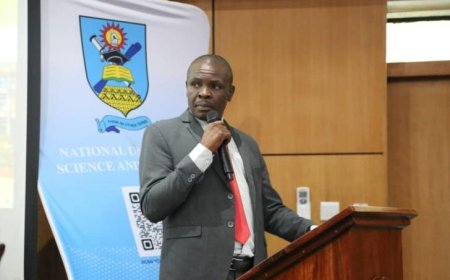
MSU Campus Director, Dr. Gilbert Tarugarira has defended the decision to abandon the University-operated shuttle, saying an assessment established that the arrangement would not be financially sustainable.
Tarugarira was speaking during a recent media tour of the institution attended by scores of journalists, the Minister of Information, Publicity and Broadcasting Services, Soda Zhemu and Nick Mangwana, the Permanent Secretary for Information, Publicity & Broadcasting.
He said the University initially believed providing students with a shuttle was a practical solution when the relocation plans were communicated.
"When we informed our students that you are now coming and you are going to be provided with a shuttle, that made a lot of sense," Tarugarira said.
However, he said a subsequent assessment of the proposed transport arrangement revealed operational and financial challenges.
Tarugarira said the different timetables of students and lecturers meant that buses could sometimes be forced to make trips carrying only a small number of passengers.
He gave an example of a bus with a capacity of about 65 passengers potentially having to operate a trip with only 10 students.
"So there might be some trips where a bus will have to run empty. So in terms of fuel and even the maintenance of that form of transport, that's a bit uncomfortable in this environment," he said.
He also said the University had to consider its revenue structure, noting that students were not paying fees in United States dollars while fuel and other operational costs had to be met in hard currency.
Rather than abandoning the transport issue, Tarugarira said MSU had begun engaging private transport operators to establish a cheaper and more sustainable connection between Kwekwe town and the campus.
He said some existing commuter operators were charging about US$3 and dropping students approximately two kilometres from the University, prompting MSU to seek a more direct arrangement.
According to Tarugarira, discussions with transport associations had resulted in proposals for an Amarene-MSU route, with a projected fare of about US$1.
He said the University had also approached transport operators, including Tombs and ZUPCO, over the possibility of providing dedicated services.
ZUPCO, he said, had indicated that it would provide a bus linking Kwekwe town and MSU soon after the Heroes’ Holiday at a proposed fare of 50 cents each way.
"They said that they are going to provide a bus to link MSU and town soon after the Heroes' Holiday," Tarugarira said.
"That means coming here 50 cents, going back 50 cents, and that would be very much affordable."
Tarugarira said students at other MSU campuses generally make their own way to their institutions using established public transport networks.
"This is a new case where people have not established some routes, but with time, I think it is going to improve," he said.