
Girls in Science Forum Inspires Next Generation of Women Researchers
By Harry Taruva — Schoolgirls met leading women researchers at UNSW’s 2026 L’Oréal-UNESCO Girls in Science Forum, exploring scientific discoveries, practical experiments and career opportunities in STEMM.
 Harry Taruva
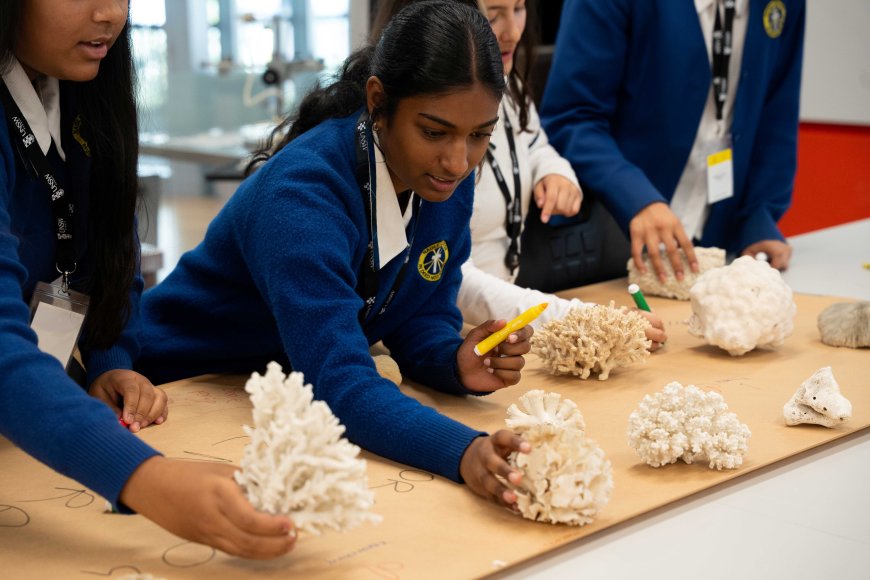
Sydney, Australia — Schoolgirls have been given an opportunity to explore careers in science after meeting leading women researchers at the 2026 L’Oréal-UNESCO Girls in Science Forum hosted by the University of New South Wales (UNSW) in Sydney.
The forum brought together students in Years 9 to 11 and five recipients of the 2026 L’Oréal-UNESCO For Women in Science Fellowships, who shared their research experiences and demonstrated how scientific discoveries can address real-world challenges.
The students explored research spanning breast cancer treatment, marine viruses, coral reef protection, maternal health and the relationship between the immune system and human health.
UNSW Associate Dean of Equity, Diversity and Inclusion in the Faculty of Science, Dr. Nicole Rijs, said exposing young people to researchers and their experiences could help them identify potential career paths.
“Hearing researchers talk about their work and the different paths they’ve taken into science can help students imagine where their own curiosity might lead,” she said.
Rijs said science needed people with different experiences, interests and perspectives, pointing to the diversity of research undertaken by the five fellows.
The researchers included Dr. Hani Kim of the Garvan Institute of Medical Research and a Conjoint Lecturer at UNSW Medicine and Health, who demonstrated how artificial intelligence could help analyse genomic and clinical data to identify breast cancer patients who may benefit from immunotherapy.
Dr. Jennifer Matthews of the University of Technology Sydney presented research into the chemistry that enables coral reefs to withstand environmental stress, including work that has informed the development of nutrient-rich treatments for young corals.
Dr. Mary Petrone of the University of Sydney discussed unusual RNA viruses found in sea sponges and other marine organisms, explaining their potential significance in understanding viral evolution and future outbreaks.
Other presentations focused on how cells lining the gut and lungs interact with the immune system, as well as the relationship between breastfeeding, human milk and infant health.
Dr. Amanda Oliver of QIMR Berghofer, outlined research that could contribute to improved treatment of chronic conditions such as inflammatory bowel disease and asthma.
Dr. Mariana Muelbert of New Zealand's Liggins Institute discussed how pregnancy and birth interventions could influence breastfeeding and early-life health.
The forum also provided an opportunity for students to raise concerns about pursuing scientific careers, including workplace pressures, self-doubt and gender representation in traditionally male-dominated fields.
Responding to questions about working in male-dominated environments, Dr. Muelbert acknowledged the challenges but said she was proud to be an agent of change.
Petrone encouraged students to believe in themselves and recognise that they deserved a place in science.
The programme also included practical activities designed to introduce students to scientific techniques and environmental research.
Students examined minerals used in everyday products and discussed how mining could meet society's needs while limiting environmental damage.
Other activities explored coral ecosystems, DNA separation through gel electrophoresis and microorganisms found in pond water.
Small-group discussions with UNSW PhD students from the faculties of Science and Medicine and Health allowed participants to ask questions about university life, research experiences and possible career pathways.
L’Oréal Australia and New Zealand Chief Corporate Affairs and Engagement Officer, Stephanie Luelf, said initiatives that made science accessible were important in encouraging more young women to consider careers in science, technology, engineering, mathematics and medicine (STEMM).
“We believe it’s important to make science accessible and inspire the next generation of women in STEMM,” she said.
The L’Oréal-UNESCO For Women in Science programme supports women researchers through flexible funding, mentorship and greater visibility for their work.