
Schools Urged to Teach Local Disaster Resilience Through Community Knowledge
By Harry Taruva — Monash University research finds that incorporating local culture, empathy and community participation into school curricula strengthens disaster preparedness and long-term community resilience.
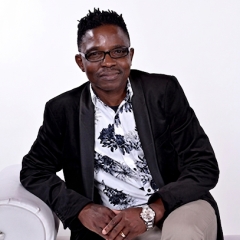 Harry Taruva
Melbourne, Australia – Schools can strengthen communities' ability to withstand disasters by incorporating local knowledge, cultural practices and empathy into education, rather than relying mainly on textbooks and routine safety drills, a new international study led by Monash University has found.
The research, published in the British Educational Research Association's Review of Education, examined school-based disaster resilience programmes in different parts of the world, including Japan, Indonesia and the United States.
It found that disaster education was more meaningful when students understood the specific risks facing their communities and participated in activities extending beyond the classroom.
The findings came ahead of COP31 in Türkiye, where climate adaptation and community disaster resilience are among the issues receiving international attention.
Belinda Davis, a Monash University Faculty of Education researcher, said disasters and community responses to them reflected the nature of human societies.
"Traditional education methods that focus solely on transmitting textbook knowledge or running safety drills don't build long-term community resilience," Davis said.
She said schools needed to develop empathy, collective responsibility and active participation among learners to prepare communities for disasters.
"By shifting our educational focus from individual survival to collective care and empathy, we build individual agency and strengthen the social fabric of our communities before, during and after disasters," she said.
The study highlighted how locally tailored education programmes could help children understand disaster risks while strengthening relationships between schools, families and communities.
In Japan, community mapping following the 2011 Great East Japan Earthquake helped students understand the human consequences of the disaster, reconnect with affected communities and identify opportunities for rebuilding.
In Indonesia, educators on Nias Island incorporated safety messages into traditional Maena dance lyrics following an earthquake and tsunami.
The approach helped overcome cultural taboos surrounding discussions about disasters while creating opportunities for children and parents to learn together.
Professor Alan Reid, also from Monash University's Faculty of Education, said successful programmes depended on collaboration between schools, community organisations, disaster response specialists and multidisciplinary teams.
"The successful initiatives we examined in the study all showcase a collaborative response to disaster, in which schools were able to adapt programs dynamically to meet real community needs," Prof. Reid said.
He said education built around relationships and social participation could develop a stronger sense of collective responsibility than standardised classroom exercises.
Professor Ilan Kelman, a co-author from University College London and UiT The Arctic University of Norway, said disaster risks and communities' understanding of them differed across geographical and cultural settings.
"Whether dealing with tsunamis in Indonesia and Japan, or flooding in the United States, effective resilience education places learners, teachers and local residents on an equivalent footing," Prof. Kelman said.
He said exchanges between communities could strengthen resilience by building trust and encouraging the sharing of local knowledge.
The researchers are calling for education systems to move towards more participatory approaches that allow young people and schools to help formulate disaster preparedness and resilience goals alongside their communities.