
Beyond Anger: From Outcry to Outcome
By Siphosami Ndlovu — Zimbabwe's planned withdrawal of ZIMSEC examination fee subsidies has sparked concerns over education access, constitutional rights and household affordability, with calls for stronger BEAM funding, transparency and targeted support.
 Kwedu News
...what Etiwel Mutero Got Right, and What Zimbabwe Must Now Get Right
By Siphosami Ndlovu
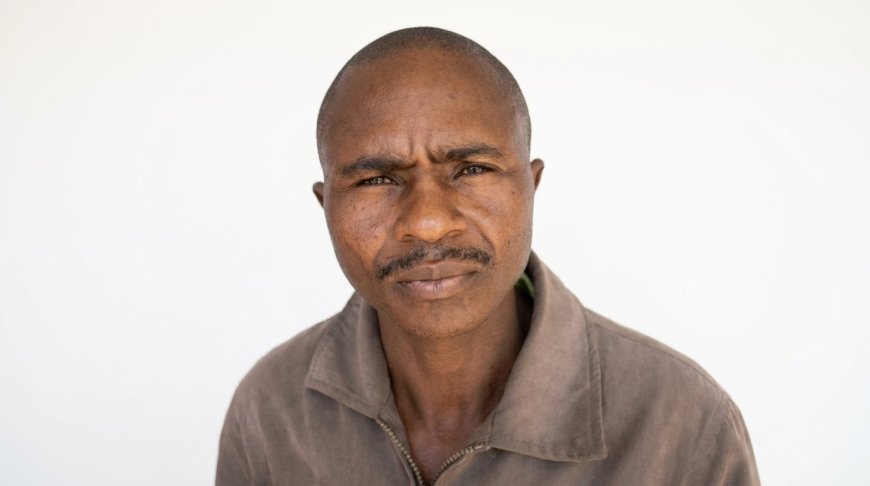
Harare — Last week, teacher Etiwel Mutero published an article that struck a nerve with parents across Zimbabwe.
In his article, titled A Cabinet Decision Against the Constitution, he challenged Cabinet's decision to phase out the Zimbabwe School Examinations Council (ZIMSEC) examination-fee subsidy, arguing that the move undermines the constitutional right to education.
His words were forceful, but the concerns behind them were shared by many ordinary Zimbabweans.
For a vendor in Mbare, a farmer in Chivi or a domestic worker in Bulawayo, the prospect of paying substantially more for their children's examinations is a deeply personal concern.
This article is not a repetition of Mutero's arguments. It is a response to them.
Mutero articulated the public outcry. My contribution is to explore how that concern can be translated into practical solutions.
I agree with his central argument. However, Zimbabwe deserves more than an expression of anger.
It needs reason, evidence and workable solutions that government can implement without compromising fiscal responsibility or undermining public confidence.
What MuterobGot Right
Mutero raised three important issues that should not be lost in the debate.
First, the Constitution matters.
Section 27(1) of the Constitution requires the State to take all practical measures to promote free and compulsory basic education for children. Section 75(1)(a) guarantees every citizen and permanent resident the right to basic State-funded education.
The Education Act, as amended by Act 15 of 2019, strengthens this framework by defining basic State-funded education as education from early childhood development to Form Four, for which pupils should not be required to pay fees or levies.
The State is also required to provide learning and teaching materials, facilities, infrastructure and resources, subject to Section 75 of the Constitution.
These provisions raise serious questions about the withdrawal of examination-fee support.
Although the precise legal implications require interpretation, government must demonstrate how its revised financing model remains consistent with its constitutional and statutory obligations.
Section 75(4) recognises that the State must take reasonable legislative and other measures, within the limits of available resources, to progressively realise the right to education.
That qualification does not remove government's responsibility to demonstrate that its decisions protect access to basic education.
Second, the financial impact on households.
The current Ordinary Level examination fee is US$24 per subject. Under the existing 55% government subsidy, parents contribute 45%, equivalent to US$10.80 per subject.
For a learner sitting eight subjects, the parental contribution is US$86.40. Without the subsidy, the bill rises to US$192.
The difference is US$105.60 for one learner sitting eight subjects.
For a household dependent on informal trading or irregular income, that is not simply a fee adjustment, it could determine whether a child sits for examinations at all.
Third, the Basic Education Assistance Module (BEAM).
It cannot shoulder the additional responsibility without significant improvements in its funding and administration.
Mutero cited parliamentary evidence showing that BEAM arrears accumulated to US$292,492,316.46 between 2023 and 2025.
The figures, presented to Parliament by Deputy Minister of Public Service, Labour and Social Welfare, Mercy Dinha, included approximately US$62.6 million in outstanding payments for 2023, US$117.8 million for 2024 and US$112.2 million for 2025.
The deputy minister attributed the backlog to limited funding and delays in Treasury disbursements.
That raises serious questions about the programme's capacity to absorb additional beneficiaries when its existing obligations remain outstanding.
A safety net that is already struggling to meet its commitments cannot simply be declared the primary solution without first addressing its weaknesses.
On these three issues, Mutero has raised legitimate concerns that deserve serious consideration.
Where Reason Must Complement Anger
However, a balanced debate must also consider the reasoning behind government's position.
Finance Minister, Professor Mthuli Ncube, argued that the universal subsidy model "does not adequately distinguish between vulnerable pupils who genuinely deserve subsidy support and those pupils whose households have the financial capacity to pay examination fees independently".
There is merit in that argument.
A learner attending a high-fee private school in Borrowdale does not necessarily face the same financial circumstances as one attending an under-resourced satellite school in Mhondongori.
In an economy facing competing demands on limited public resources, directing assistance towards households that need it most is a legitimate fiscal consideration.
The problem is not the principle of targeting. It is how targeting is implemented when it takes effect and whether the public can trust the system.
Under the revised Cabinet arrangement, government support will continue in 2027 for learners in rural P3 primary schools, rural S3 secondary schools, satellite schools and those benefiting from BEAM.
From 2028, the subsidy is expected to be restricted to deserving BEAM beneficiaries following an audit intended to improve the identification of vulnerable learners.
This is an important distinction. Government is introducing a phased withdrawal rather than ending all support immediately.
Nevertheless, targeting will only work if three conditions are met.
The selection process must be transparent and free from political interference.
Savings from withdrawing universal subsidies must translate into increased support for vulnerable learners.
Most importantly, no child should be excluded from examinations because of administrative failures during the transition.
Government has announced an audit of BEAM beneficiaries, with Finance Minister Mthuli Ncube acknowledging that some current beneficiaries may not meet the eligibility requirements.
However, parents have not been presented with a sufficiently detailed picture of how the revised arrangements will work.
The eligibility criteria, verification procedures, funding commitments and mechanisms for appealing against exclusion need to be communicated publicly.
Families should not be expected to make financial decisions based on assurances about a system whose operational details remain unclear.
This is why Mutero's argument resonated with so many people.
The debate is not only about examination fees but also about public trust.
What International Experiences Teach Us
International comparisons offer useful lessons, although Zimbabwe must consider its own economic circumstances before adopting policies implemented elsewhere.
The experiences of Zambia, Malawi and Kenya demonstrate that free education requires more than a government announcement, but deliberate budgeting, adequate funding and sustained political commitment.
Zambia provides an important example of what sustained investment in free education can achieve.
Following the introduction of its free education policy, the Zambian government reported that more than 2.5 million additional children had returned to school.
The country has recruited 41,917 teachers since 2022 and procured 1.6 million desks to improve learning conditions.
In its 2026 State of the Nation address, President Hakainde Hichilema also reported that the country had recorded a 70% Grade 12 pass rate in 2025.
Zambia's Ministry of Education subsequently reported the precise figure as 70.26%, the first time the country had crossed the 70% mark.
The government has attributed improvements in participation and learning outcomes to a combination of interventions, including free education, teacher recruitment, school grants, learning materials and feeding programmes.
The lesson is not that free education alone produced these results, but that expanding access requires investment in the wider education system.
Malawi offers another relevant example.
From 1 January 2026, the government abolished examination and identification fees charged by the Malawi National Examinations Board, together with School Development Fund contributions and other user fees in public secondary schools.
The policy covers public secondary schools, although boarding fees remain payable and private schools continue to charge their prescribed fees.
Importantly, Malawi's Ministry of Education confirms that government continues to fund schools through grants to replace the abolished charges, with disbursements channelled through education divisions.
The government also released funding to schools ahead of the second term opening in January, according to the African Press Agency.
Although the policy has placed additional pressure on classrooms, teaching materials and financial resources, Malawi's approach demonstrates the importance of establishing a funding mechanism alongside the introduction of free education.
Kenya provides a cautionary example of the financial pressures associated with education financing.
In January 2026, Kenya's Education Cabinet Secretary Julius Ogamba told lawmakers that the Education Ministry had a budget deficit of 48.3 billion Kenyn shillings (KSh).
The Free Day Secondary Education programme had also accumulated KSh83.5 billion in underfunding between the 2018/19 financial year and 2025.
According to the Kenyan Ministry of Education figures reported by the Daily Nation, the annual allocation entitlement per secondary school learner was KSh22,244, a target that had not been met since 2018/19.
In the first-term 2026 disbursement, schools received KSh7,952.04 per learner, below the expected KSh11,122 allocation.
These figures illustrate the risks of making education commitments without ensuring that funding allocations keep pace with the needs of schools and learners.
For Zimbabwe, the lesson is that examination-fee assistance must be supported by predictable and sustainable annual budget allocations.
The point is not that Zimbabwe should simply copy Zambia, Malawi or Kenya. Their economic conditions and education systems differ.
Rather, their experiences reinforce a fundamental principle: free education is a budgetary commitment, not a political slogan.
Here I want to introduce an additional dimension that was not the focus of Mutero's article but is relevant to the broader discussion.
The same household struggling to raise US$192 for examination fees may also have to find US$150 for an ordinary passport, together with an additional US$20 charge for a QR code under Zimbabwe's passport-fee regulations.
Regional comparisons published by Botswana's government news service in October 2026 put ordinary passport charges at P260 (US$18.75) in Botswana under the existing fee structure, R600 (US$36.13) in South Africa, N$400 (US$24.17) in Namibia and (K320 15.69) in Zambia.
Botswana had announced an increase in its ordinary passport fee to P400, but the implementation was postponed from November 2026 to 1 January 2027.
These figures are nominal charges in different currencies and should not be treated as direct comparisons of production costs or purchasing power.
Differences in passport specifications, security technology, administrative arrangements and government subsidies also matter.
Nevertheless, the disparity raises legitimate questions about the affordability and justification of public service charges.
I am not suggesting that Zimbabwe should necessarily charge the same amount as these countries, rather, government should explain how its charges are determined and whether they are proportionate to the services provided.
The cumulative burden extends beyond passports. Families must also meet the costs of birth certificates, national identity documents, school uniforms, levies and transport.
These expenses cannot be considered in isolation. They are drawn from the same household income, which must also cover food, accommodation, healthcare and other basic necessities.
There is no separate pocket for education and another for citizenship documents. It is the same pocket, often already stretched to its limits.
Government should take public concerns about affordability seriously and provide clear explanations of how such charges are determined.
Transparency is essential in building public confidence in government decisions.
A Practical Way Forward: Five Proposals
Rather than limiting the debate to demands for an outright reversal, Zimbabwe should consider a transition that protects vulnerable learners while recognising the government's fiscal constraints.
The following proposals offer a possible starting point:
1. Pause implementation and allow proper consultation
Government should reconsider the proposed transition timetable and allow Parliament, teachers' unions, parents and other stakeholders at least six months to scrutinise the revised arrangements.
Before the 2027 changes take full effect, government should publish a comprehensive implementation plan explaining how learners will be identified, how schools will receive funding and how parents can challenge decisions that exclude deserving children.
A pause would not represent a retreat from reform. It would demonstrate a willingness to get the policy right before implementation.
2. Introduce a tiered subsidy rather than abolishing it
A differentiated subsidy system could protect vulnerable learners while reducing expenditure on households better positioned to meet examination costs.
Under such an arrangement, government could provide full subsidies to BEAM beneficiaries, learners in rural P3 and S3 schools, satellite schools and orphans.
However, eligibility should not depend exclusively on the type or location of a school. Poor learners attending ordinary urban public schools should also have access to assistance through a transparent means-testing process.
The existing 55% subsidy could be retained for other public, local authority and mission school candidates, while support could be withdrawn from high-fee private schools whose households have the financial capacity to meet examination costs.
This would allow government to target public resources more effectively without abandoning learners from low-income households.
3. Strengthen BEAM before making it the primary safety net
Before expanding BEAM's responsibilities, government must address its outstanding arrears and improve the programme's administration.
The reported US$292.5 million backlog should be addressed through a publicly disclosed payment plan, with schools informed of when outstanding payments will be settled.
Beneficiary information should be made available at district level, subject to appropriate privacy safeguards, and schools should have reliable mechanisms for verifying learners' eligibility.
The selection process must also be protected from political interference, with clear procedures for appealing against wrongful exclusion.
A safety net must be adequately funded, accessible and credible if families are expected to depend on it.
4. Establish a dedicated ZIMSEC Examination Fund
Zimbabwe could establish a dedicated fund to support examination fees for vulnerable learners.
The fund could be financed through carefully assessed allocations from mining royalties or a modest levy on selected luxury imports, rather than placing additional costs on already struggling households.
Any proposed revenue source would need to be evaluated for its likely yield, economic impact and administrative feasibility.
Its operations should be subject to annual parliamentary scrutiny and independent auditing.
Such an arrangement would provide a more predictable funding mechanism and reduce the risk of examination support being affected by competing budgetary demands.
5. Review the cost of essential citizenship documents
Government should also review passport, national identity document and birth certificate fees against regional benchmarks.
A publicly available breakdown of the costs involved would help citizens understand how the charges are determined and whether they are proportionate to the services provided.
Affordability and transparency should be central considerations when setting charges for essential public documents.
The Question Government Must Answer: Where Will the Savings Go?
There is one additional question that should be central to this debate.
If the universal examination-fee subsidy is fiscally unsustainable, how much does it currently cost government, how much will the revised arrangement save, and how much of that money will be redirected towards vulnerable learners?
Government has explained the need to distinguish between households that can afford examination fees and those that cannot.
But the public also needs to know the financial calculations behind that decision.
How much will be allocated to BEAM? How many additional learners will benefit? What proportion of the projected savings will be retained within the education sector? How will Parliament monitor the expenditure?
These are reasonable questions, not attempts to frustrate government policy.
If the objective is to protect public resources while ensuring that disadvantaged children continue accessing examinations, the government should be able to demonstrate how the revised model will achieve both objectives.
Without these figures, parents cannot properly assess whether the proposed reform will improve support for vulnerable learners or simply transfer more costs to households.
From Outcry to Outcome
Etiwel Mutero has done Zimbabwe a service by articulating the concerns of parents who may struggle to raise US$192 for their children's examinations.
The challenge now is to turn that public outcry into meaningful policy action.
Government is not the enemy of parents. Teachers are not the enemy of the Treasury, and parents are not opposed to responsible management of public finances.
But government must remain accountable for decisions that affect access to education. Fiscal discipline and the protection of constitutional rights should not be treated as competing objectives.
All parties should share a common goal: building an education system in which no child is denied the opportunity to obtain an examination certificate because of poverty.
UNICEF's 2021 Zimbabwe Education Fact Sheets reported that only 15 percent of children complete upper secondary education.
The inequalities are particularly stark when household income is considered. Only 1 percent of children from the poorest wealth quintile complete upper secondary education, compared with 37 percent from the richest quintile. The completion rate is 6 percent in rural areas, against 29 percent in urban areas.
These figures highlight the extent of educational inequality in Zimbabwe. They also demonstrate why government must be careful not to introduce additional financial barriers for children whose families are already struggling to keep them in school.
The figures do not establish what effect the new examination-fee policy will have. However, they provide a compelling reason to asse