
Stop Using Our Children As Debt Collectors
Dr Masimba Mavaza calls on the Zimbabwean Government to enforce laws protecting children from exclusion and humiliation over unpaid school fees, proposing stronger penalties, improved BEAM funding and reforms to school debt recovery.
 Kwedu News
Stop Chasing The Child For The Parent's Debt
By Dr. Masimba Mavaza
From time immemorial, students have been used as debt collection tools. If their parents fail to pay fees, it is the child who is chased from school.
Think of it. The debt is not the child's. The contract is not the child's. The poverty is not the child's. Yet the punishment is always the child's.
The embarrassment of being called out at assembly. The humiliation of being followed to class, called out in front of the whole school, paraded like a criminal, then chased from school like a thief.
The shame follows you. Sometimes you just save yourself from this embarrassment by refusing to go to school at all.
The stigma of being the chased-away pupil lingers on you to your death. It whispers in your ear when you apply for a job.
It haunts you when you meet your old classmates who finished school. It tells you, you were not good enough, when in truth, your parents were simply not rich enough.
The Government makes statements during the day that no child must be chased away, and talks at night to the headmasters to chase them away. The one who suffers is the child.
The Government does not legislate a law to make it illegal. It just blows cold air.
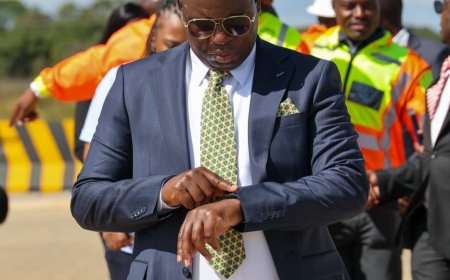
Minister (Tino) Machakaire paid for a few kids, and the cameras clicked, and the headlines glowed. But charity is not policy.
A Minister paying for five children while five hundred thousand are chased away is not leadership. It is theatre.
He does not sponsor a motion in Parliament to stop this diabolic culture of embarrassing the child. Why not?
When Zimbabwe Was Great: Mugabe Educated Us For Free
There was a time when this country understood that a child is not a bill.
At independence in 1980, Robert Mugabe declared education a basic human right. He abolished all primary school tuition fees.
He said, in effect: No child in this country will be denied a classroom because his father is poor.
And the nation rose.
Within one year, enrolment nearly doubled, from 885,801 pupils to 1,310,315. Schools sprang up in every village. Teacher training colleges sprang up to fill them.
The education budget, which was 2.5% of GDP in 1980, rose to 7.4% by 1985 and to 12.5% by 1990, one of the highest in the world.
Zimbabwe, a country that under Rhodesia had reserved 10 times more education money for 1% white children than for 99% black children, suddenly became the literacy miracle of Africa.
By the late 1980s we had achieved universal primary education. By 2005, we boasted 97% literacy, number one in Africa.
That was not magic. That was political will. That was a government that decided a child was more important than a balance sheet.
Free education was enshrined in the Education Act of 1987: primary education would be free and compulsory.
Then came the betrayal.
When The Fees Crept In: ESAP And The Selling Of Our Children
In 1990-1991, Zimbabwe swallowed the bitter pill called ESAP, the Economic Structural Adjustment Programme, prescribed by the IMF and World Bank.
The prescription was simple and cruel: Cut government spending. Remove subsidies. Introduce user fees in health and education. Let the market decide who learns and who dies ignorant.
In 1991, Parliament amended the Education Act of 1987. The 1991 Act, Act 26 of 1991, reversed the principle of free and compulsory primary education.
It authorised the introduction of fees in all urban primary schools and rural secondary schools.
Rural primary schools were left technically free, but the damage was done. The door had been opened. The principle had been broken.
The education budget collapsed from 30% of the national budget in the early 1980s to an average of 14% through the 1990s.
Schools were told to fend for themselves. School Development Committees were told to charge levies for building funds, sports, textbooks, furniture, even chalk.
What started as $35 a term in a high-density primary school, became $50, then $100, then US$20, US$40, US$300, US$500 in private schools. What started as a “levy” became a ransom.
And with the levy came the chase.
BEAM, the Basic Education Assistance Module, launched in 2001, was meant to cushion the poor. It was too small, too late, too bureaucratic.
The Social Development Fund before it was the same, parents applied, waited months, and by the time the money came, the child had already been chased away three times, had already dropped out, had already lost heart.
By 2012, UNICEF reported that at least 197,000 pupils were dropping out of primary school every year, largely because of fees.
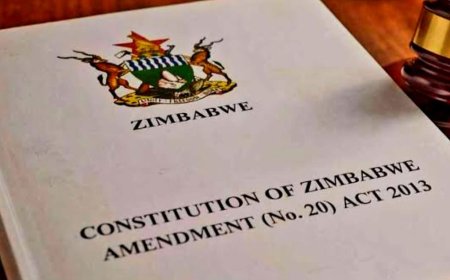
In 2013, 95% of Zimbabweans voted for a new Constitution. Section 75(1)(a) of that Constitution says, in black and white: Every citizen and permanent resident has the right to a basic, state-funded education.
In 2020, Parliament amended the Education Act again to say: No pupil shall be excluded from school for non-payment of school fees.
In February 2025, Statutory Instrument 13 of 2025 repeated it, even louder: “No pupil shall be excluded from school for non-payment of any form of school fees or levies.”
And yet, every term, the same shameful theatre repeats. Headmasters stand at the gate with a list. Teachers walk into class with a list. The assembly becomes a courtroom. The child becomes the accused.
The law says one thing. The school does another. Because the law has no teeth, and the headmaster has no fear.
The Pain Of A Child Chased Away
Let us stop speaking in statistics and speak in a child's heart.
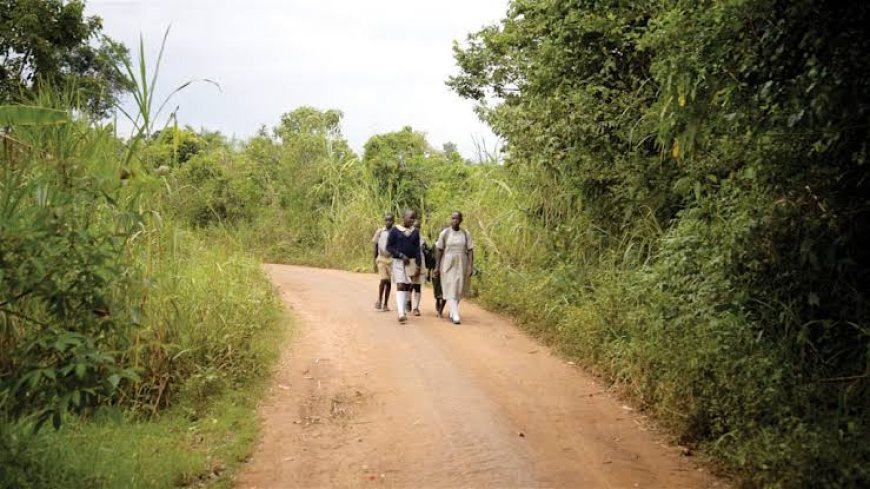
Imagine you are nine years old. You wake up at 5am. You walk 4 kilometres barefoot, your uniform washed the night before, your books in a plastic bag. You are hungry, but you are happy, because today you will learn fractions.
You sit down. The teacher enters, not with a book, but with a list. She calls your name. Not to praise you. To shame you.
“Tanaka, your fees?”
The whole class turns. Forty pairs of eyes. Forty sniggers. You mumble, “Mama said she will pay next week.”
“Go home. Come back when you have paid.”
You stand up. You walk out, past the other children, past the prefects laughing at the gate, past the school you love, into the road.
You are nine and you have just been told you are not worthy of learning because you are poor.
What do you do? You do not go home. Home is worse. At home, mother will cry. Father will beat you for embarrassing him. So you hide under a tree. You sit there until 1pm, when school closes, so that your neighbours think you went to school. You lie. You learn to lie. That is the first lesson fees teach a child: to lie, to hide, to be ashamed of poverty.
Some children never return. They become vendors at Mbare. They become herd boys. They become child brides. They become the lost generation that ESAP created.
A girl chased away at 12 is a girl married at 14. A boy chased away at 11 is a boy recruited by the machete gangs at 15. The price of chasing a child from school is not a lost term. It is a lost life.
And the wound never heals. Ask any adult who was chased away. They remember the name of the teacher. They remember the exact words. They remember the exact day. The body forgets beatings. The soul never forgets public humiliation.
We are raising a nation of wounded children, and we call it discipline. We are raising a nation of adults who hate school, and we wonder why they hate the country.
The Hypocrisy Must End: Make It A Crime
Enough of circulars. Enough of press statements. Enough of ministers touring schools for cameras while headmasters chase children after the cameras leave.
If the Government is serious, let it do what serious governments do: Make it criminal.
I propose, and I challenge the Minister of Primary and Secondary Education, Hon. Torerayi Moyo, and the Minister of Youth, Hon. Tino Machakaire, to take this to Parliament as a matter of urgency:
1. Make It A Criminal Offence To Deny A Child Primary Education For Fees
Amend the Education Act [Chapter 25:04] to create a specific offence: Unlawful Exclusion of a Pupil for Non-Payment of Fees.
Any headmaster, teacher, bursar, School Development Committee chairperson, or school authority who calls out, shames, excludes, sends home, withholds results, or denies entry to a child because of unpaid fees shall be guilty of an offence, liable to a fine, imprisonment, or both, and automatic dismissal from the teaching service.
Not a warning. Not a circular. A crime. Because denying a child education is a crime against the future of the nation. It is child abuse, dressed up as administration.
2. Separate The Debt From The Child, Forever
The debt belongs to the parent, not the child. Let the law say so.
Create a School Fees Debt Recovery System that forbids any contact with the child:
Schools shall bill parents directly, by SMS, letter or through the District Education Office.
Schools shall be empowered to sue parents in the Magistrates Court, to enter into payment plans, to garnish wages where the parent is employed, or to refer the matter to the Department of Social Welfare for BEAM assessment.
Schools shall be prohibited from using the child as a messenger, a collector, or a hostage. No child shall be given a letter to take home demanding money. No child shall be told to “tell your mother.”
Examination results, Grade 7, O Level and A Level, shall never be withheld for fees. The contract for ZIMSEC is between ZIMSEC and the candidate, not between the school and the parent. Let the law punish any school that withholds results.
Collect the money like a civilised state collects tax: from the adult, through the courts, not from the child, through shame.
3. Fund The Promise: BEAM Must Be Automatic, Not Begging
BEAM must stop being a begging bowl. Every child whose parents are unemployed, on BEAM, on Social Welfare, orphaned, or in a child-headed household, must be automatically registered at enrolment. The school claims from Government, not from the child.
If the State says education is compulsory, the State must pay for the child it compels to attend. You cannot compel a child to come to school and then chase him for coming without money. That is madness.
4. Tax Private Schools To Pay For Poor Children
Here is the most just proposal of all, and the one the rich will hate most:
Zimbabwe now has a booming private school industry. Schools charging US$3,000, US$5,000, US$10,000 per term. Schools with swimming pools, horse riding, Cambridge curricula, and imported teachers, while government schools next door have no chairs, no textbooks, no toilets.
Let us be honest: Private schools are businesses. They make profit from education, a public good. They use our roads, our water, our teachers trained by the State, and our children.
Government must introduce a Private Schools Education Equity Levy, a tax of 10% on gross fees charged by all non-government schools.
That tax must be ring-fenced, by law, into a 'National Basic Education Fund', used only to:
- Pay fees for disadvantaged children in government schools,
- Build classrooms and toilets in rural schools,
- Buy textbooks and furniture,
- Pay BEAM arrears.
Let the rich child’s privilege pay for the poor child’s pencil. That is not socialism. That is Ubuntu. That is justice. That is what Mugabe meant when he said education is for all.
If a private school can afford a swimming pool, it can afford to help a child in Epworth afford a chair.
5. Publish The Shame List, In Reverse
Every term, the Ministry must publish the names of schools that chased children away, and the number of children affected.
Let the nation know which headmasters are breaking the law. Let parents know which schools to avoid. Transparency is a punishment more powerful than a fine.
And let the Ministry publish, too, the names of schools that kept every child, despite poverty. Let us honour them. Let us reward them with grants.
A Challenge To The Ministry
Minister Moyo, Minister Machakaire, Honourable Members of Parliament: You were all once children. Some of you were chased away yourselves. You know the pain.
Do not come to us in January with another press statement. Do not come with another donation of 10 exercise books and a photo opportunity.
Come to Parliament with a Bill. Come with a law that has teeth. Come with a budget that pays for free primary education, as the Constitution demands. Come with a tax on private schools that shows you are serious about equity.
For if we can find money for cars for chiefs, for allowances for MPs, for endless workshops in Nyanga, we can find money for a child’s Grade 3 fees.
A nation that chases its children from school for money is a nation that is eating its own seed. You do not harvest a future by starving the seedling.
Stop using our children as debt collectors.
Stop embarrassing the innocent to punish the poor.
Teach the child. Bill the parent. Punish the headmaster who dares to confuse the two.
That is the only way Zimbabwe will rise again, from the classroom, not from the gate where our children are turned away like criminals.
A child’s place is in class, not at home crying because his mother is poor.
Let that be the law.
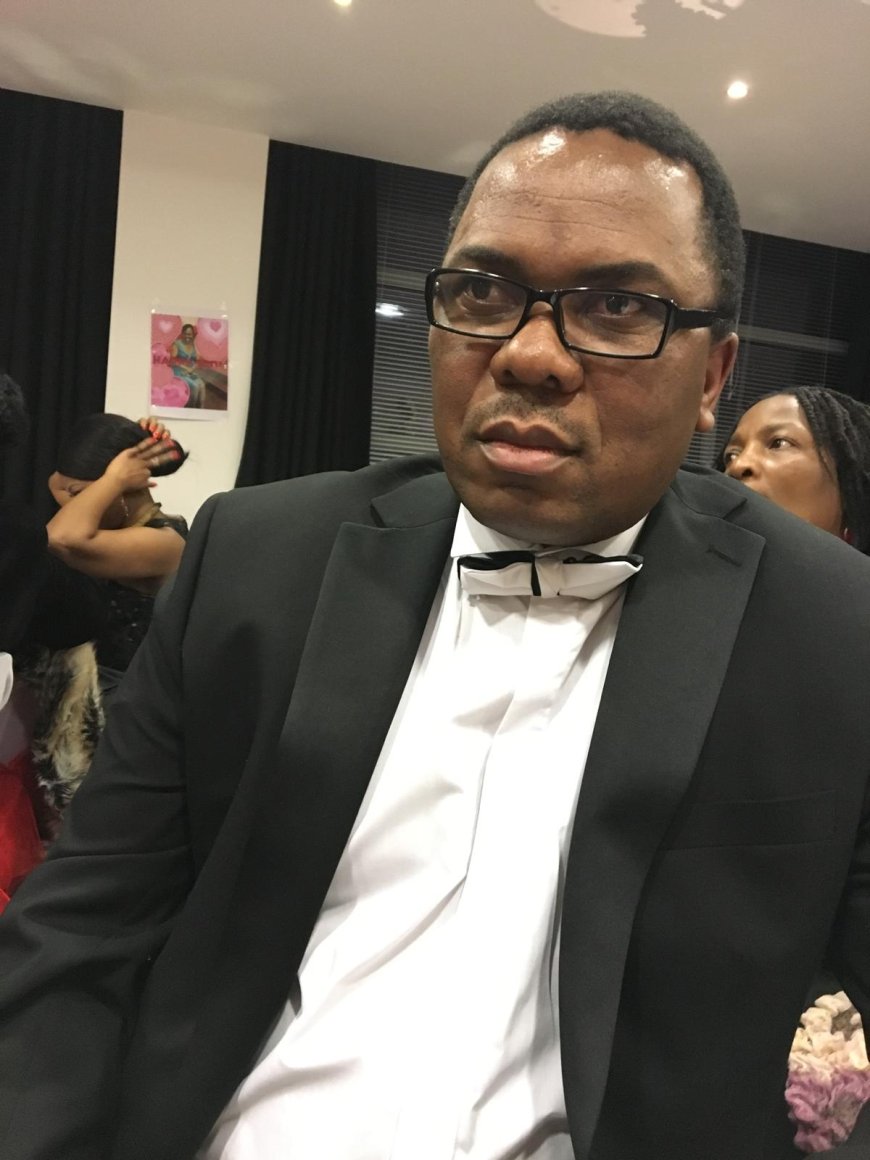 Dr. Masimba Mavaza.