Zimbabwe Assumes COMESA Chairmanship as Regional Leaders Push for Deeper Integration and Industrialisation
Zimbabwe has assumed the COMESA chairmanship, taking over from Kenya at the 25th Summit in Harare as leaders push for industrialisation, higher intra-regional trade and integration.
 Kwedu News
By Staff Reporter
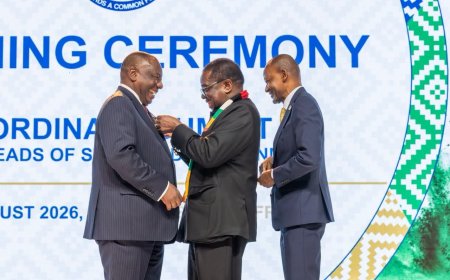
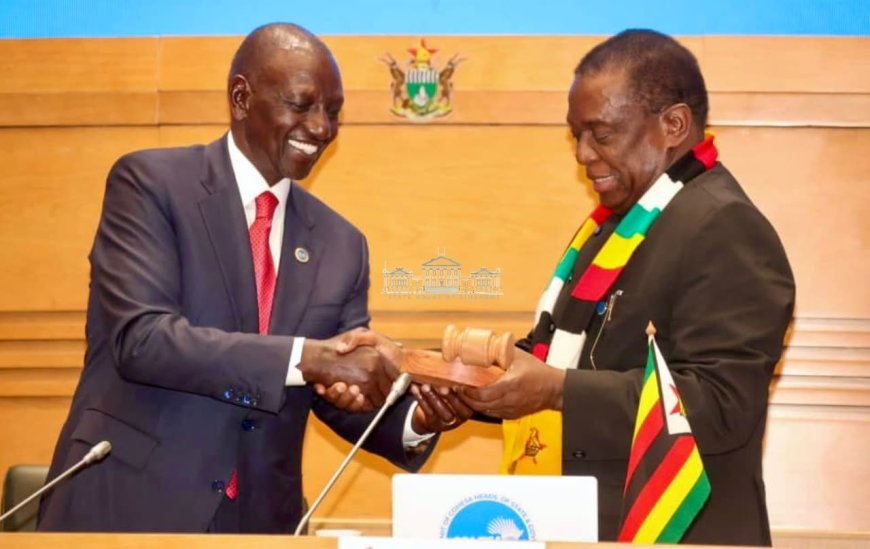
Harare — Zimbabwean President Emmerson Mnangagwa on Thursday, October 22 assumed the chairmanship of the Common Market for Eastern and Southern Africa (COMESA) from Kenyan President William Ruto during the 25th Summit of Heads of State and Government, held at the New Parliament Building in Mount Hampden, on the outskirts of Harare.
The handover marks the end of Kenya’s one-year tenure, which began at the 24th Summit in Nairobi on 9 October 2025, and ushers in Zimbabwe’s leadership of the 21-member regional economic bloc for the 2026–2027 period.
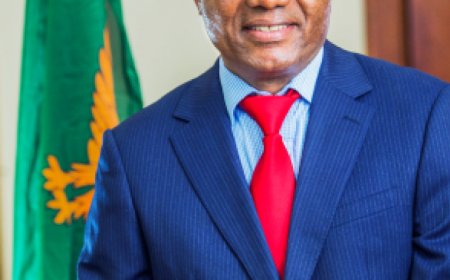
Zambian President, Hakainde Hichilema, was elected Vice-Chairperson of the new COMESA Bureau, while President Ruto continues as Rapporteur.
The summit convened under the theme “One Market, One Future: Advancing Inclusive Industrialisation, Investment and Regional Integration in COMESA.”
The leaders launched the COMESA Medium-Term Strategic Plan 2026–2030, which targets raising intra-COMESA trade to 15% of the bloc’s total trade by 2030.
COMESA brings together 21 member states with a combined population of nearly 700 million people and a GDP exceeding US$1 trillion.
Reports show that intra-COMESA exports have grown from around US$2 billion at the establishment of the Free Trade Area in 2000 to over US$14 billion in 2025, though leaders noted that the region still trades far more with the rest of the world than among its own members.
In his outgoing address, Ruto thanked fellow leaders for their support and expressed full confidence in his successor.
“On behalf of the Republic of Kenya and as outgoing Chairperson of the COMESA Authority, I thank fellow heads of state and government for your support, for cooperation and for the privilege you gave me to serve our region. I do not take that privilege for granted,” he said.
Handing over the instruments of office, President Ruto said he is confident of President Mnangagwa's leadership.
“As I hand over the chair, I do so with full confidence in my brother, President Emmerson Mnangagwa.
"Under his stewardship and with the support of every member state, I trust that we will turn the ambition of one market, one future into progress our people can see and feel, he said.
Ruto framed regional integration as an economic and strategic necessity amid shifting global dynamics.
“The global order is shifting, geopolitical tensions are rising, protectionism is returning, supply chains are breaking, competition for critical and strategic resources is intensifying.
"COMESA’s commitment to African integration is our answer to all of these emerging challenges,” he said, adding that “if prosperity is not shared, then it is not prosperity at all.”
He urged a decisive shift away from exporting raw materials.
“For too long, our engagement with the world has followed one script. We export raw materials, we import finished goods… What the world needs now is a different composition.
"One market, speaking with one voice, rather than 21 markets negotiating alone," President Ruto said.
Ruto also launched the Medium-Term Strategic Plan and the 2025 Annual Report, highlighting the bloc’s potential.
Accepting the Chairmanship, President Mnangagwa pledged to consolidate the bloc's gains and accelerate value addition, inclusive industrialisation and participation in regional value chains.
“On behalf of the people and Government of Zimbabwe, I take over the mantle of Chairperson of the COMESA authority, with deep humility and a profound sense of duty.
"I thank you, your Excellencies, for the confidence reposed on my country to nurture the vision of this regional bloc, for the period 2026-2027,” he said.
On the summit theme, he said “it is a call to harness the region’s resources and investment potential to accelerate modernisation and industrialisation, towards a higher quality of life for our citizens.
"To this end, our common market must enable enterprises to produce at scale, facilitate cross-border movement of factors of production and reach new customers."
President Mnangagwa stressed that Africa’s natural resources must drive industrialisation rather than raw exports, citing Zimbabwe’s experience with local processing of minerals.
“The message to the region is that the natural endowments of Africa must industrialise our economies, create jobs and broad-based empowerment which improve the quality of lives of our peoples," he said.
He outlined priorities including agro-processing industrial parks, climate-resilient agriculture, simplified border procedures, digital trade systems and support for women, youth and MSMEs.
In closing the summit, he reinforced the need for action.
“We have determined that tariff and non-tariff barriers, cumbersome customs procedures, coupled with archaic and manual systems at ports of entry, are prohibitive to the integration agenda and thus must be urgently expunged….
"If we are to build truly resilient economies, COMESA member states must cultivate a culture of trading among ourselves first. Our local resources must drive our local prosperity," said President Mnangagwa.
He also congratulated President Hichilema on his election as Vice-Chairperson and thanked Kenya for advancing digitalisation and regional value chains during its tenure.
President Hichilema assumed the Vice-Chairmanship and, on the sidelines, handed over title deeds for land in Lusaka for a new COMESA Headquarters building, reaffirming Zambia’s long-standing role as host of the Secretariat.
“With gratitude to the people of Zambia and the COMESA member states, this morning we assumed the role of Vice Chairperson for COMESA.
"The work to elevate the role COMESA will play in facilitating intra Africa trade starts now. We will, as usual, count on your support," President Hichilema said in a statement.
He linked the engagement to Zambia’s “Grow Zambia Agenda,” focused on expanding trade, investment and job creation.
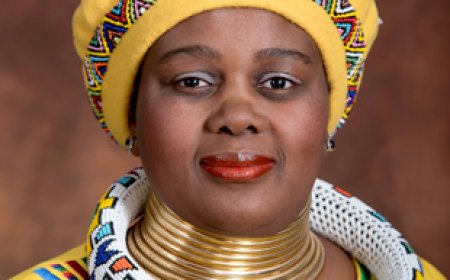
COMESA Secretary General, Chileshe Mpundu Kapwepwe, called for stronger domestic resource mobilisation to finance the industrialisation and integration agenda under the new Strategic Plan.
“We have the market, natural resources, the human capital, institutions, the private sector, and we have the strategic framework.
"What we now require is the collective determination to mobilise the resources and make the investments necessary to transform these assets into sustainable prosperity,” she said.
She earlier emphasised that industrialisation, investment and regional integration are mutually reinforcing drivers of sustainable development and noted progress in digital trade tools and the Tripartite Free Trade Area (COMESA-EAC-SADC).
COMESA, established in 1994 as a successor to the Preferential Trade Area, aims to promote regional economic integration through trade and investment.
It serves as a key building block of the African Continental Free Trade Area (AfCFTA).
Kenya’s Chairmanship focused on digitalisation and deepening regional value chains.
Zimbabwe’s tenure is expected to prioritise inclusive industrialisation, value addition, particularly of natural resources, investment attraction, removal of non-tariff barriers, infrastructure connectivity and climate-resilient agriculture.
Challenges remain significant with non-tariff barriers, infrastructure gaps, high transport costs, lengthy border procedures and limited intra-regional trade.
Leaders committed to accelerating electronic certificates of origin, single-window systems, interoperable payments and full implementation of the Free Trade Area.
President Ruto also pushed for faster operationalisation of a market levy under Article 168 of the COMESA Treaty to provide more predictable financing for regional programmes.
The summit followed pre-events including the COMESA Green Industry Connect and the 19th COMESA Business Forum.