Young Chegutu Authors Turn Classroom Learning Into Published Works
By Siphosami Ndlovu — Three pupils aged 10 and 13 at Hartley No. 1 Primary School in Chegutu have published their first books, showcasing young literary talent and the potential of Zimbabwe’s Heritage-Based Curriculum.
 Kwedu News
By Siphosami Ndlovu
Chegutu — Three pupils at Hartley No. 1 Primary School in Chegutu have become published authors, turning their ideas into books in an initiative the school says is intended to promote creativity and give practical expression to Zimbabwe’s Heritage-Based Curriculum.
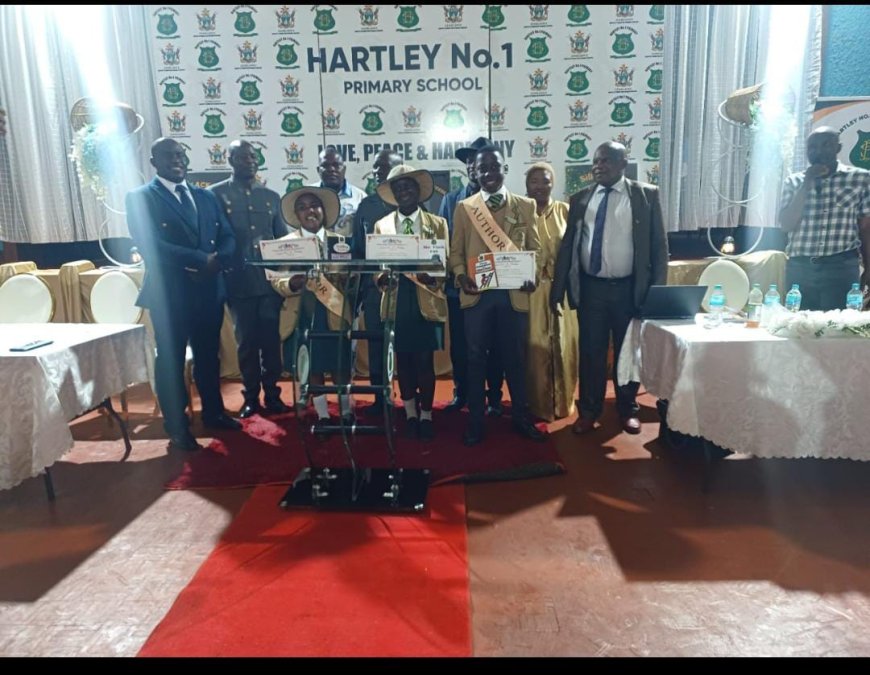
Samara Chafa (10), Gabriella Moyoweshumba (13) and Tinashe Sean Benza (13) launched their books at the government-run school recently, marking the culmination of a process that took almost two years to overcome publishing and funding challenges.
The three books explore different subjects, ranging from short stories, identity to personal development, illustrating how young learners can use writing to express their ideas beyond the classroom.
Samara, a Grade Five pupil, is the author of Silky Tales, a collection of short stories incorporating moral lessons.
Gabriella, a Grade Seven pupil and the school’s current student vice-president, wrote The Black Girl, which explores identity and self-understanding.
Tinashe, also in Grade Seven and the school’s student president for 2026, authored Five Principles of Success, a motivational book focused on personal development.
Their publications offer what educationists say is an example of how schools can create opportunities for learners to apply their literacy skills, develop their ideas and share their work with a wider audience.
The launch was intended not only to recognise the three authors but also to encourage other pupils to explore their creative abilities.
School Head, Rukarwa Tendayi Takawira, said the initiative was designed to expose young writers to opportunities beyond the classroom while supporting the objectives of the Heritage-Based Curriculum.
“The main reason was to launch, expose and motivate young writers at Hartley No. 1 and elsewhere.
"It came as a learning platform in our call to fulfil the objectives of the Heritage-Based Curriculum,” Takawira said.
He said the books gave learners an opportunity to communicate ideas that might otherwise remain unexpressed.
“The book writing and launch provides a platform for learners to transfer their silent voices into scripts to be heard by all,” he said.
The school organised the launch on its premises rather than at a hotel, citing the need to promote the institution, manage financial constraints and make the event accessible to other learners.
Oganisers enabled pupils to witness their peers being recognised for work produced outside conventional classroom assignments.
The head said the school hopes the experience will encourage other learners to consider writing and publishing as achievable goals rather than pursuits reserved for adults.
The project faced a lengthy search for a publisher and the funding required to turn the manuscripts into finished books.
The breakthrough came in March 2026, when the school engaged Essentials, a publishing company led by Director Aleck Kaposa.
The school described the company as a partner and sponsor, saying its affordable publishing rates helped make the project possible.
“Essentials is like a partner and sponsor. Their publishing costs are so low that one would wonder how he is managing without external funding,” the school said.
The three manuscripts were edited, designed and printed in less than two months after the engagement.
Parents, working with the School Development Committee (SDC), funded the printing.
According to the school, 100 copies of each title have been produced.
The school also intends to buy 100 copies of each book for its library, where the publications could serve as reading material for current and future pupils.
The books are expected to be available online, in bookshops and at Hartley No. 1 Primary School, although specific outlets and release dates have not been provided.
The publishing process also exposed the practical challenges that aspiring writers face after completing a manuscript, including finding a publisher and meeting production costs.