
Local Govt Secretary Muguti Fired Two Months After Appointment
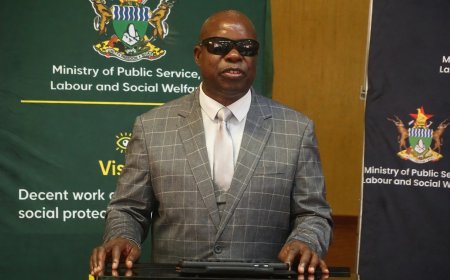
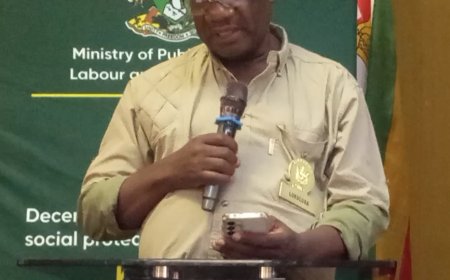
President Emmerson Mnangagwa has removed Engineer Tafadzwa Muguti as Permanent Secretary in Zimbabwe’s Ministry of Local Government and Public Works just two months after his appointment. Dr Addmore Pazvakavambwa has been named as his replacement with immediate effect.
 Kwedu News

Harare — President Emmerson Mnangagwa has removed Engineer Tafadzwa Muguti as Permanent Secretary in the Ministry of Local Government and Public Works, exactly two months after his appointment to the post.
The change was announced on Wednesday evening, November 11, by Chief Secretary to the President and Cabinet, Dr Martin Rushwaya.
Dr. Addmore Pazvakavambwa has been appointed to replace Muguti with immediate effect, in accordance with Section 205(1) of the Constitution of Zimbabwe," Dr. Rushwaya said in a statement.
Pazvakavambwa previously served as Permanent Secretary for Provincial Affairs and Devolution in Masvingo Province.
He has been recognised for performance excellence in public service, including a presidential award as the best Secretary for Provincial Affairs and Devolution.
No official reasons were provided for Muguti’s removal.
Eng. Muguti succeeded Dr John Basera, who was reassigned to the Zimbabwe Land Commission. Prior to that, Muguti had served as Permanent Secretary for Presidential Affairs and Devolution in the Office of the President and Cabinet.
His short tenure was marked by a high-profile and often controversial enforcement drive across the country but mostly in the capital, Harare.
Soon after taking office, Muguti became the public face of an aggressive campaign against illegal settlements and informal trading sites in cities and towns.
The operations involved demolitions of homes and vending stalls in various parts of the country.
Critics said the actions left families homeless and stripped informal traders of livelihoods at a time of significant economic hardship.
Civic groups, opposition figures and members of the public condemned the manner of the clearances, describing them as harsh and insufficiently accompanied by alternatives.
The demolitions intensified public debate in the days leading up to the announcement. On the same day as Muguti’s removal, Local Government Minister Daniel Garwe publicly stated that the demolitions were not government policy, a remark widely seen as distancing the administration from the programme.
Days earlier, authorities had directed local authorities to halt home demolitions and prioritise regularisation of informal settlements while targeting illegal land barons.
Muguti had also drawn attention for other outspoken positions. These included calls for stricter enforcement against village heads involved in illegal land sales, sometimes referred to as “sabhuku deals”, warnings that thousands of traditional leaders could face arrest, and suggestions to restrict the use of cellphones and filming in traditional chiefs’ courts on confidentiality grounds.
He had previously faced criticism during earlier roles for directives related to tinted vehicle windows, Non-Governmental Organisations operations and other enforcement matters.
Some within ZANU-PF and the broader public described his style as overly assertive or confrontational.
In a related appointment announced the same day, former Deputy Finance Minister Clemence Chiduwa was named Deputy Minister of Economic Development and Investment Promotion.
He will serve under Minister Kudakwashe Tagwirei.
Dr. Rushwaya said the appointment was made under Section 104(2) of the Constitution and takes immediate effect.
The Ministry of Local Government and Public Works oversees local authorities, urban and rural planning, housing, public infrastructure and related functions that directly affect service delivery and daily life for many Zimbabweans.
The rapid change in Permanent Secretary leadership comes at a time of ongoing challenges around informal settlements, land management and the balance between enforcement of planning laws and the economic realities faced by ordinary citizens.