CAB3 Behind Us, Focus on Accelerating Agriculture — Agric Minister Masuka
Agriculture Minister, Dr. Anxious Masuka says Zimbabwe must now focus on implementing transformative agricultural policies following the enactment of CAA3, with food security, rural development and Vision 2030 remaining key priorities.
 Delicious Mathuthu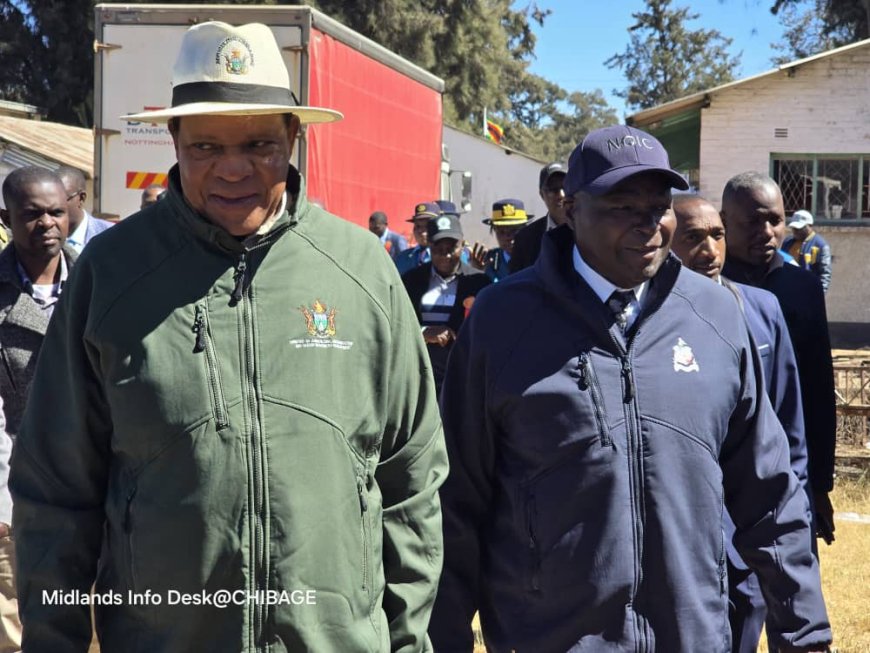
Gweru — Agriculture, Mechanisation and Water Resources Development Minister, Dr. Anxious Masuka, has called on Zimbabweans to shift their focus from the recently enacted Constitution Amendment Act No. 3 of 2026 (CAA3) to the accelerated implementation of policies aimed at transforming agriculture and achieving lasting food security.
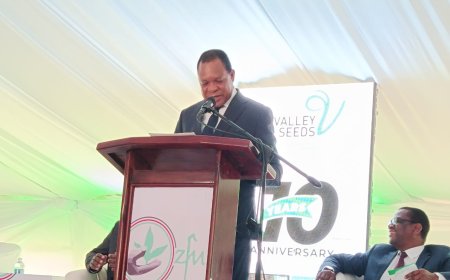
Addressing the official opening of the 101st Midlands Agricultural Show in Gweru on Saturday, August 15, Dr. Masuka said the enactment of CAA3 had brought to an end the political process surrounding the constitutional amendment and should allow the country to concentrate on its development agenda.
“Now that CAB3, now CAA3, our political expression of our developmental aspiration is firmly behind us because of the overwhelming support by Zimbabweans, we must turn our collective attention to the accelerated implementation of our transformative agricultural policies,” Dr. Masuka said.
His remarks came shortly after President Emmerson Mnangagwa assented to the Constitution of Zimbabwe Amendment Act (No. 3), 2026, after a controversial public consultation process with reports of violence and intimidation from suspected ruling party ZANU PF activists. It was subsequently gazetted as law.
The legislation introduced a number of changes to Zimbabwe’s constitutional and electoral framework.
The Act provides, among other changes, for the election of the President by an electoral college comprising Parliament rather than through a direct popular vote, extends the terms of the President and Parliament from five to seven years, and introduces changes to voter registration and delimitation responsibilities.
The enactment followed approval by Parliament, with the National Assembly adopting Senate amendments before the Bill was sent to the President for assent.
Dr. Masuka, however, placed the constitutional development within the wider Government programme towards Vision 2030, saying the country should now focus on translating its policy objectives into tangible economic and social outcomes.
He said the priority was to achieve “perennial food security and food sovereignty”, improve nutrition and livelihoods, accelerate economic development and transform rural areas.
The Minister said the objectives were central to the country’s ambition of becoming a prosperous and empowered upper-middle-income society by 2030.
“This noble Vision is within reach and is increasingly becoming a reality,” he said.
His remarks echoed those of Midlands Minister of State for Provincial Affairs and Devolution Mr Owen Ncube, who said CAA3 was part of the broader framework for policy continuity and the implementation of the Government’s development agenda.
Honourable Ncube said the Second Republic’s programmes in agriculture were aimed at moving Zimbabwe away from dependence on raw commodity production towards greater industrialisation and beneficiation.
He said the Agriculture, Food Systems and Rural Transformation Strategy was seeking to transform Zimbabwe from its traditional bread-basket role into “an agro-industrial hub of the region”.
He said the province was also benefiting from the alignment of Education 5.0 industrial parks and innovation hubs with the Rural Development 8.0 model.
Among projects he cited were the Holy Cross Dam Universities and community fisheries and irrigation initiatives, as well as innovations developed at Kwekwe Polytechnic, including an electronic cattle spray run, a Pfumvudza hole-digging machine and a small-grain thrasher.
The focus on implementation comes as Government begins operationalising provisions of CAA3.
Authorities have already started work on transferring responsibility for voter registration and management of the voters’ roll from the Zimbabwe Electoral Commission to the Registrar-General’s Office.
The new constitutional framework also establishes a Zimbabwe Electoral Delimitation Commission, while leaving the Zimbabwe Electoral Commission with a more focused mandate around conducting elections and voter education.
Government has described the amendment as providing greater policy continuity and institutional stability, while critics have challenged aspects of the law and its enactment.
A Constitutional Court challenge has also been mounted against CAA3, with the applicant arguing that the enacted law contained changes that were materially different from the Bill subjected to public scrutiny and parliamentary debate.
The competing positions have placed CAA3 at the centre of a continuing national debate over constitutional governance, electoral arrangements and the country’s political future.
At the Midlands Show, however, Dr. Masuka sought to draw attention back to the economic and agricultural agenda.
He said Zimbabwe’s agricultural transformation required the country to move beyond policy formulation and focus on implementation, investment, productivity and value addition.