
Ten New Air Force Pilots Graduate as Mnangagwa Calls for High Standards in Military Service
By Dumisani Ndlovu — President Mnangagwa has commissioned 10 new Air Force of Zimbabwe pilots in Gweru and also highlighting military aviation development, technical skills, discipline and professionalism.
 Dumisani Ndlovu
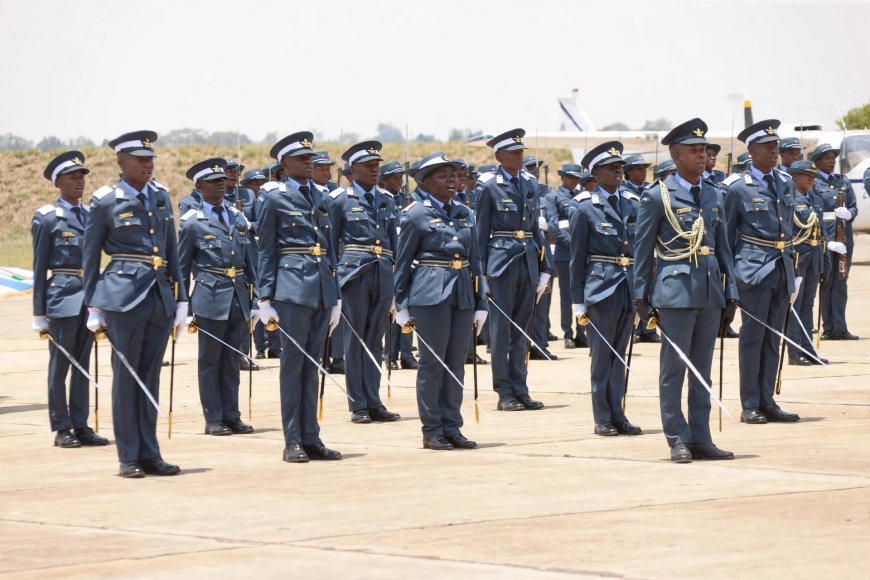
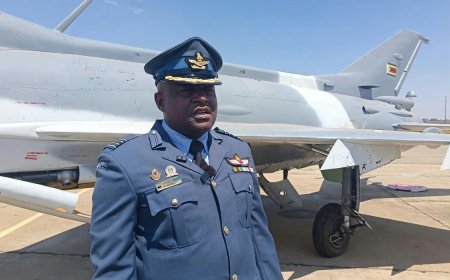
Gweru — Ten newly qualified Air Force of Zimbabwe pilots have graduated, receiving their flying wings marking the completion of an intensive military aviation training programme that Government says will contribute to strengthening the country's defence capabilities and technical expertise.
President Emmerson Mnangagwa, who is also Commander-in-Chief of the Zimbabwe Defence Forces, presided over the commissioning ceremony at Josiah Tungamirai Air Force Base, where the graduates completed Number 70 Pilot Training Course, which began on November 8, 2021.
In his address, President Mnangagwa said the achievement went beyond individual academic and professional success, representing an important addition to the country's military aviation capacity.
He said attaining officer status and qualifying as a combat pilot demanded considerable commitment and marked a significant contribution to national security.
"To earn a commission as an officer in the Zimbabwe Defence Forces and qualify as a combat pilot is a remarkable achievement at the personal level and indeed a major national milestone," he said.
The training programme started with 12 Officer Cadets, including 11 men and one woman.
The cohort was subsequently reduced after one cadet was discharged, while another student pilot and an instructor lost their lives in an aircraft accident.
The President paid tribute to the two deceased personnel and conveyed his sympathies to their families, recognising the challenges encountered during the training period.
"On behalf of Government and indeed on my own behalf, I once again express my deepest and heartfelt condolences to the families of the deceased instructor and student pilot.
"May their souls continue to rest in eternal peace," he said.
The four-year training course combined military instruction, University-level academic studies and practical aviation training, preparing the cadets for the technical, operational and leadership demands of military flying.
Its initial stage focused on military orientation, introducing the trainees to the discipline, values and conduct expected of Air Force officers.
Particular attention was given to compliance with lawful orders, maintaining composure in high-pressure situations and developing the psychological resilience required in military operations.
The cadets subsequently undertook a Bachelor of Science Honours degree in Aviation Sciences, Aircraft Systems and Operations through the Zimbabwe National Defence University.
Their academic programme included aerodynamics, navigation, aviation law, aircraft systems, human factors, radar technology and air traffic management.
The theoretical component was followed by practical instruction at Number 6 Squadron, where each trainee was required to complete 120 flying hours.
Their flight training encompassed aircraft handling, circuit procedures, instrument navigation, formation flying and aerobatics, among other essential competencies.
President Mnangagwa said incorporating University qualifications into pilot training reflected the Air Force's efforts to align military aviation education with technological advancements and the increasingly sophisticated nature of air operations.
He pointed to developments in artificial intelligence and other emerging technologies as some of the factors necessitating changes in the preparation of military pilots.
"In keeping with the ongoing technological developments, including the use of Artificial Intelligence and emerging trends in the conduct of air operations, the flying training syllabus has been amended and upgraded to a degree programme," President Mnangagwa said.
He added that Number 70 was the second group to complete the revised degree-based training programme at the School of Flying Training.
The President linked the development of specialised aviation skills to the country's broader human capital development objectives under National Development Strategy 2 and the Vision 2030 agenda.
He said the arrival of newly trained officers would strengthen the defence establishment while supporting Government's drive to build a technically capable workforce.
President Mnangagwa challenged the Air Force to continue investing in specialised skills, modern equipment and institutional capacity to keep pace with developments in military aviation.
He also commended the institution's pursuit of technology transfer arrangements with equipment suppliers, saying such partnerships could improve domestic technical capabilities and strengthen the country's ability to maintain its aviation assets.
The overhaul and maintenance facility at Josiah Tungamirai Air Force Base was identified as an important resource for developing local expertise.
"An overhaul and maintenance facility established here at Josiah Tungamirai Air Force Base, must continue to help build a pool of agile, competent, skilled young men and women," he said.
The graduation ceremony also celebrated individual excellence, with three Officer Cadets receiving major awards recognising their achievements in flying proficiency, military competence and overall performance.
Officer Cadet Daphne Kunashe Kavu received the Pink Skies Award, which is presented to the best-performing female student and carries a US$1 000 cash prize.
Kavu, the only woman among the 12 cadets who enrolled for the programme, also received the Commandant School of Flying Training's Award, accompanied by another US$1 000.
The latter recognition is awarded to the third-best student for exceptional performance in flying training and sound decision-making.
Officer Cadet Donewell Makoni was presented with the Commander Air Force of Zimbabwe's Award, together with US$1 500, for outstanding achievement in flying training.
His performance was assessed against several aviation competencies, including aircraft handling, airmanship, situational awareness, flying proficiency and the ability to make sound operational decisions while applying instructions.
The prestigious recognition, the Sword of Honour, was awarded to Officer Cadet Wilberforce Benovelence Chitungo, who emerged as the best overall student.
The award carries a US$2 000 cash prize and recognises the cadet whose overall performance reflects exceptional aviation skills, military competence, discipline and professional conduct.
Chitungo distinguished himself through his flying ability, aircraft handling, situational awareness, judgement and decision-making.
Beyond strengthening domestic capabilities, President Mnangagwa said the Air Force's participation in regional military cooperation platforms remained important in promoting operational coordination among Southern African countries.
He commended Zimbabwe's involvement in the Southern African Development Community (SADC) Standing Aviation Committee, which facilitates cooperation and interoperability between member states' air forces.
He said collaborative exercises provided opportunities for regional forces to improve their preparedness, operational planning and execution of military assignments.
The President also expressed confidence in Zimbabwe's preparations to host Exercise Blue Runde in 2027, saying the event would offer participating air forces an opportunity to exchange expertise and enhance their operational capabilities.
Zimbabwe is also expected to showcase its aviation capabilities through displays at the Africa Aerospace and Defence exhibition in South Africa.
Turning to the newly commissioned pilots, Mnangagwa said their qualifications placed them under an obligation to demonstrate high standards of conduct, competence and loyalty in executing their national responsibilities.
He challenged them to approach their assignments with professionalism, accuracy, discipline and patriotism, while providing leadership through their conduct and dedication to duty.
"The nation expect the highest standards of professionalism, precision and discipline," he said.
He further cautioned the officers against drug and substance abuse, urging them to protect their careers and maintain the standards expected of members of the country's defence forces.
"The wings conferred on you are the fortress of our nation," Mnangagwa said.
He congratulated the award-winning cadets while reminding the other graduates that success in military service was measured not only through individual distinctions but also through collective commitment and teamwork.
"The military profession and tradition are about teamwork and unity; there are no losers or winners," he said.
The President also acknowledged the contribution of the Ministry of Defence, the Zimbabwe Defence Forces command, Air Force leadership, instructors, training personnel and the families who supported the cadets throughout their studies.
He urged the newly commissioned pilots to translate their training into dedicated service and wished them successful careers in the defence of Zimbabwe.