
Mater Pathology Shake-Up Puts 430 Queensland Jobs at Risk
By Harry Taruva — Together Queensland has urged Health Minister Tim Nicholls to intervene in Mater's pathology outsourcing plans, warning that around 430 positions face uncertainty and workers have inadequate time to explore redeployment before Christmas.
 Delicious Mathuthu
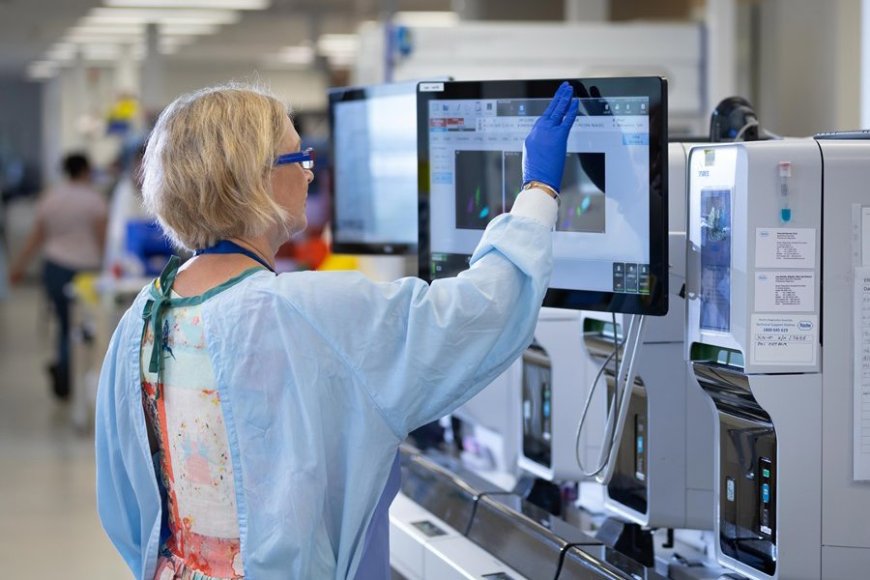
Brisbane — Hundreds of pathology workers at Mater hospitals in Queensland face possible job losses weeks before Christmas following a decision to outsource laboratory services, prompting a union to demand urgent government intervention over what it describes as a rushed redundancy process.
Around 430 positions are affected by Mater's plan to transfer pathology services at its Brisbane and Springfield hospitals to external providers over approximately 18 months.
The decision has triggered a dispute with Together Queensland, which represents affected workers and has formally challenged the consultation and redeployment arrangements under the Mater Health Professionals Enterprise Agreement 2026.
The union says employees in the first phase of the transition have been given until Friday, November 6, to express interest in a limited number of retained positions, despite the scale of the restructuring.
Consultation is scheduled to last three weeks, while the redeployment window is limited to seven days.
Employment outcomes for the first group of affected workers are expected between December 1 and 4.
Together Queensland has written to Health Minister, Tim Nicholls, seeking urgent intervention, arguing that the compressed timelines leave employees with insufficient opportunity to explore alternatives to redundancy.
Branch Secretary, Alex Scott, said the announcement had placed additional pressure on families already struggling with rising living costs and higher borrowing expenses.
“Families are already struggling with the cost of living and this week they've been hit with another interest rate rise.
"For hundreds of Mater workers, that comes on top of the prospect of losing their livelihoods just weeks before Christmas,” Scott said.
He said the affected workforce included highly skilled scientists, technicians, specimen collectors and support staff, many of whom had dedicated years to providing pathology services.
“They were told on Monday their jobs were at risk and by Friday they have to decide whether to put their hand up for one of the limited roles being retained.
“Three weeks of consultation and a seven-day redeployment window for a change affecting 430 positions is not a genuine opportunity to explore alternatives, and it leaves workers counting down to redundancy," he said.
Under the proposed changes, most Mater Pathology services will move to private provider Sullivan Nicolaides Pathology, while Special Chemistry services will transfer to Pathology Queensland.
The union's central concern is that pathology work will continue under the new arrangements without a clear employment pathway for the workers currently performing it.
Scott said Mater had not identified any arrangement through which affected employees could secure positions with Sullivan Nicolaides Pathology.
“The work isn't disappearing. The same tests will still be done for the same patients, but the people who have been doing that work are facing redundancy without a clear pathway into the jobs that will continue to exist,” he said.
He argued that the transition should recognise employees' existing skills, experience and service rather than expose them to redundancy while their work continues under external providers.
Together Queensland has asked Mater to extend the November 6 expression-of-interest deadline, reconsider the consultation and redeployment periods, and suspend final redundancy decisions until available employment alternatives have been properly examined.
The union has also requested urgent discussions with Mater over potential employment opportunities for affected staff.
It formally lodged a dispute under the enterprise agreement and requested a substantive response from the hospital operator by 5pm on Thursday, November 5.
The dispute has also drawn attention to the Queensland Government's role as a funder of Mater's public hospital services.
Scott said the government should establish how the outsourcing arrangement would affect public patients and the experienced workforce currently delivering pathology services.
“Queenslanders fund Mater's public hospital services and the Government has every right to ask what this decision means for public patients and the experienced workforce delivering that care,” he said.
In its letter to Nicholls, the union proposed several interventions, including asking Mater to delay first-phase terminations until proper consultation and redeployment processes had been completed.
It also wants Pathology Queensland to consider employing affected workers and the government to use its position as a funder to facilitate employment opportunities with Sullivan Nicolaides.
Another proposal is for the government to consider whether public patient pathology services at Mater hospitals should instead be provided by Pathology Queensland.
The union has additionally sought assurances that patients using public hospital services will not face new out-of-pocket pathology costs because of the changes.
Scott said there was still an opportunity for Mater and the government to develop a transition arrangement that protected employment wherever possible.
“Workers deserve more than a few days to make decisions that could change their lives.
“No one should be rushed towards redundancy weeks before Christmas when the work they do is still needed," he said.