Sai Mart Workers Pay the Price: US$8,000 Stock Loss Hits Lowest-Paid Staff
 Dumisani Ndlovu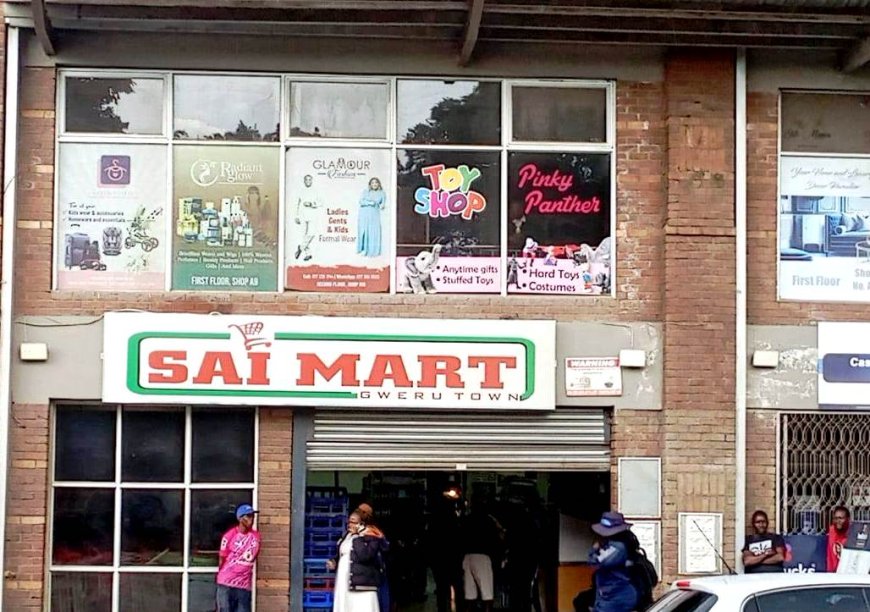
Employees at Sai Mart in Gweru allege they are being paid below the latest sector minimum wage while also facing salary deductions to cover an US$8,000 stock shortfall, raising concerns about labour practices following the retailer’s takeover of former Choppies Zimbabwe stores.
When Sai Mart began replacing the signage of Choppies Zimbabwe outlets across Zimbabwe, workers say hoped the new brand would usher in stability after a turbulent period in the retail sector.
The chain, owned by businessman and Deputy Minister of Industry and Commerce Raj Modi, acquired the former Choppies stores nationwide, retaining about 1,100 employees while rolling out a nationwide rebranding campaign.
But for some of the lowest-paid workers at the company’s Gweru branch, the transition has instead brought renewed anxiety about wages and deductions that they say are pushing already modest salaries below survival level.
Under the March 2024 Collective Bargaining Agreement issued by the National Employment Council for the Commercial Sectors of Zimbabwe (NECCSZ), the minimum wage for the lowest-paid Grade 1(a) worker was set at US$295.
However, a subsequent agreement for the retail and wholesalers sub-sector, effective from 1 July to 31 December 2025, raised the minimum wage for the same grade to US$312, with corresponding increases across other grades.
Workers at the Gweru branch allege that the updated wage structure has not yet been implemented.
“We are still being paid using the 2024 rate of US$295,” said one junior employee who requested anonymity for fear of victimisation. “According to the 2025 agreement, the minimum should be US$312. That difference may look small on paper, but for us it affects transport, groceries and school expenses.”
For employees living paycheck to paycheck, the US$17 gap is significant in a country where the cost of living continues to rise.
Paying for stock losses
Beyond the wage dispute lies another grievance that workers say has deepened frustration on the shop floor.
Employees allege that management has been deducting money from their salaries to recover losses linked to an US$8,000 stock shortfall recorded at the branch. Individual deductions reportedly reach up to US$40 per employee.
“At month-end we are told there is a stock shortage and everyone in the department must contribute,” said a shop attendant. “In January we were made to sign forms agreeing to deductions, and in February many of us saw a big portion of our salaries taken.”
For a worker earning US$295 instead of the updated US$312, a US$40 deduction represents more than 13 percent of monthly income.
“That is money meant for rent or school fees,” another employee said. “It feels like collective punishment. We are treated as if we are all suspects.”
Workers further allege that deductions are sometimes applied to entire teams even when some staff members were not on duty at the time of the alleged losses.
“How can someone who was on leave be asked to pay for missing stock?” asked a till operator. “We are not saying losses should be ignored, but there should be proper investigations and proof before people’s salaries are cut.”
The dispute unfolds as Sai Mart continues expanding its presence in Zimbabwe’s formal retail sector following its acquisition of the former Choppies Zimbabwe network.
The takeover was widely viewed as a vote of confidence in the country’s supermarket industry at a time when formal retailers are grappling with shrinking margins and intense competition from informal traders.
A senior official familiar with operations at the Gweru branch, who spoke on condition of anonymity, said branch managers face strong pressure to control inventory losses as the company consolidates its newly acquired outlets.
“There is a strong emphasis on reducing shrinkage,” the official said. “But any deductions must comply with labour regulations and the agreed wage framework. If workers feel unfairly treated, morale will inevitably suffer.”
Some workers also claim that during internal discussions, certain supervisors allegedly suggested that complaints about the deductions would have little effect because the company owner holds a government position.
The remarks could not be independently verified.
Contacted for comment, Sai Mart Human Resources Manager Admire Ndlovu said he was not aware of the allegations and referred questions to the Gweru branch management.
Further comment was not available at the time of publication.
Retail shrinkage — losses caused by shoplifting, internal theft, breakages and administrative errors — is a challenge faced by supermarkets worldwide. Employers often argue that strict controls are necessary to protect already thin profit margins.
Yet for workers at the bottom of the pay scale, the issue is less about balance sheets and more about survival.
“If the minimum wage is US$312, pay us that first,” said one employee. “Then deal with stock losses properly. Don’t shift the burden onto the lowest-paid workers.”
As Sai Mart banners continue to rise across Zimbabwe’s towns and cities, the situation in Gweru highlights a broader dilemma in the retail sector — in the push for efficiency and growth, who ultimately bears the cost?