Hope Rises from the Dust as Mbirimi Donation Transforms Mlanke School Dream
Mlanke Primary School in Ward 21, Shurugwi South, was born out of community desperation to protect children from walking nearly 14 kilometres to Dorset Primary. With villagers moulding bricks and erecting makeshift structures, the school has struggled with inadequate infrastructure.
 Dumisani Ndlovu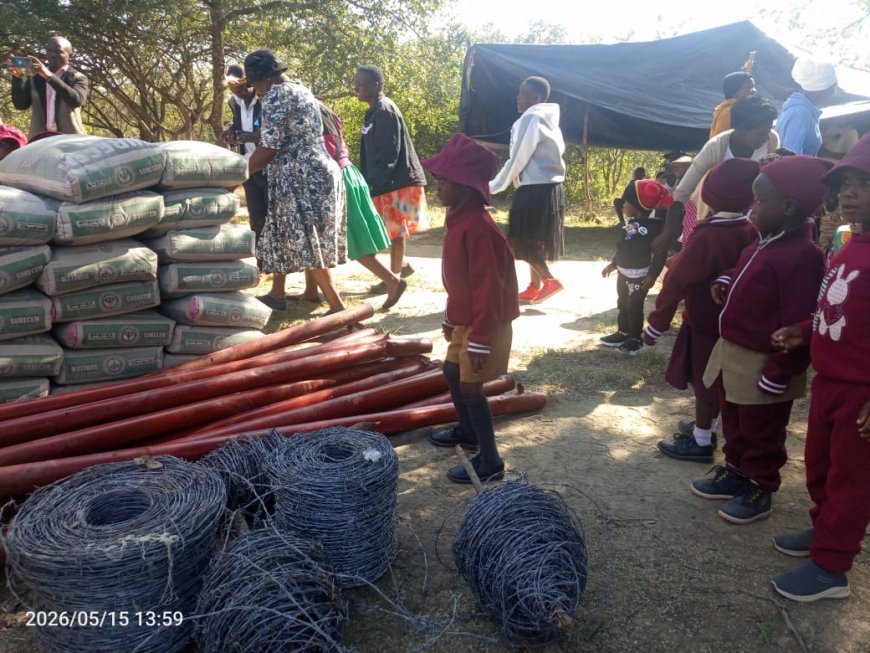
Shurugwi - Deep in the remote stretches of Dorset Resettlement Area in Ward 21, where dusty footpaths cut across rugged terrain and young children once walked nearly 14 kilometres in search of education, a quiet transformation is beginning to take shape.
For years, villagers in Mlanke watched generations of children leave home before sunrise, trekking dangerous routes to Dorset Primary School through isolated bushland reportedly inhabited by wild animals.
For many families, the journey was not only exhausting for young learners but also a daily source of fear and anxiety.
Today, however, hope is slowly replacing uncertainty.
The catalyst behind that hope is local businessman and farmer Rodwell Mbirimi, whose recent donation of cement, fencing materials and a state-of-the-art industrial gas stove has breathed new life into efforts to construct and regularise Mlanke Primary School.
To outsiders, the donation may appear modest.
But to villagers in Mlanke, it represents something far greater, the beginning of a future they have fought for since 2017.
“What Rodwell Mbirimi has done is more than just a donation,” said School Development Committee chairperson Mike Dhandinda.
“He has paved the way for the construction and growth of this school. This is only the tip of the iceberg," he said.
Established through community efforts nearly a decade ago, Mlanke Primary School emerged out of desperation after parents realised young children could no longer continue risking their lives walking long distances to school each day.
With no formal infrastructure, villagers moulded farm bricks with their own hands and erected temporary learning structures to ensure children could at least begin learning closer to home. The conditions however remain harsh.
Nearly 40 pupils and two teachers currently operate without proper classroom blocks, teachers’ houses, adequate toilets or reliable water supplies.
The nearest borehole is almost two kilometres away, forcing both pupils and teachers to endure difficult conditions daily.
Yet despite the challenges, the determination of the community has never faded.
Parents continue contributing labour, moulding bricks and mobilising scarce resources in the hope that one day Mlanke Primary School will become a fully-fledged rural institution capable of serving hundreds of learners.
Mbirimi’s intervention has now injected fresh momentum into that dream.
Community leaders say his support has inspired renewed confidence among villagers and strengthened efforts to attract additional development partners, corporates and philanthropists to the project.
The School Development Committee leading the initiative consists of Chairperson Mike Dhandinda, Vice Chairperson Shyleen Zulu, Secretary Sibusisiwe Moyo, Treasurer Stella Muhle, Committee Member Brighton Chese and Advisor Siphosami Ndlovu.
Meanwhile, a development committee comprising Tafara Mubereki, Happious Anenge, Shelter Chatugwa and Josphen Mahari is coordinating broader mobilisation efforts aimed at accelerating infrastructure development and stakeholder engagement.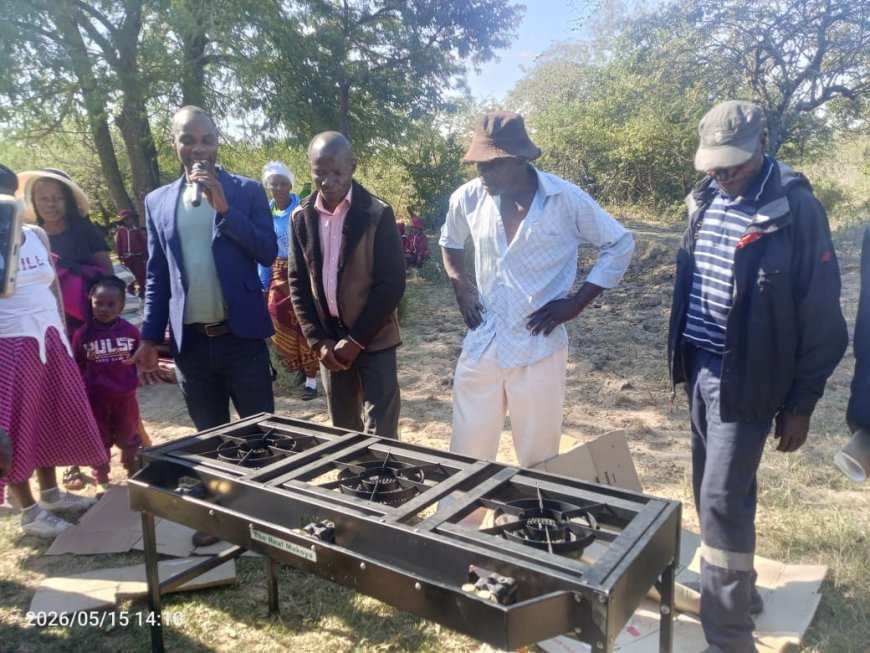 Businessman and farmer Rodwell Mbirimi hands over an industrial gas stove to the school committe members and community leaders during the inaugural Mlanke resource mobilisation event .
According to Dhandinda, the committees are now intensifying efforts to secure technical support and additional resources for classroom construction, teachers’ accommodation, ablution facilities and water projects.
“Our vision is to transform this school into a fully operational institution that can serve more than 500 learners from Grade Zero to Grade Seven.
“We are engaging Government engineers and finalising project proposals because we want this school to meet all required standards,” he said.
Currently, the school does not meet Ministry of Primary and Secondary Education requirements to operate as a registered examination centre.
Without infrastructure expansion, future Grade Seven pupils may still be forced to travel long distances to sit for national examinations.
School head, Loice Gumbo, said the community’s resilience had kept the dream alive.
“Parents and villagers have continued moulding bricks and using local resources despite the hardships.
“Community participation remains critical in improving access to education in remote areas like ours,” she said.
Development advocate, Tafara Mubereki, believes the project should serve as a wake-up call for corporates, churches, mining companies, civic organisations and development agencies to invest more aggressively in rural education.
“Mbirimi has demonstrated that development begins when individuals and businesses decide to become part of the solution. He has set the pace," he said.
Mubereki challenged stakeholders to contribute towards classroom blocks, boreholes, furniture and other critical infrastructure needed to improve learning conditions for rural children.
He said the Mlanke project aligns with the national vision of ensuring that “no one and no place is left behind.”
For villagers, however, the project is about more than policy slogans or infrastructure targets.
It is about giving children a chance to dream without walking for hours through dangerous terrain just to sit in a classroom.
And for many in Mlanke, Rodwell Mbirimi’s donation represents the moment that dream finally began to feel possible.
Mbirimi is no stranger to community development initiatives.
Over the years, he has supported schools and rural communities through drilling and installing boreholes, erecting JoJo water tanks, introducing Starlink internet connectivity and distributing sanitary pads aimed at promoting girl-child education and improving learning conditions in disadvantaged communities.
Now, in the quiet rural community of Mlanke, villagers hope his latest intervention will become the foundation upon which a brighter future is built.