
Feminists Call for Justice and Inclusion in Zimbabwe’s Lithium Growth
Feminist advocates and grassroots leaders in Bikita call for a gender-responsive approach to the lithium mining boom, demanding land rights protection and a just energy transition.
 Harry
Harry
By Own Correspondent
Harare - As the global demand for critical minerals surges to power the clean energy transition, feminist advocates and grassroots leaders in Zimbabwe have raised concerns regarding the inclusion of women in the burgeoning extractive sector.
Across the country’s mineral-rich regions, women are calling for a fundamental shift in how extractive industries operate, demanding justice, equity and meaningful participation in decision-making processes.
This comes as Zimbabwe's Second Republic continues to drive the mining sector as a key pillar of the National Development Strategy (NDS1), with lithium being a central component of the country’s economic growth.
For many women living in mineral-rich communities like Bikita, the threat of losing land and livelihoods however remains a daily reality.
In the Hanyanya village of Bikita, the Vatombe community has highlighted the environmental impact of increased exploration.
Gamuchirai Munesi, the Acting Village Head of the Vatombe community, described the lithium boom as a challenge to traditional heritage.
“Lithium mining has become a curse. It threatens our mountains, our water sources and the land that has sustained the Vatombe people for generations,” Munesi said.
She said the community remains determined to engage authorities to ensure their legal rights are protected.
“Our struggle is also about legal empowerment and ensuring our concerns are addressed through the appropriate authorities,” she said.
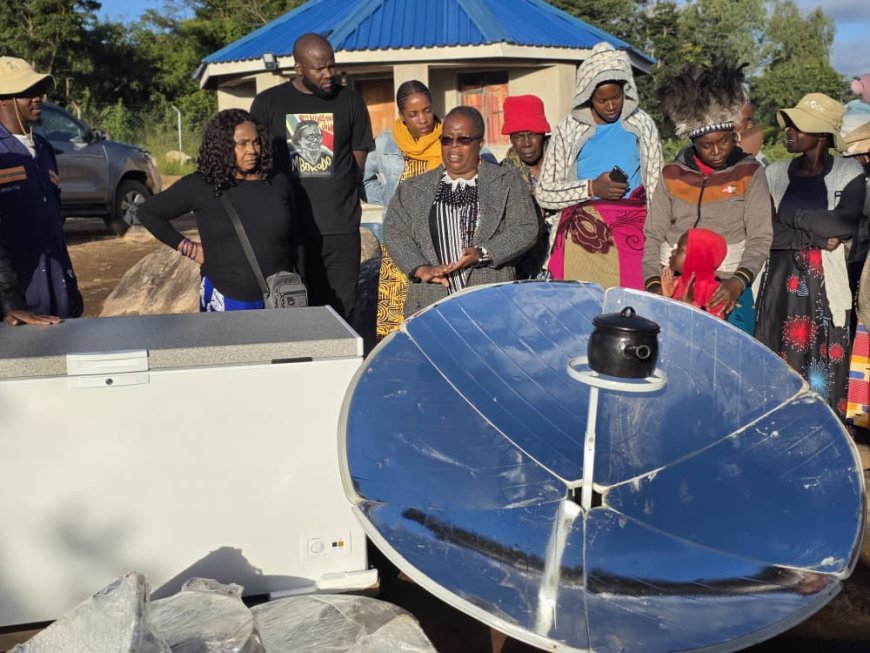
These sentiments were echoed during a recent Story Circle event in Hanyanya, which brought together grassroots women and climate justice activists.
The event was organised by SHINE Collab, a feminist energy justice network led by Executive Director Dr Mela Chiponda.
Dr Chiponda, a leading eco-feminist scholar, noted that the transition to clean energy must be inclusive to avoid replicating historical imbalances.
“The transition to clean energy cannot be built on the same extractive logic that has historically marginalised women,” Dr Chiponda said.
“This moment demands that we rethink power, who holds it, who benefits and how women, particularly at the grassroots, can shape these systems,” she said.
She also argued that current models of mineral extraction often see resources extracted for global markets while local communities, especially women, bear the social and environmental costs.
These include insecure land rights and heightened risks of gender-based violence.
Drawing lessons from renewable energy projects in Bikita, Dr Chiponda highlighted the central role women play in driving adoption at the community level.
“It is only fair that their views and indigenous knowledge are integrated into the solutions we pursue.
"We cannot talk about sustainability without justice.Women are not just victims of these systems, they are leaders, innovators and knowledge holders.
"Their voices must be recognised, resourced, and respected,” she said.
The calls for justice align with recent international observations with the United Nations University Institute for Water, Environment and Health (UNU-INWEH) Director, Kaveh Madani, recently noted that while technological disruptions are necessary, the unintended consequences must be addressed.
“Technological disruptions are necessary, but we must address their unintended consequences.
"A transition cannot be called green, sustainable, or just if it shifts environmental harm from the rich to the poor, or from one region to another,” Madani said.
As Zimbabwe continues to attract global investment for its vast lithium and cobalt reserves, essential for electric vehicles and battery technologies, advocates say the path forward must be both green and gender-responsive.
“A truly just transition is one where African women are not an afterthought,” Dr Chiponda said adding that, “they must be at the centre, shaping the future, not merely surviving its consequences.”