Zimbabwe Marks May Day With Renewed Push for Workers’ Protection and Inclusive Growth
Government has pledged stronger labour protections, wage reforms and workplace safety as Zimbabwe celebrates May Day in Gweru.
 Delicious Mathuthu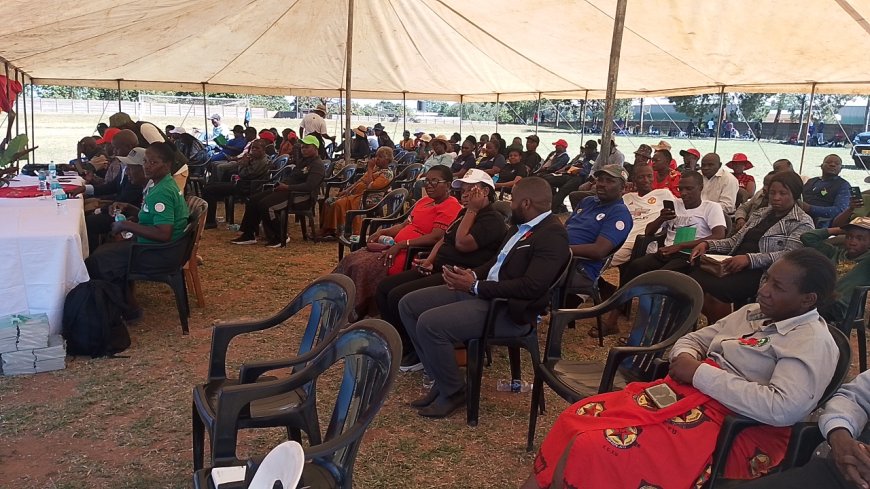
Gweru - Zimbabwe’s government has pledged to strengthen labour protections, improve wages and expand social security coverage as the country marked May Day celebrations in the Midlands city of Gweru on Thursday.
Speaking on behalf of Public Service, Labour and Social Welfare Minister, Honourable Edgar Moyo, Midlands Provincial Labour Officer, Lackson Maburutse, told workers gathered at Mkoba Stadium that the government remained committed to safeguarding the welfare of employees amid ongoing economic recovery efforts.
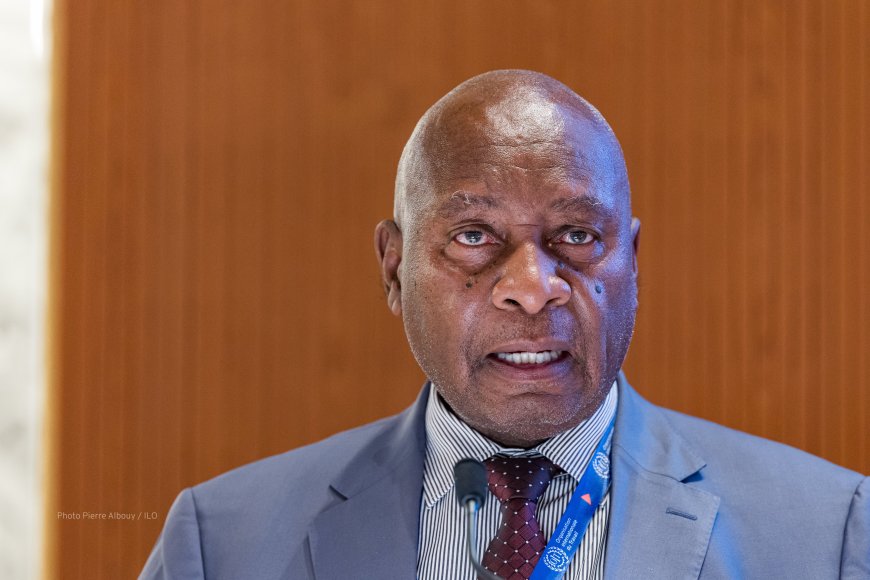 Labour Minister, Hon. Edgar Moyo. Photo credit: Pierre Albouy/ILO
“It is not merely a public holiday, it is a remembrance and a recommitment of our gallant workers,” Maburutse said.
“It is a day that belongs entirely and unreservedly to the men and women who, in their quiet and tireless dignity, hold this nation together," he said.
He noted that workers remained central to national development, highlighting the government’s National Development Strategy 2 (NDS2), which runs from 2026 to 2030, as a key framework for inclusive economic growth.
“Inclusive growth can only be achieved when the workforce is protected, remunerated and empowered to participate meaningfully in social dialogue,” he said.
Maburutse pointed to recent economic data suggesting recovery momentum, noting that job losses were expected to decline as growth continues.
“This recovery trajectory is expected to continue and the Government is doing everything in its power to sustain and accelerate the recovery,” he said.
He added that the operationalisation of the National Employment Policy would help coordinate government, business and labour stakeholders to expand job creation.
On wages, Maburutse said collective bargaining mechanisms had yielded tangible results over the past year.
“In the past twelve months alone, seventeen National Employment Councils concluded collective bargaining agreements with meaningful wage adjustments for workers,” he said.
He stressed that trade unions play a critical role in negotiating improved conditions.
“It is the Trade Unions that represent the workers… who must negotiate for better working conditions and welfare of the employees,” he said.
The government is also pursuing reforms in the public sector, including efforts to establish a unified salary structure aimed at improving industrial harmony.
“The ultimate aim is to improve the bargaining system and to come up with a single spine salary structure,” Maburutse said.
Beyond wages, he called for greater emphasis on non-monetary benefits, including workplace safety, housing and social support systems.
“No worker should leave home for work and not come back home alive,” he said.
Official figures cited in the speech showed that in 2025 authorities issued 847 improvement notices and 143 prohibition orders following workplace inspections, while the National Social Security Authority handled 12,400 injury compensation claims.
“These are real statistics reflecting our current occupational and safety gaps,” Maburutse said, “behind every number is a family broken by loss,” he added.
He said the government had adopted a “Zero Harm” approach and was finalising new occupational safety legislation to tighten enforcement and penalties.
Turning to child labour, Maburutse described it as a serious violation of rights and pledged stronger enforcement.
“It is a violation of human rights, a theft of childhood and a robbery of education,” he said.
Labour inspectors carried out more than 2,300 inspections targeting child labour in the past year, 2025, uncovering cases mainly in informal sectors and agriculture.
“Any employer found exploiting a child in their workforce will face the full wrath of the law,” he said.
Maburutse also highlighted progress in social protection, noting that over 85 percent of formal sector workers are now covered, while efforts are underway to extend benefits to those in informal employment.
“Millions of Zimbabweans who earn their livelihoods outside formal employment deserve the same protection,” he said.
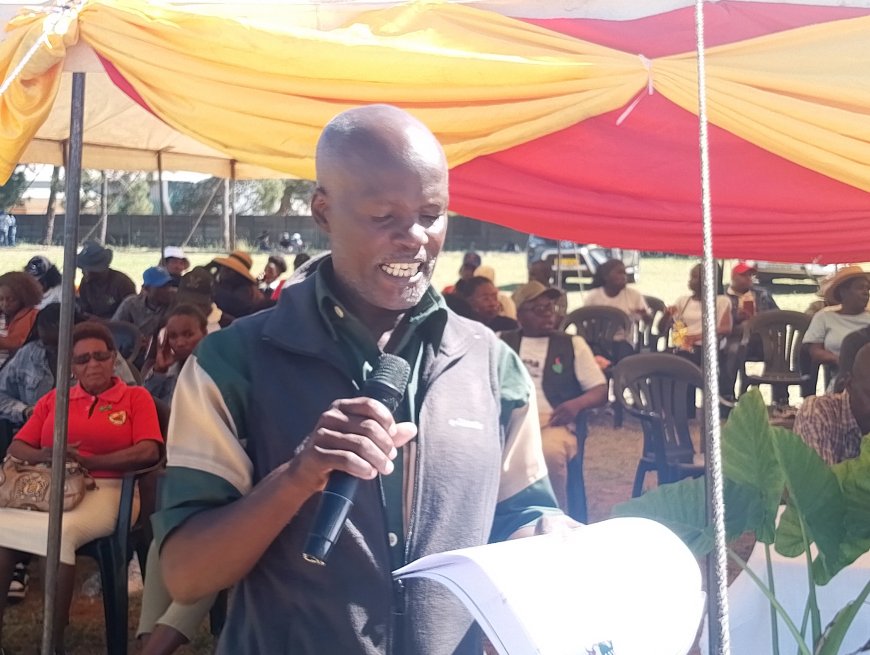 Midlands Provincial Labour Officer Lackson Maburutse
He reaffirmed the importance of the Tripartite Negotiating Forum, which brings together government, business and labour to address socio-economic challenges.
“Our major target is the conclusion of the social contract,” Maburutse said.
Looking ahead, he said Zimbabwe’s Vision 2030 agenda would focus on job creation through industrialisation, agriculture, mining and the digital economy.
“Every investment attracted, every factory opened, every farm developed, is another act of job creation,” he said.