Rising Public Debt Stifling Zimbabwe’s Infrastructure and Social Services, Experts Warn
Local government experts and civil society leaders at the Midlands Provincial Public Debt Accountability Indaba have called for urgent reforms, citing a "negative correlation" between Zimbabwe’s growing multi-billion dollar debt and the collapse of essential public infrastructure.
 Delicious Mathuthu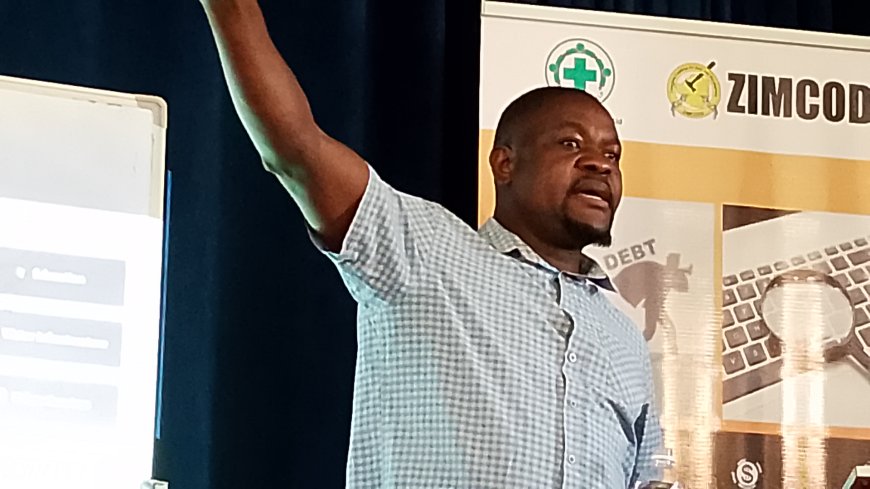
Gweru - Zimbabwe’s escalating public debt, now estimated between US$23 billion and US$25 billion, is creating a "development deficit" that has left urban infrastructure on the brink of collapse and essential social services underfunded, experts have warned.
Speaking at the Midlands Provincial Public Debt Accountability Indaba, held under Zimbabwe Coalition on Debt and Development (ZIMCODD) "Debt Justice Now" campaign, local government expert Dr. Vincent Chakunda told delegates that the country’s debt burden has reached a critical threshold where it directly undermines the state’s ability to provide basic rights such as healthcare and clean water.
The high-level engagement brought together officials from local authorities in the Midlands province including Gweru, Kwekwe, Shurugwi, Redcliff among others.
A senior mber of ZANU PF in the central committee, government departments and civil society organisations, including residents associations were part of the Indaba.
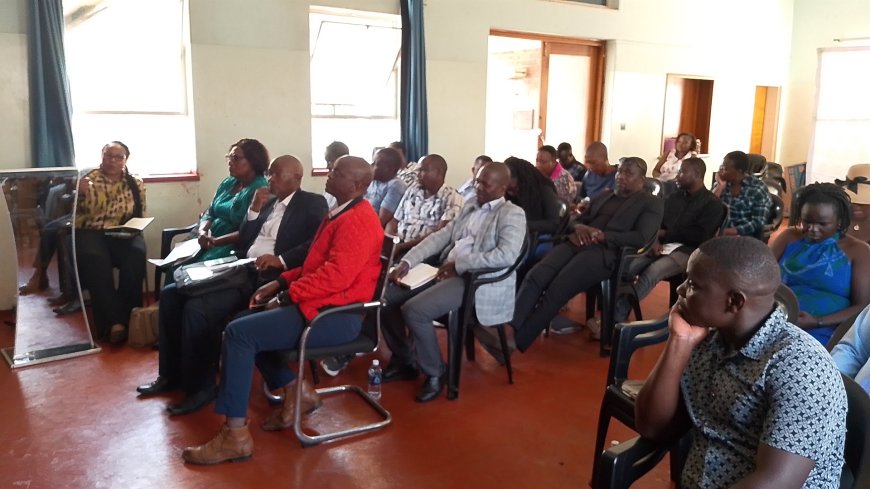 Some of the delegates part of the Public Debt Accountability Indaba.
"What it means in scientific terms is that there is a negative correlation between a growing debt and the resources available to support infrastructure development," Dr. Chakunda said.
"The key sectors mostly affected now include health, road infrastructure, water provision and other public services. If you want to see the state of the health system in Zimbabwe, get sick and see, you are forced to pump out money to private doctors because public hospitals are not performing," he said.
The Rebasing Debate
The indaba also highlighted a recent "rebasing" of Zimbabwe’s Gross Domestic Product (GDP), which saw official figures jump to approximately US$45 billion to US$53 billion from around US$23 billion, after accounting for the massive informal sector.
While the government and international partners like the International Monetary Fund (IMF) suggest this provides a more accurate picture of the economy, Dr. Chakunda warned that it could be a double-edged sword.
"Some now fear that this rebasing could be used as a basis for borrowing more in terms of debt-to-GDP ratio," he noted in reference to the Debt Management Act laws, adding that despite the larger GDP figure, actual revenue collection by the Zimbabwe Revenue Authority (ZIMRA) remains subdued, hardly surpassing US$3 billion annually.
Infrastructure and "Guerrilla Planning"
The debt crisis is most visible in Zimbabwe's urban settlements.
Delegates heard that while the population has grown exponentially, public infrastructure has remained stagnant or decayed.
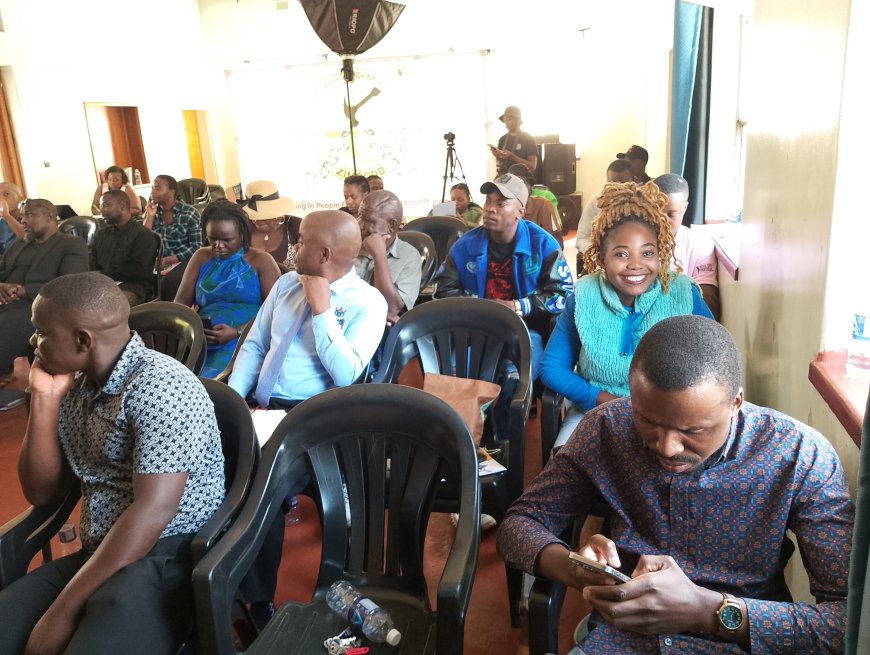 Some delegates at the Indaba.
Dr. Chakunda pointed to the emergence of "guerrilla planning" in new suburbs like Hopely in Harare, Woodlands Park and Mkoba 21 in Gweru where thousands of houses are built without corresponding infrastructure like schools, hospitals or sewer treatment systems.
"Common sense tells you that you can’t have 23,000 housing units without planning for a hospital. This becomes a technical burden for city councils to fix later," he said referring to recent studies done in Hopely.
He further noted that the collapse of the Public Sector Investment Program (PSIP), which once provided concessional loans to councils for capital projects, like off-site infrastructure expansion, has left local authorities unable to recapitalise.
Resource-Backed Loans and Transparency
The discussion also turned to the rise of resource-backed loans, particularly from Chinese creditors.
Unlike traditional Bretton Woods institutions, these arrangements often involve the exchange of natural resources or mining rights for infrastructure projects, Dr. Chakunda said.
"The Chinese are smarter; they release billions as investment capital targeting key areas, but in exchange for, perhaps, a place to mine," Dr. Chakunda explained.
"Government finds it difficult to account for these as they often do not recognise such arrangements in the same way as traditional debt," he said.
A Path to Recovery
The indaba called for a radical restructuring of parastatals and the revival of local government income-generating enterprises.
Dr. Chakunda noted that in the 1970s, parastatals contributed 40% to the national GDP, a figure that has plummeted to less than 5% today despite their numbers nearly doubling.
To address the current crisis, stakeholders recommended strengthening parliamentary oversight, improving debt transparency and ensuring that any new borrowing is funneled exclusively into "productive sectors" that can generate the revenue needed for repayment.
"Debt is not inherently bad," Dr. Chakunda said.
"The challenge is that a lot of loans are not channeled toward the productive sector. We must use money to generate more money so that those loans can be paid back without suffocating the taxpayer," he said.