AG Mabiza Under Fire as Legal Storm Over Constitution Bill Reshapes Succession Debate
Zimbabwe activist Rutendo Matinyarare accuses Attorney General Virginia Mabiza of misadvising President Mnangagwa on Constitution Amendment Bill No. 3, sparking a legal and political storm that threatens governance, succession dynamics, and regional scrutiny.
 Dumisani Ndlovu
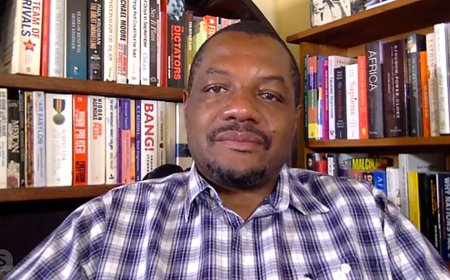
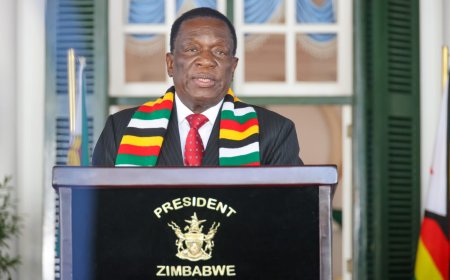
HARARE — A fierce legal and political storm is brewing within Zimbabwe’s corridors of power after outspoken political activist Rutendo Matinyarare launched a blistering attack on Attorney General Virginia Mabiza, accusing her of steering President Emmerson Mnangagwa into a constitutional misstep that could reverberate far beyond the current term.
At the centre of the dispute lies a controversial constitutional amendment effort, referred to as CAB3, which Matinyarare argues is fatally flawed from its inception. His claim is stark: the Attorney General allegedly misadvised that Cabinet holds the authority to initiate a constitutional amendment bill — a position he insists is legally untenable.
In a sharply worded critique, Matinyarare described the guidance as not merely erroneous, but dangerously misleading, warning that it has plunged the government into what he termed a “constitutional grey zone” with far-reaching implications.
He further alleged that Mabiza is now attempting to strong-arm Cabinet into endorsing the disputed bill, despite its alleged inconsistencies with the supreme law. According to him, such pressure undermines constitutional governance and places public officials in a precarious position.
“No arm of government is compelled to follow directives that violate the Constitution,” he argued, framing the issue as a test of institutional integrity rather than mere political disagreement.
The activist’s remarks escalate beyond legal critique into political consequence. He contends that the controversy has inadvertently weakened Mnangagwa’s standing while elevating Vice President Constantino Chiwenga as a more viable contender in the unfolding succession discourse toward the 2028–2033 term.
In perhaps his most stinging rebuke, Matinyarare suggested that the fallout has drawn unwanted regional scrutiny, claiming that external actors are now compelled to intervene diplomatically due to what he characterizes as a fundamental misreading of constitutional procedure at the highest level.
He also accused Mabiza of abandoning the advisory restraint expected of her office, alleging that instead of recalibrating her position or consulting broader legal expertise, she has resorted to intimidation tactics against senior government officials.
“An advisor derives authority from sound counsel, not coercion,” he said, questioning the legitimacy of her posture within the executive hierarchy.

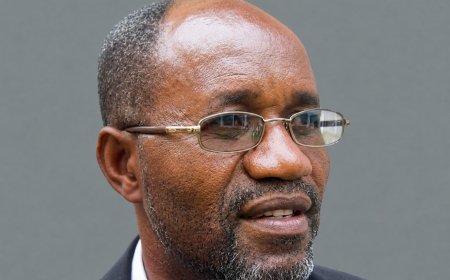
Attorney General Virginia Mabiza
Matinyarare painted a broader picture of an administration increasingly detached from its earlier image of consultative governance, warning that what he described as rising “arrogance and insularity” could erode both public trust and internal cohesion.
While the government has yet to formally respond to the allegations, the episode underscores deepening tensions within Zimbabwe’s political and legal architecture — where questions of constitutional fidelity are now colliding with succession politics, and where a single legal interpretation may be shaping the trajectory of national leadership.
As the debate intensifies, the CAB3 controversy is no longer just a legal matter — it has become a defining political fault line.