Baloyi Post Sparks Debate Over Mnangagwa’s Rapid Military Rise
Minnie Baloyi’s viral post on her 20‑year military career has ignited debate over fairness in promotions, as comparisons emerge with Sean Mnangagwa’s rapid rise to Lieutenant Colonel. The discussion reflects wider concerns about meritocracy and accountability in Zimbabwe’s institutions.
 Dumisani Ndlovu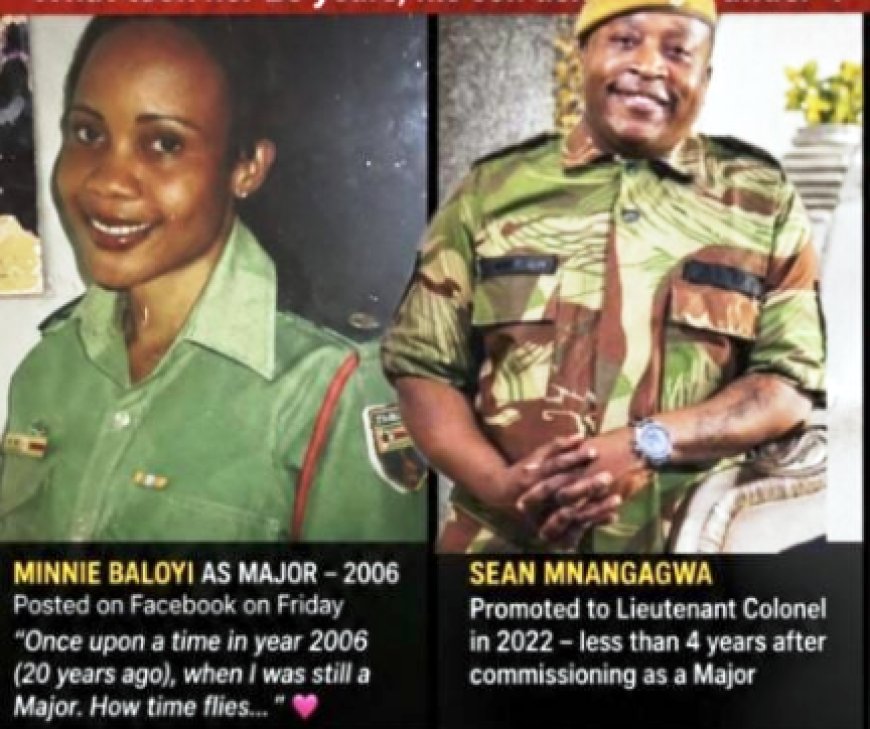
Harare - A viral social media post by Minnie Baloyi has ignited fresh debate over promotion practices within Zimbabwe’s military, with comparisons drawn to the rapid rise of Sean Mnangagwa.
Baloyi shared a throwback image of herself as a Major in 2006, describing it as a “priceless” memory marking her long service.
However, the post quickly took on a different tone online, as users contrasted her two-decade career progression with reports that Mnangagwa attained the rank of Lieutenant Colonel in under four years.
The comparison has fuelled widespread discussion on social media, with some users questioning disparities in promotion timelines within the ranks.
One commentator, Sandile Makeba, writing on X (formerly Twitter) questioned the promotion timelines.
“I don't understand how it took four years for Sean Mnangagwa to be promoted to Lieutenant Colonel, while Minnie Baloyi had to spend 20 years to reach the same rank… Some spend decades in the barracks climbing the ladder, while others seem to have a VIP elevator,” said Makeba.
Others echoed similar sentiments, suggesting the contrast raises concerns about fairness, merit and potential influence in military advancement.
However, some voices defended the traditional structure of military promotions, noting that progression from Major to Colonel typically spans many years and is governed by established procedures, including experience, performance and available positions.
The Zimbabwe Defence Forces has not issued any public comment regarding the comparisons or the broader debate.
Analysts say the discussion reflects growing public scrutiny of state institutions, particularly around transparency and meritocracy.
What began as a personal reflection on a long military career has since evolved into a broader national conversation about power, privilege, and how advancement is determined within key institutions.
The issue also comes amid heightened political discourse in Zimbabwe, where questions of governance and accountability continue to dominate public debate.