Chaos Erupts at Zimbabwe Constitutional Amendment Bill No. 3 Hearings, Lawyer Doug Coltart Beaten, Journalists Harassed
Public hearings on Zimbabwe’s controversial Constitutional Amendment Bill No. 3 descended into violence yesterday at Harare’s City Sports Centre, with human rights lawyer Doug Coltart assaulted and journalists reportedly trapped and ordered to delete footage. MISA Zimbabwe condemns the intimidation, as nationwide consultations on the bill—widely seen as extending presidential terms and consolidating executive power—face accusations of bias and suppression.
 Delicious Mathuthu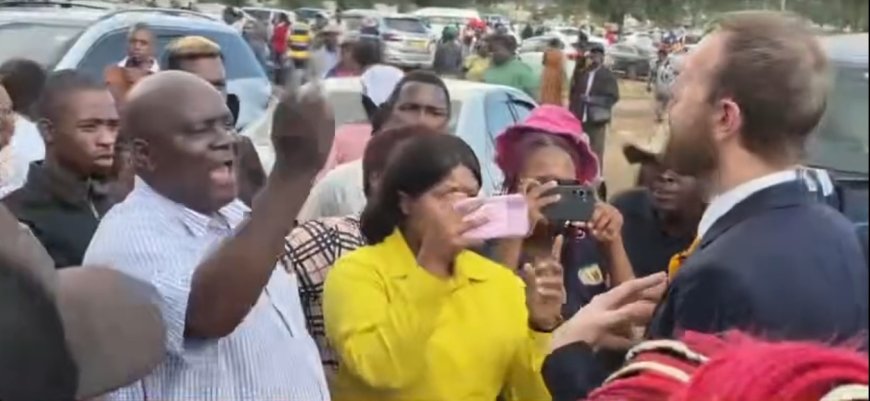
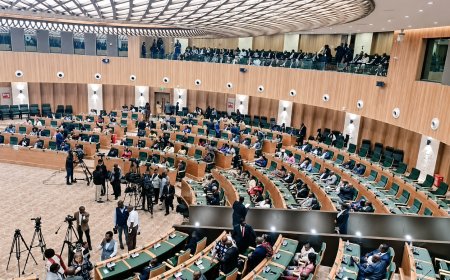
Harare - The City Sports Centre, a venue meant for orderly public debate, descended into pandemonium on Tuesday, March 31, as thousands gathered for the second day of Parliamentary hearings on the proposed Constitution of Zimbabwe Amendment (No. 3) Bill.
What began as a constitutionally mandated consultation quickly unravelled into scenes of intimidation and physical confrontation, with suspected ZANU-PF supporters disrupting proceedings, heckling opposition figures and targeting critics of the proposed changes.
Human rights lawyer Douglas Coltart, son of Bulawayo Mayor David Coltart, found himself at the centre of the melee while attempting to leave the venue.
Eyewitness accounts and circulating video footage show a group of men surrounding him, snatching his mobile phone and eyeglasses before beating him amid shouts questioning his nationality and loyalty.
One of the alleged assailants captured snatching lawyer Doug Coltart’s phone, has been named as Luckmore Tinashe Gapa, a ZANU-PF Central Committee member.
Coltart was not the only prominent voice silenced; opposition leaders including Tendai Biti, Fadzayi Mahere and Morgen Komichi were booed and denied the microphone as chaos erupted.
"What was meant to be a public hearing has descended into a farce. Anyone who was deemed to be opposition was deprived the mic.
"They specifically said, hamubate mic, meaning that you won't touch the mic," prominent opposition figure and lawyer, Mahere said.
"In other words, ZANU-PF wanted only the people that it had bussed in to speak. We weren't given the opportunity to voice our opposition to the bill.
"As soon as the mic came to our bay, ZANU-PF thugs came and started beating us up and saying that you're not allowed to touch the mic," she said.
Compounding the disorder, an unknown number of journalists covering the event were reportedly trapped inside the hall.
Multiple media outlets alleged ZANU-PF members blocked exits and demanded that reporters delete all footage and images before being allowed to leave, raising immediate fears for press freedom.
In response to the escalating threats against media workers, the Media Institute of Southern Africa (MISA) Zimbabwe chapter issued a statement expressing concern for journalists’ safety.
“MISA Zimbabwe is deeply concerned about the safety and security of journalists following reports of the challenges journalists face while covering the public hearings,” the organisation said.
“The challenges reported to us so far include harassment and intimidation of journalists covering the public hearings, and in some cases, difficulties in accessing certain venues," MISA-Zim said.
They urged authorities, including the police, to uphold constitutional protections of journalists.
“We urge all responsible authorities, including the police, to ensure the safety of journalists performing their lawful professional duties in accordance with Section 61 of the Constitution, which guarantees the right to freedom of expression and the media.
“Journalists play a vital role in exercising and enjoying the right to access information and uphold public accountability as outlined in Section 62 of the Constitution, and they should therefore be permitted to carry out their work without obstruction," the statement continued.
The incident in Harare is not an isolated flare-up but reflects a broader pattern of tension that has marked the nationwide public hearings on the bill, which began on Monday 30 March and are scheduled to run until early April.
Parliament has organised one short session, often under three hours, per administrative district, a format already criticised by legal analysts as constitutionally inadequate for genuine nationwide consultation under Section 328 of the Constitution.
At the heart of the controversy lies the content of the Amendment Bill No. 3 itself.
Gazetted in February 2026, the bill proposes extending the presidential, parliamentary and local authority terms from five to seven years, effectively allowing President Emmerson Mnangagwa to remain in office until 2030.
It also seeks to replace direct popular elections for the presidency with a parliamentary selection process, while introducing changes to independent commissions, such as merging the Gender Commission into the Human Rights Commission and abolishing the National Peace and Reconciliation Commission, and shifting electoral boundary delimitation away from the Zimbabwe Electoral Commission.
Government supporters frame the amendments as necessary reforms for stability and alignment with regional practices.
On the other hand, critics including opposition parties, civic groups and legal experts, argue the changes represent a dangerous consolidation of executive power and a rollback of democratic gains enshrined in the 2013 Constitution.
“The problem with Constitutional Amendment No. 3 is that it grants the president excessive power and undermines key elements of our society,” opposition party Bulawayo Mayor, David Coltart, stated in earlier commentary on the proposals, a sentiment echoed by many attending the hearings.
Across the country, similar scenes of overcrowding, political tension and selective participation have emerged.
In Bulawayo, reports surfaced of supporters being bussed in from outside the province, while opposition voices claimed they were sidelined or ignored.
In the north, rural districts such as Epworth and Hwedza, hearings filled to capacity but were marred by allegations of pre-arranged pro-government majorities.
The Zimbabwe Peace Project has documented a rising climate of intimidation, with civic activists and opponents facing threats even before the formal hearings began.
The four day consultation perion continues today, third day, as analysts warn that the combination of procedural shortcomings, reported violence and partisan disruptions risks undermining the legitimacy of the entire process.
Written submissions remain open until mid-May, but analysts say many fear the street-level reality, marked by yesterday’s City Sports Centre chaos in Harare, already signals a consultation more performative than participatory.
WATCH! The moment when Doug Coltart mobile phone was snatched