Zimbabwe Targets Agro-Industrial Growth Through Value Addition
Zimbabwe is stepping up efforts to boost agricultural value addition and beneficiation as Government targets an agro-industrial economy, with Agriculture Minister Dr Anxious Masuka highlighting growth in wheat, dairy, tobacco, maize milling and other value chains at the 101st Midlands Agricultural Show in Gweru.
 Delicious Mathuthu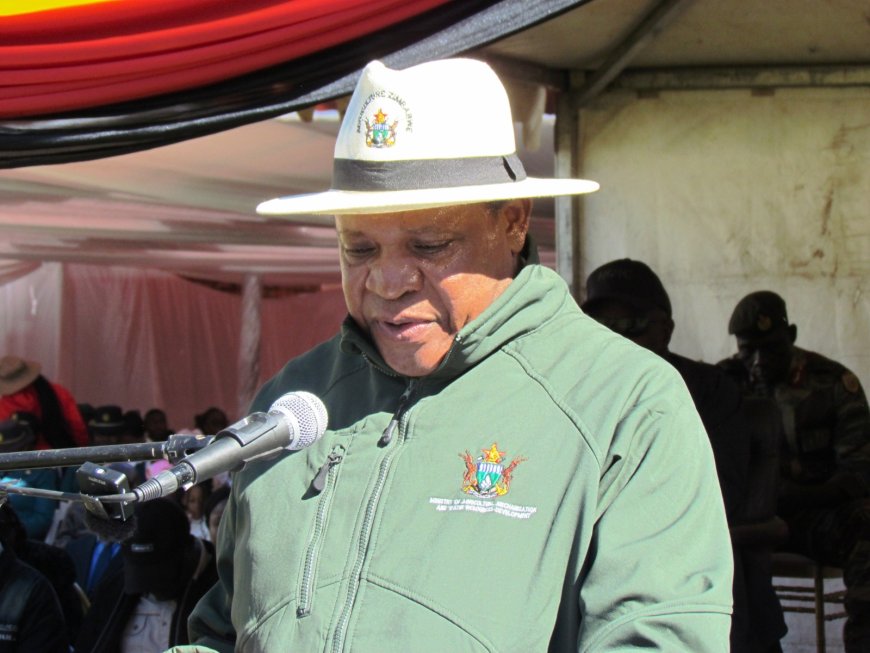
Gweru — Agriculture’s growing contribution to Zimbabwe’s economy must now be matched by greater value addition and beneficiation if the country is to move from being a producer of raw commodities to a competitive agro-industrial hub, Agriculture, Mechanisation and Water Resources Development Minister Dr. Anxious Masuka has said.
Speaking at the official opening of the 101st Midlands Agricultural Show in Gweru yesterday, Saturday, August 15, Dr. Masuka said the exhibition’s theme, “Value Addition: The Key to Competitiveness,” was in line with the Government’s Vision 2030, the National Development Strategy 2 (NDS2) and the Agriculture, Food Systems and Rural Transformation Strategy 2 (AFSRTS2).
He said agriculture remained a critical driver of economic growth, with the sector anchoring the country’s 8.3% economic growth recorded last year after expanding by 27.9%.
“Agriculture is a primary driver for inclusive and sustainable economic growth. Agriculture has causal, cofactor and multiplier effects on the rest of the economy,” Dr. Masuka said.
He said agriculture accounted for 25% of the country’s Gross Domestic Product (GDP) growth in 2025, while 63% of raw materials used by industry came from the agricultural sector.
Agriculture, he added, also consumed up to 40% of industrial output, highlighting the need to strengthen linkages between farming, manufacturing and other downstream industries.
Dr. Masuka said Zimbabwe’s agricultural transformation was already producing results in several value chains, citing wheat, tobacco, blueberries, goats and dairy among the sectors that had recorded significant progress.
“Only in 2017, Zimbabwe imported over 80% of its annual wheat requirements, yet in 2026 we project another record crop of 700 000 MT (metric tones) up from the 640 000 MT produced last year, against our soft wheat annual requirements of 450 000 MT,” he said.
The Minister said the dairy sector had similarly undergone significant expansion, with national milk production rising from 67 million litres in 2017 to 154 million litres last year, 2025.
“From 2026, we should reach self-sufficiency,” he said.
Dr. Masuka said the Government’s emphasis was no longer simply on increasing agricultural production, but on ensuring that farmers participated in complete value chains and retained a greater share of the value generated from their produce.
He said processing capacity in the tobacco sector had risen from 2% in 2017 to 11% in 2025, while the number of cigarette manufacturing companies increased from four to eight during the same period.
Cigarette manufacturing capacity had also increased from 2,6 billion to 8,8 billion cigarettes annually.
In the dairy sector, milk processing capacity had increased to 153 million litres, with two processing facilities established since 2017, Minister Masuka said.
The maize milling industry had also added three processing plants, taking combined capacity to 6 000 tonnes a day, from 4 500 tonnes in 2017, while six additional flour processing plants had lifted cumulative daily capacity from 800 tonnes to 1 500 tonnes.
“These examples illustrate the Second Republic's determination to enhance value addition across sectors. Much has been done, but much more needs to be done, so the momentum gathered then must be accelerated,” Dr. Masuka said.
He challenged farmers, manufacturers, entrepreneurs and investors to view agriculture as a business regardless of scale and to embrace climate-smart production, value-chain development and an agro-industrial approach.
AFSRTS2, he said, was built around five principles; agriculture as a business everywhere; climate-smart agriculture; a value-chain approach; an ecosystem approach; and positioning Zimbabwe as an agro-industrial hub rather than returning to the traditional “bread-basket” model.
The Midlands Show Society president, Emmanuel Zimbandu in his introductory remarks, said the annual exhibition provided an important platform for businesses and producers to demonstrate how value addition could improve competitiveness.
“The theme reminds us that competitiveness is not simply about producing more, but about producing better, adding value, improving quality and creating products that meet the demands of the market,” he said.
Zimbandu said value addition was essential for maximising the benefits derived from Zimbabwe’s natural and human resources while creating employment and strengthening local industries.
“The Midlands Show Society is proud to provide this platform for showcasing these achievements, for encouraging stronger partnerships between Government, the private sector, farmers, investors and stakeholders,” he said.
Midlands Minister of State for Provincial Affairs and Devolution, Honourable Owen Ncube, said the province was positioning itself as an important contributor to Zimbabwe’s agro-industrial transformation.
He said the province had made progress through land tenure reforms, joint ventures, irrigation rehabilitation, solarised boreholes, Village Business Units, agro-processing projects and infrastructure development.
Honourable Ncube said the Midlands had also surpassed its 2026 winter wheat target and remained among the leading provinces in livestock numbers and milk and dairy production.
He urged exhibitors to use the show not merely as an exhibition, but as a business platform.
“I therefore urge exhibitors here present to benchmark their operations, identify markets, share knowledge, develop business partnerships and unlock investment opportunities to accelerate rural industrialisation, employment generation and GDP growth,” he said.
The 2026 show also comes as Government prepares for another potentially difficult agricultural season, with Minister Masuka saying there was an 88% to 92% probability that the 2026/27 summer season would be characterised by El Niño conditions.
He, however, sought to reassure farmers that Government had drawn lessons from the severe drought of 2024 and had put in place measures aimed at protecting national food security.
“This should not cause alarm. Riding on our experiences in 2024, when we experienced the worst El Niño in living memory, we have robust plans to emerge stronger, more united and more food secure,” he said.
The Government’s response includes strengthening the Strategic Grain Reserve, expanding climate-smart agriculture, establishing an integrated financing architecture, strengthening livestock drought mitigation, enhancing imports and improving early warning systems and capacity building.
Dr. Masuka also urged agricultural show societies to modernise their operations and professionalise their governance structures to attract partners and investment.
“Government will continue to fully support Agricultural Shows,” he said, describing the exhibitions as platforms for learning, experience sharing, business networking and connecting generations.
He said Government was reviewing levies, permits and other costs as part of efforts to improve the ease of doing business, while infrastructure development in water, roads, rail, ports, schools, clinics and hospitals would continue to support economic activity.
The Midlands Show, first held in 1925, is marking its 101st edition this year, bringing together players from agriculture, mining, manufacturing, commerce, technology and entrepreneurship.
The 2026 Midlands Show began on Thursday, August 13 and ending today, Sunday, August 17 with almost 150 registered exhibitors.