Australia Still Falling Short on Child Sexual Abuse Prevention — UNSW
By Harry Taruva - UNSW criminologist Professor, Michael Salter, says Australia continues to struggle to prevent child sexual abuse despite decades of inquiries, warning that safeguarding systems must evolve with emerging threats.
 Delicious Mathuthu
Sydney — Australia continues to struggle to prevent child sexual abuse despite decades of public inquiries exposing similar patterns of offending, with a leading criminologist warning that authorities and communities have developed ways of ignoring warning signs even when the evidence exists.
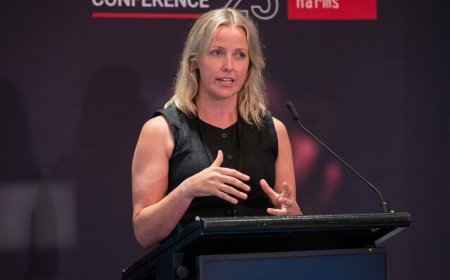
University of New South Wales (UNSW) Sydney criminologist and Director of the East Asia and Pacific Hub of Childlight, Professor Michael Salter, said the country had accumulated extensive knowledge about child sexual abuse, but systems designed to prevent it had not kept pace with the evolving threat.
"The issue isn't that we don't know,” Professor Salter said, adding, “It's that we’ve built ways of not knowing.”
His research focuses on child sexual abuse, online exploitation and institutional responses to violence, as well as the social and psychological conditions that allow abuse to remain hidden.
Salter describes this as the “anti-epistemology of violation”, the ways societies can organise themselves so that abuse is simultaneously visible and ignored.
He said grooming should not only be understood as something offenders do to children, arguing that perpetrators could also manipulate adults around victims in staff rooms, sporting clubs, churches and homes.
“We are not, as a community, literate around how we get manipulated by offenders in order to turn away from children,” he said.
The warning comes amid recent allegations and investigations involving schools, childcare and residential care, while authorities are also confronting emerging forms of exploitation online.
In New South Wales, former childcare worker Hamish Tait faces 329 charges relating to the alleged abuse of 136 children over 16 years, including offences involving the production of child abuse material.
In Queensland, an ABC investigation has exposed allegations of organised sexual exploitation involving vulnerable teenagers living in residential care.
Salter said the cases should not be treated as sudden crises because they reflected longstanding vulnerabilities that had not been fully addressed.
“It is an accumulation of unresolved harms,” he said.
He said Australia had repeatedly followed a pattern over the past five decades in which a form of abuse was exposed, authorities responded, public attention eventually shifted and significant vulnerabilities remained.
Each new form of offending, he said, could emerge before Australia had fully dealt with the previous one, ranging from familial and institutional abuse to organised exploitation, online networks and AI-enabled offending.
Salter said child protection systems needed to account for highly motivated offenders who deliberately sought positions giving them access to children, including those too young to speak about or disclose abuse.
“For child protection to work, it must be designed around the possibility of premeditated offending,” he said.
He also said communities could sometimes respond to allegations by questioning the credibility of victims instead of examining the behaviour of alleged perpetrators.
“It's the burden of believing the victim,” Salter said, adding that “If you believe the victim, then you, as an individual, have a massive amount of responsibility.”
He said the vulnerability of children could make sexual abuse particularly difficult for adults to confront.
“We find the vulnerability of children very challenging because it also reminds us of our own vulnerability,” he said.
Salter's research has increasingly focused on organised abuse involving multiple offenders and victims, including the production of child sexual abuse material.
He said online communities could allow offenders to share techniques, encourage one another and exploit digital platforms, while technological advances continued to create new opportunities for offending.
Salter said the challenge extended to debates around end-to-end encryption, which can protect legitimate communications but can also create difficulties for investigations into serious crimes.
“When we say ‘we actually can't have end-to-end encrypted technology because that facilitates these guys getting together’, the reaction from the public is ‘Why is this so urgent?’” He said.
He also called for child sexual abuse to be addressed more closely within Australia's broader response to gender-based violence, arguing that children had often been treated separately from adult victims in policy and service structures.
“Children make up the majority of sexual assault victims,” Salter said.
He said separating violence against women from violence against children did not always reflect the realities of victims or perpetrators.
“Violence does not begin at 18,” he said.
Salter said domestic violence and child sexual abuse could occur within the same family and involve the same perpetrator, while coercive control and grooming could involve similar patterns of isolation, manipulation and the undermining of protective relationships.
“Perpetrators isolate children, they characterise them in ways that mean that their disclosures are not believable,” he said.
He also pointed to the Australian Child Maltreatment Study, which found that adolescents are more commonly responsible for child sexual abuse than adults in Australia.
Where sexual abuse is alleged between students, Salter said consent education should be accompanied by coordinated responses involving police, child protection authorities, mandatory reporting systems and schools to protect the safety, welfare and education of all children involved.
His recent submissions were made as the Federal Government develops the next action plans under the National Strategy to Prevent and Respond to Child Sexual Abuse and the National Plan to End Violence against Women and Children.
The submissions call for children to be recognised as victim-survivors of gender-based violence in their own right, alongside a national grooming prevention strategy and greater accountability for systems that can enable abuse.
Salter also called for greater scrutiny of technology and financial companies, saying social media, messaging and gaming services could provide offenders with access to children, while payment systems and cryptocurrencies could facilitate sexual extortion, paid abuse and the sale of child sexual abuse material.
He said Australia needed a child protection system capable of responding to known forms of abuse while evolving as quickly as offenders and technology.
“How is it that we know – but we don't know that we know, and then we don't do anything about it?” Salter said.