
Digitising Zimbabwe Courts to Ease Case Management
By Dumisani Ndlovu — Zimbabwe is rolling out the integrated electronic case management system (IECMS) as efforts continue to modernise court administration through electronic filing, case tracking, automated allocation and virtual hearings.
 Dumisani Ndlovu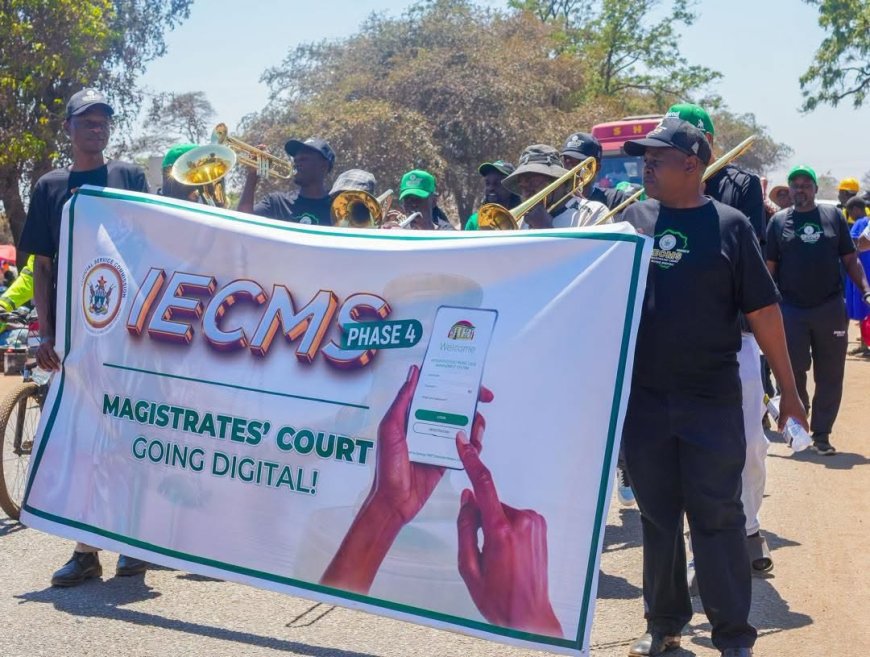
Gweru — Zimbabwe’s justice delivery system is set for a major digital transformation as the Integrated Electronic Case Management System (IECMS) is rolled out to replace cumbersome paper-based processes.
The system is an electronic platform designed to improve case tracking, filing, case allocation and access to courts.
The Judicial Service Commission (JSC) has set December 31, 2026 as the target for digitising all courts in the country, with JSC Secretary, Dr. Walter Chikwana saying the national rollout is gathering momentum ahead of the launch of Phase 4.4 on October 1, 2026, in Midlands and Mashonaland West provinces.
Dr. Chikwana made the announcement in a post published on the JSC’s Facebook platform as preparations intensified for the next phase of the digital court programme.
The development comes as the Midlands Province IECMS Awareness Campaign was pre-launched at the Gweru Magistrates’ Court under the theme “Modernising Justice through Technology.”
Speaking at the event, Minister of State for Provincial Affairs and Devolution for Midlands Province, Honourable Owen Ncube, described IECMS as a flagship national programme that would fundamentally change the administration and delivery of justice.
“I feel greatly honoured to be accorded the opportunity to officiate as Guest of Honour on this momentous Midlands Provincial Pre-Launch Awareness Campaign of the Integrated Electronic Case Management System, a flagship project under the National E-Government Program designed to modernise and transform the delivery of justice in Zimbabwe,” Honourable Ncube said.
He said the initiative was in line with the government’s digitalisation agenda and the National Development Strategy 2 pillar on Science, Technology, Digital Innovation and Human Capital Development, which focuses on digitalisation, expansion of Information and Communication Technology infrastructure and digital literacy.
Ncube said the transition from paper-based case management to secure digital platforms demonstrated the government’s commitment to modernising public services.
He applauded the JSC, led by Chief Justice Elizabeth Gwaunza, for embracing the electronic system, saying it supported the principles of judicial independence, accessibility, transparency, efficiency, impartiality and accountability in justice delivery.
“I therefore applaud the Judicial Service Commission led by Chief Justice Elizabeth Gwaunza for embracing His Excellency, the President, Cde Dr. E. D. Mnangagwa's Whole of Government and Society Approach towards establishment of an Integrated Electronic Case Management System that entrenches judicial independence, accessibility, transparency, efficiency, impartiality and accountability in justice delivery,” he said.
The Minister said one of the anticipated benefits of IECMS was the reduction of corruption risks associated with manual processes and excessive human interaction in the handling of court files.
“In addition, the electronic system inhibits corruption by reducing human interface and the manual handling of files,” Ncube said.
He also linked the system to efforts to address court backlogs, saying digital case management could reduce delays associated with the movement and handling of physical files.
“Case backlogs will therefore be reduced as this new system brings Courts closer to communities in line with the New Dispensation's Devolution and Decentralisation Agenda,” he said.
IECMS incorporates a range of digital functions, including electronic filing, case tracking and management, automated case allocation, e-filing support services and virtual hearings.
The applications are designed to cater for different users within the justice system, including litigants, legal practitioners, law enforcement agents, judicial officers and court administrators.
The move to electronic filing is expected to reduce reliance on physical documents and the transportation of files between offices, while case tracking is intended to improve the management and monitoring of proceedings.
Virtual hearings are also expected to reduce the need for some court users and participants to travel to court, subject to the nature of proceedings, legal requirements, connectivity and available infrastructure.
Ncube said IECMS was not an isolated government digitalisation project but formed part of a wider programme aimed at improving data management and public service delivery.
He cited several electronic systems already being implemented in different sectors, including Civil Registration and Vital Statistics, which collects national statistics on births, deaths and marriages through ZIMSTAT.
He also cited the Electronic Procurement System, which manages public-sector tendering, supplier registration and contract awards, as well as the E-Passport system, with state-of-the-art offices established in Gweru, Zvishavane and Gokwe South among other districts.
Other systems highlighted by the minister included Health Records Management Information Systems, the Mining Cadastre Management Information System, and the Electronic Traffic Management System, alongside AI-powered CCTV surveillance, electronic dockets and automated fingerprint identification being used by the Zimbabwe Republic Police.
Ncube said these systems were part of efforts to facilitate data flow, improve service delivery, ensure legal compliance and align public-sector operations with global best practices.
“In view of the foregoing, I commend the Second Republic for spearheading strategic initiatives that facilitate inclusive and seamless data flow, improve service delivery, ensure legal compliance, align operations with global best practices and uphold the integrity of the Public Service,” he said.
For the courts, where case administration has traditionally depended heavily on physical files and manual processes, IECMS comes as a relief.
Legal experts say the effectiveness of IECMS will, however, depend on the availability of reliable ICT infrastructure, connectivity, digital literacy, cybersecurity measures and adequate support for court users and justice-sector personnel as the system expands nationwide.