Mnangagwa Unveils Sweeping Legislative Agenda
President Emmerson Mnangagwa has unveiled Zimbabwe’s Fourth Parliament Session legislative agenda, covering electoral reforms, healthcare, policing, transport, agriculture, firearms, drug control, environmental protection and veterans’ welfare.
 Kwedu News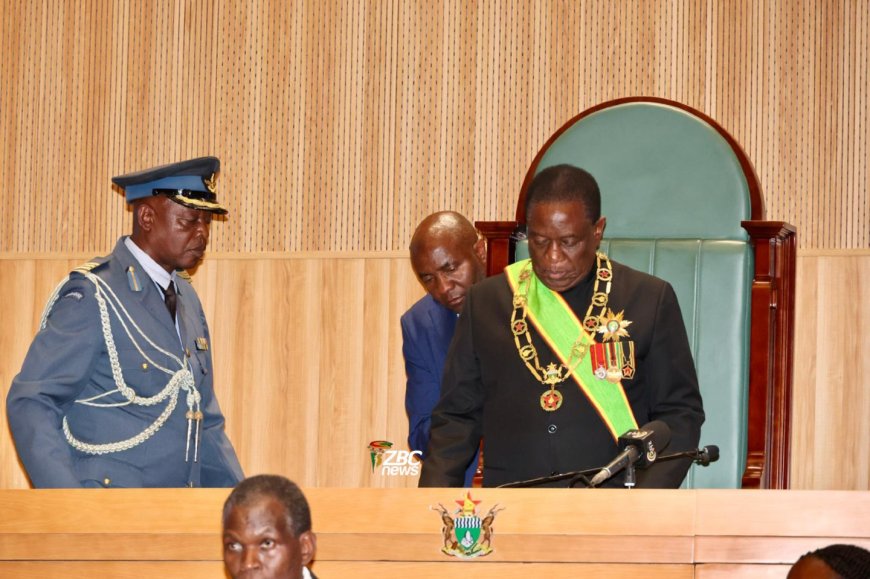
Harare — President Emmerson Mnangagwa has unveiled a wide-ranging legislative programme for Zimbabwe's Fourth Session of the Tenth Parliament, with major changes planned for electoral law, healthcare, policing, transport, agriculture and the regulation of firearms and drugs.
The programme follows the enactment of Constitutional Amendment Act No.3 and includes consequential amendments intended to align existing laws with the Constitution.
President Mnangagwa said the Government remained committed to constitutionalism, access to justice, good governance and public accountability.
Among the priority measures announced are amendments to the Electoral Act and Constitutional Court Act, alongside legislation establishing a new Delimitation Commission.
The session will also process the Child Justice Bill, Whistle Blowers and Witness Protection Bill, Legal Aid Bill, Legal Practitioners Amendment Bill and Chartered Secretaries Amendment Bill.
The Finance Bill will seek to modernise the country's revenue mobilisation framework, while the Foreign Affairs and International Trade Bill is expected to formally incorporate trade and investment promotion into the statutory mandate of Zimbabwe's diplomatic missions.
President Mnangagwa said the diplomatic reforms would strengthen coordination across Government and support the international projection of “Brand Zimbabwe”.
He said the legislative programme extends into agriculture and environmental management, with Parliament expected to consider amendments to the Water Act, Zimbabwe National Water Authority Act, Tobacco Industry and Marketing Board Act and Tobacco Research Board Act.
The Forest Act and Communal Land Forest Produce Act will also be amended as part of efforts to strengthen environmental protection.
Healthcare legislation featured prominently in his address, with the National Healthcare Provision Bill expected to be tabled to strengthen healthcare delivery and promote equitable access.
Other health-related Bills include the Zimbabwe National Family Planning Council Bill, Medicines and Allied Substances Control Bill, Medical Research Bill, Food and Food Safety Bill and Mental Health Bill.
President Mnangagwa said the medicines legislation would address regulation of medicines, medical products and allied substances while supporting pharmaceutical-sector development and patient safety.
Transport legislation will also receive attention, with the Road Accident Fund Bill, Merchant Shipping Bill, Road Traffic Authority Bill and National Roads Authority Bill scheduled for consideration.
The policing and criminal justice framework is set for further changes through the Police Amendment Bill and the proposed National Drug and Substance Abuse Control and Enforcement Agency Bill.
President Mnangagwa said the measures were intended to address emerging criminal justice and public security challenges.
“The Government is aware of the need to respond to emerging criminal justice trends as well as public security and regulatory challenges,” he said.
The Trafficking in Persons Bill will also be considered, with President Mnangagwa saying it would seek to protect citizens from transnational syndicates offering non-existent jobs abroad.
The legislative programme further includes the Biological Weapons and Toxins Crimes Bill, Defence Amendment Bill and measures relating to international arms-control treaties.
Parliament is also expected to accelerate consideration of the Firearms Amendment Bill, which President Mnangagwa said would tighten the possession and use of firearms in Zimbabwe.
Veterans of the liberation struggle are also included in the legislative programme, with three amendment Bills expected to address statutory benefits for veterans, dependants and war victims.
The proposed changes will also strengthen the legal framework governing the identification, exhumation, repatriation and reburial of fallen liberation war heroes and heroines.
Beyond the legislative programme, the President said Government would continue reforms aimed at improving public-sector performance and citizen engagement.
“A centralised Citizen Engagement Platform will see regular interface to capture the views of citizens on policy, reform and the overall performance of the public sector,” he said.
President Mnangagwa said the Fourth Session should be used to deepen reforms and accelerate development before 2030.
“The Legislature is assured that my Administration shall continue to facilitate an environment that is responsive to current realities, yet predictable and transparent,” he said.