
Russia Targets Indonesia’s Nuclear Energy Market
Russia is deepening its energy partnership with Indonesia, promoting floating nuclear technology as Rosatom advances a 200-megawatt electricity supply agreement targeting North Maluku.
 Kwedu News
By Staff Reporter
Jakarta – Russia is advancing its nuclear energy cooperation with Indonesia, with floating nuclear power technology emerging as a key component of efforts to expand electricity generation in the Southeast Asian archipelago.
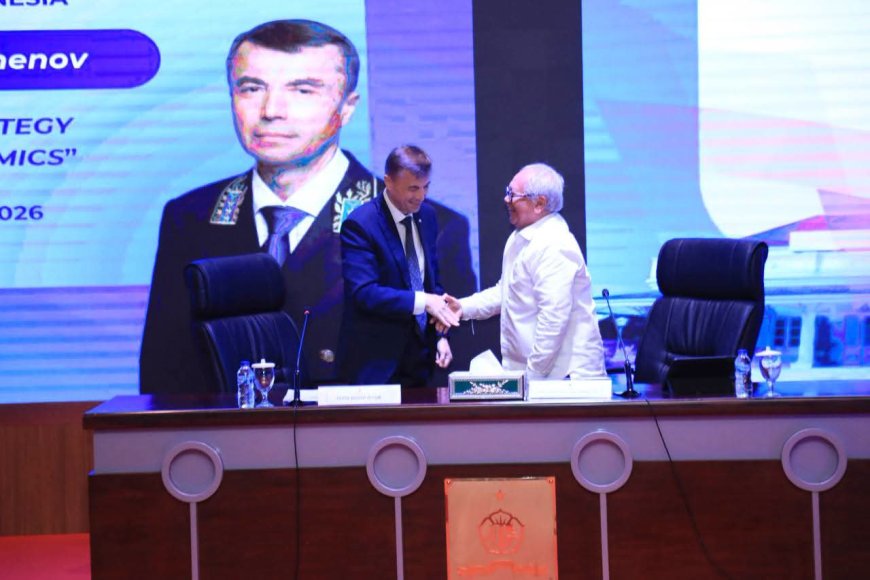
The latest push came on Monday, November 2, when Russian Ambassador to Indonesia Sergey Gennadievich Tolchenov addressed the Indonesian National Resilience Institute (LEMHANNAS RI), delivering a lecture titled Russia's Energy Sustainability Strategy in the Context of Global Geopolitical Turbulence.
Tolchenov highlighted the importance of strengthening the two countries' strategic partnership, particularly in the energy sector and presented Russia as a potential long-term partner in Indonesia's efforts to diversify its energy sources.
The Russian Foreign Ministry said the ambassador discussed opportunities for joint infrastructure projects, placing particular emphasis on Russia's proposed floating nuclear power plants.
"The Ambassador stressed that Russia remains a reliable and responsible international partner, consistently advocating for the development of mutually beneficial cooperation despite the restrictions imposed by several states.
"Special attention was paid to the prospects for implementing joint infrastructure initiatives, including the promotion of Russia's design floating nuclear power plants in Indonesia.
"The implementation of such projects will contribute to strengthening the country's energy security and also give an additional impetus to Russian-Indonesian cooperation," the Russian Foreign Ministry said.
The lecture comes against the backdrop of developments in bilateral nuclear cooperation.
The Russian Foreign Ministry said the lecture generated considerable interest among Indonesian participants, followed by questions and an exchange of views with the ambassador.
On October 16, Russia's state-owned nuclear corporation, Rosatom, signed an agreement with Indonesian company PT Pembangkit Listrik Nuklir to supply electricity generated by two floating nuclear power units.
The proposed 200-megawatt project is intended to serve northern Halmahera Island in North Maluku province, eastern Indonesia.
The units will use reactors from Rosatom's RITM series, with electricity supplies expected to begin within five years after the main contractual conditions take effect.
The agreement is a significant development in Russia's longstanding efforts to secure a role in Indonesia's emerging nuclear power industry.
It also moves the relationship beyond diplomatic discussions towards a commercial electricity-supply arrangement.
Under the proposed arrangement, Rosatom will retain ownership of the floating power units, while the Indonesian company will purchase electricity under a long-term commercial agreement.
The project is expected to rely on private investment rather than direct funding from Indonesia's state budget.
Indonesia has been exploring nuclear energy as part of a broader strategy to diversify its electricity supply, reduce dependence on fossil fuels and meet growing demand across its thousands of islands.
Indonesian President, Prabowo Subianto, has placed nuclear power within the country's longer-term energy development agenda.
The revised National Energy Policy, signed in September 2025, incorporates nuclear energy into Indonesia's planned energy mix, with the country targeting net-zero emissions by 2060.
Russia has been positioning itself as a technology and infrastructure partner in that transition.
In May 2026, Rosatom Director-General Alexey Likhachev met Prabowo to discuss nuclear power development, infrastructure, technical cooperation and the training of Indonesian personnel.
The discussions covered large conventional nuclear plants, small modular reactors and floating power units. The cooperation also has a regulatory dimension.
In August 2026, Russia's nuclear safety regulator, Rostekhnadzor, and Indonesia's Nuclear Energy Regulatory Agency (BAPETEN) held discussions in Jakarta on the regulatory framework for floating nuclear power facilities.
The talks covered licensing, nuclear and maritime regulation, site requirements, operator authorisation and emergency preparedness.
Despite the commercial agreement, the regulatory work remains an important part of the process. Indonesia must establish the necessary licensing, safety, environmental and maritime oversight arrangements before floating nuclear facilities can operate in its waters.