Auditor Exposes Missing Millions, Schools Financial Records and Billions in Gweru City Assets
"The Council did not recognise the revenue, expenses, liabilities and assets for its four (4) schools in the financial statements... resulting in weak financial oversight, possible misuse of funds, undetected fraud, loss of accountability and transparency, and misstatement of the financial...": Auditor-General.
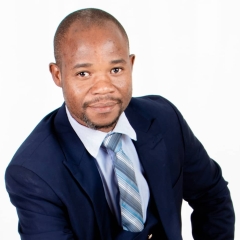 Delicious Mathuthu
Gweru — Gweru City Council failed to account for billions of Zimbabwe Gold (ZiG) in public funds, omitted council-run schools from its books and maintained no records for major city infrastructure, the Auditor-General’s latest report has revealed.
The findings, contained in the Auditor-General's Report for the year ending 31 December 2025 on Local Authorities, recently released to the public and presented to Parliament in June 2026, expose deep-rooted weaknesses in the city's 2024 financial management and governance, raising fresh concerns over accountability at a time when residents continue to endure deteriorating roads, ageing sewer infrastructure and mounting service delivery challenges.
The Auditor-General, Vimbai Chikwenhere, expressed a disclaimer opinion, one of the severe audit outcomes issued when auditors are unable to obtain sufficient evidence to determine whether financial statements fairly present an institution's financial position.
The Auditor-General said the council's records were so incomplete and inconsistent that it was impossible to verify several key areas of its finances.
One of the striking findings was that the city's four council schools were entirely omitted from its financial statements.
"The Council did not recognise the revenue, expenses, liabilities and assets for its four (4) schools in the financial statements," the Auditor-General said.
The report warned that the omission resulted in weak financial oversight, created risks of fund misuse and undetected fraud, caused a loss of accountability and transparency, and led to the misstatement of financial statements.
For parents whose children attend council schools, the omission means millions of dollars worth of school income, expenditure, assets and liabilities were never reflected in the city's official accounts.
Council acknowledged the omission and told auditors it intends to incorporate the schools into its consolidated financial statements.
The audit also found that the city could not properly account for some of its most valuable public assets.
The report revealed that Gweru does not maintain a comprehensive asset register and failed to record or value critical infrastructure, including roads, bridges and sewer reticulation systems.
"The Council did not maintain an asset register to support its property, plant and equipment balance... In addition, the Council's infrastructure assets such as road networks, sewer reticulation systems and bridges were not valued and accounted for as part of property, plant and equipment," the report states.
Council attributed the shortcomings to limitations in its Enterprise Resource Planning (ERP) system, which has been flagged for years, this time around saying it intends to procure a new system by December 31, 2026, before conducting a full inventory and valuation of infrastructure assets.
The Auditor-General's report however confirmed that similar concerns have been raised in previous audits, indicating the problem has persisted for years.
The Auditor further revealed that council's financial records could not be reconciled with its bank accounts.
The Auditor-General found an unexplained ZiG89 million difference between council's cashbook and bank balances, while another ZiG167.69 million discrepancy existed between its cash records and general ledger.
Without regular bank reconciliations, Auditor Chikwenhere warned, errors or fraudulent transactions may go undetected.
Equally alarming was the discovery of a ZiG1.29 billion suspense account, money that could not be properly allocated because of poor accounting records.
"The Council did not maintain adequate records and was not practicing the principle of double entry," the Auditor-General noted.
The report also uncovered major inconsistencies in council's land records.
Repossessed commercial stands were not recognised as current assets or inventory, while council's own records reflected a negative inventory balance of ZiG2.62 billion, compared with a positive balance of ZiG23.81 million reported in the financial statements, leaving an unexplained variance of ZiG2.64 billion.
Revenue collection records were equally unreliable, the Auditor revealed.
She found that council failed to reconcile customer debts, resulting in an unexplained ZiG43.98 million difference between amounts owed by ratepayers and figures appearing in the financial statements.
The Auditor also questioned ZiG99.44 million worth of journal entries that were unsupported by documentation, making it impossible to verify whether the transactions were valid.
Further concerns were raised over council's investments in Gweru City Parking Management Company (Private) Limited and Upenyu Breweries trading as Go Beer (Private) Limited, which were not accounted for in the financial statements despite international accounting standards requiring such investments to be recognised.
The report also identified a ZiG54.23 million discrepancy in employee leave provisions after council's leave records failed to reconcile with amounts reflected in its financial statements.
Gweru residents' representatives have, over the years, highlighted that most worrying in these audits is that many of the weaknesses are not new.
The Auditor-General confirmed this saying Gweru made little progress in addressing deficiencies identified in previous audits.
Of the 15 findings raised in the preceding audit, only three were addressed, while 12 remained unresolved.
Among the outstanding issues are the continued absence of an asset register, failure to account for infrastructure assets, failure to perform bank reconciliations, unsupported grant income, unsupported journal entries, unreconciled receivables and payables, failure to account for investments in joint ventures and failure to obtain beer levy statistics.
The recurrence of the same findings expose persistent weaknesses in the Gweru City Council governance and financial management despite repeated recommendations by the Auditor-General.