NPAZ Trains Prosecutors on Fight Against Drugs
By Dumisani Ndlovu — National Prosecuting Authority of Zimbabwe (NPAZ) is training Public Prosecutors in Gweru on financial tracking, asset recovery and forensic evidence to dismantle drug trafficking networks and strip syndicates of illicit wealth.
 Dumisani Ndlovu
Gweru— The National Prosecuting Authority of Zimbabwe (NPAZ) is strengthening prosecutors’ capacity to dismantle drug trafficking networks by targeting not only offenders but also the vehicles, property and financial resources used to sustain their criminal activities.
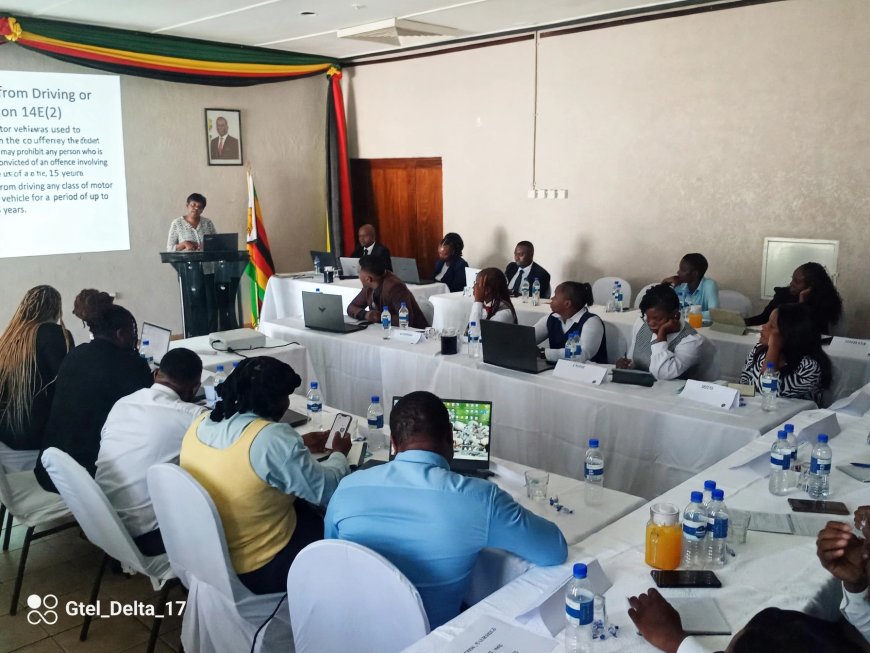
The strategy emerged during a specialised drug and substance abuse prosecution training workshop running from October 25 to 30 at Fairmile Regency Hotel in Gweru, where public prosecutors are receiving training in financial investigations, asset forfeiture, forensic evidence and the prosecution of organised drug trafficking networks.
In a presentation on the first day of the workshop, Harare based NPAZ Drug Prosecutor, Heather Mhlanga Muokoto, told participants that courts could impose driving or flying restrictions on offenders and accomplices involved in transporting dangerous drugs, in addition to imprisonment, fines and forfeiture.
“Where a motor vehicle or aircraft was used to transport dangerous drugs, the court may prohibit the offender, or an accomplice who drove or flew the vehicle, from driving any class of motor vehicle or flying aircraft for a period of up to 15 years,” Muokoto said.
She said the restriction was an additional sanction intended to deter the use of transport in drug trafficking.
Muokoto also outlined provisions of the Dangerous Drugs Act [Chapter 15:02] governing the seizure and forfeiture of dangerous drugs and property connected to drug-related offences.
She identified sections 14D, 14E, 14F, 14G, 14H and 14J as key provisions governing forfeiture, explaining that the measure was intended to deprive offenders of the tools of their trade and prevent the further criminal use of property.
“The objectives of forfeiture are to deprive offenders of the instrumentalities of crime, prevent further criminal use of property, and protect the public from dangerous drugs,” she said.
The presentation placed asset forfeiture at the centre of efforts to disrupt trafficking networks, highlighting the importance of following the money and pursuing property linked to criminal activity alongside the prosecution of suspects.
The workshop’s financial investigations component covers the identification of drug proceeds, money laundering, asset tracing and preservation, as well as forfeiture and confiscation proceedings.
Prosecutors are also examining prosecution-guided investigations and cooperation with the Zimbabwe Republic Police (ZRP) Criminal Investigation Department (CID) Drugs Section, the Medicines Control Authority of Zimbabwe (MCAZ), Customs and other relevant stakeholders.
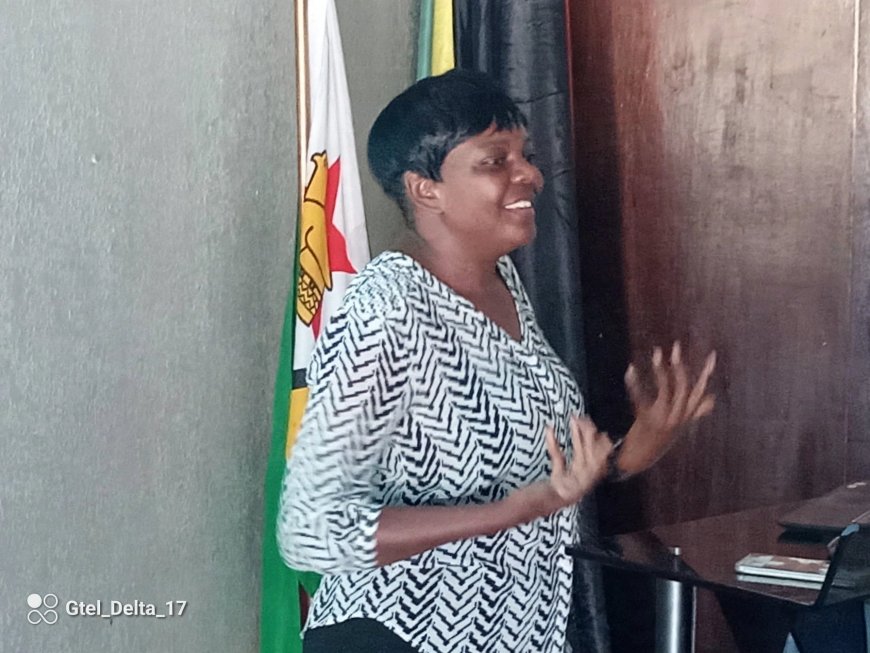 Heather Mhlanga Muokoto making a presentation on asset forfeiture and legal measures to disrupt drug trafficking during the training workshop in Gweru.
NoAZ said the programme seeks to strengthen the preparation of trial-ready cases, including those involving controlled deliveries and undercover operations.
Charge formulation and prosecutorial decision-making form another major component, with sessions covering possession, use, trafficking and dealing offences, alongside the distinction between physical and mental possession.
Participants are also being equipped with skills in bail applications, sentencing principles, aggravating and mitigating factors, mandatory minimum sentences and the prosecution of organised trafficking cases.
The evidentiary component focuses on certificates of analysis, documentary evidence, digital material recovered from mobile phones and social media platforms, and the qualification and presentation of expert witnesses.
Prosecutors are expected to strengthen their ability to examine forensic reports, challenge evidence where necessary and present reliable evidence before the courts.
The legislative sessions cover the Dangerous Drugs Act, the Harmful Substances Act, the Medicines and Allied Substances Control Act, the Traditional Practitioners Act and Statutory Instrument 150 of 1991.
Participants are also examining the classification of drugs, including crystal methamphetamine, commonly known locally as mutoriro, emerging substances and the distinction between traditional herbs and complementary medicines.
Recognising the links between substance abuse, addiction and criminal offending, the workshop includes sessions on drug-induced cases, addiction and psychiatric assessments, facilitated by Psychiatrist, Dr. Muzvidziwa, of the Ministry of Health and Child Care.
Other expected contributors include Zimbabwe Republic Police (ZRP) Forensic Scientist, one E. Chengeta and representatives from the Medicines Control Authority of Zimbabwe (MCAZ) and the Criminal Investigation Department (CID) Drugs Section, bringing together expertise from law enforcement, forensic science, medicines regulation, health services and prosecution.
The training also addresses emerging trends in organised crime, cross-border trafficking and drug distribution facilitated by digital platforms.
Practical exercises include testing participants’ skills in drafting charges, analysing forensic reports, examining expert witnesses, opposing bail applications and presenting asset-forfeiture cases.
Exhibit management and chain-of-custody requirements are also under scrutiny, with emphasis on the proper collection, preservation, storage, testing and production of exhibits in court.