
Greenpeace Warns of ‘Catastrophic’ Oil Spill Risk From Woodside’s Scott Reef Drilling Plans
Greenpeace Australia Pacific and Environs Kimberley warn that Woodside’s proposed Scott Reef drilling could cause a major oil spill, threatening marine life and the Kimberley coast.
 Harry Taruva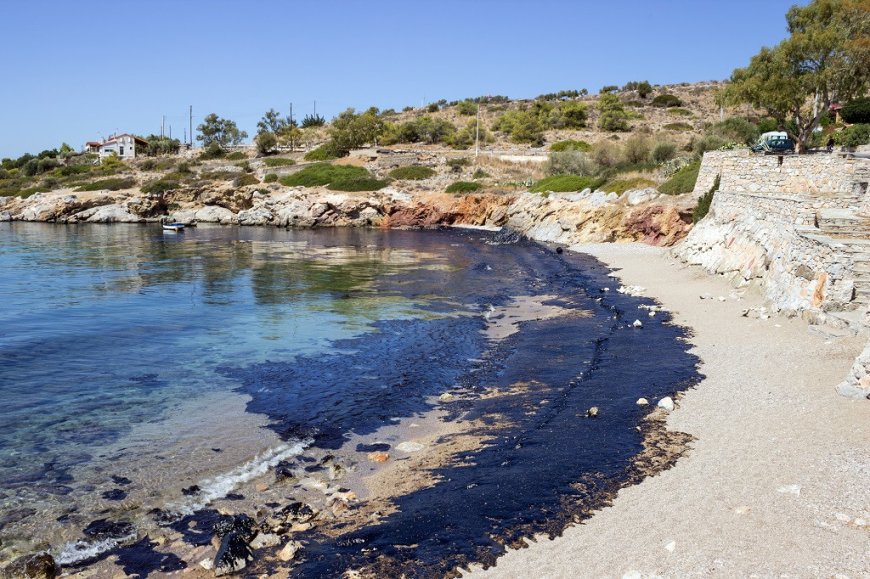
Sydney — Environmental groups have warned that Woodside’s proposed drilling at Scott Reef could trigger a massive oil spill with the potential to devastate marine ecosystems, affect the Kimberley coastline and reach as far as Indonesia.
Greenpeace Australia Pacific and Environs Kimberley said new analysis of Woodside’s own modelling had identified a worst-case scenario involving an uncontrolled blowout directly beneath Scott Reef.
The groups claim the resulting spill could be up to 30 times larger than the 2009 Montara oil disaster, raising concerns over potential impacts on whale migration routes, turtle nesting grounds and marine parks along the Kimberley coast.
The analysis relates to Woodside’s Browse to North West Shelf Project, which proposes offshore gas development in the Scott Reef area.
The environmental groups say an uncontrolled release could spread oil condensate across sensitive marine habitats and potentially reach the Kimberley coastline and Indonesia.
Greenpeace Australia Pacific Senior Campaigner, Hannah Schuch, said the potential consequences demanded serious consideration by state and federal regulators.
“Woodside is aware that drilling at Scott Reef risks a massive oil spill that would have severe, far-reaching consequences,” Schuch said.
She claimed regulators were also aware of the potential risk and called for the Federal Government to release a report prepared by the National Offshore Petroleum Safety and Environmental Management Authority (NOPSEMA).
An Freedom of Information (FOI) application revealed that the federal Department of Climate Change, Energy, the Environment and Water had asked NOPSEMA to investigate the oil spill risk in 2025.
The environmental groups said NOPSEMA had refused access to its report, while documents obtained through the FOI process showed Australian Government Department of Climate Change, Energy, the Environment and Water (DCCEEW) sought further advice this year.
Schuch said the Government should reject the Browse project to eliminate the risk of a major offshore oil spill.
“The pygmy blue whales that migrate up and down the Western Australia coast with their newborns each year could be swimming and feeding in toxic, oil-slicked water,” she said.
Environs Kimberley Executive Director, Martin Prichard, warned that a major spill could also have significant economic consequences for the region.
“A catastrophic oil spill by Woodside would be disastrous not just for marine life in the area but also for the Kimberley’s (AU)$500 million tourism industry,” Prichard said.
He said five marine parks along the Kimberley coast could fall within the potential risk area identified by the groups.
Prichard also pointed to the 2009 Montara oil spill, saying the Kimberley had avoided the worst consequences of that disaster because the spill did not move towards the region.
“The Montara oil spill was disastrous for West Timor with the toxic oil destroying seaweed farmers' livelihoods,” he said.
The groups' concerns come after the Western Australian Environmental Protection Authority deemed the Browse project “unacceptable”, citing oil spill risk among its concerns.
Woodside subsequently submitted a mitigation plan based on technology that, according to the groups, has never been used in an actual major spill response.
An independent review of the mitigation plan identified this as a weakness, the groups said.
Independent oil spill expert, Professor Richard Steiner, warned that major offshore spills could be extremely difficult to contain and recover.
“A large offshore spill is impossible to effectively contain or recover,” Professor Steiner said.
He cited historical recovery rates of between 2 and 6% of total spill volume and warned that ecological damage from toxic hydrocarbons could be extensive and long-lasting.
Professor Steiner pointed to the 1989 Exxon Valdez disaster in Alaska, saying some affected marine populations had still not recovered decades later.
He warned that a major spill in Western Australia could result in similarly long-term ecological consequences.
“The only sure way to avoid the risk of a catastrophic marine oil spill is to not develop oil and gas projects in marine environments,” he said.
Greenpeace Australia Pacific and Environs Kimberley are now calling on the Federal Government to publicly release the NOPSEMA report and take the identified spill risks into account before decisions are made on the proposed development.