
Australia’s Diesel Bill Hits A$9 Billion Amid Iran Conflict, Report Finds
By Harry Taruva — Australia paid an estimated AU$9 billion in additional diesel costs between March and August, a Climate Council report says, urging electrification to reduce dependence on imported fuel.
 Harry Taruva
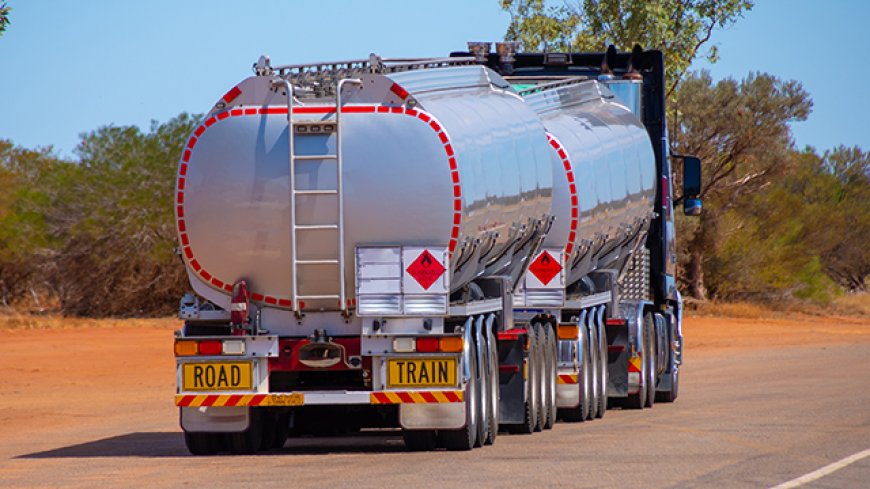
Canberra — Australia incurred an estimated AU$9 billion in additional diesel costs between March and August during the Iran conflict, more than twice the amount paid by any other country, according to a new report by the Climate Council.
The report, Crude Awakening, warns that Australia’s heavy dependence on imported fuel leaves the country vulnerable to international conflicts and oil price shocks, which can push up transport, freight and food costs.
Australia is the world’s largest seaborne importer of diesel and relies on imports for about 90% of its diesel requirements, the report says.
National diesel consumption has also risen to two-and-a-half times its 2000 level, leaving the economy exposed when global supply disruptions drive prices higher.
Climate Council, an independent, community-funded organisation that publishes research and information on climate change, its impacts and potential solutions, Economist Nicki Hutley, said the reliance on foreign oil weakened Australia’s energy security and allowed international instability to feed into domestic inflation.
“Relying on imported oil means leaving our energy security in someone else’s hands.
"When global conflict chokes supply, prices spike and the cost ripples through the whole economy,” Hutley said.
She said the impact extended beyond motorists, affecting household budgets through higher costs across the economy.
Electrifying freight and business operations could reduce Australia’s exposure to global oil price movements and ease inflationary pressure, she said.
The report argues that shifting transport and energy systems towards electricity powered by domestic renewable sources would provide a more durable response than temporary fuel relief.
It identifies solar, wind and energy storage as potential foundations for greater energy independence.
Climate Council Chief Executive, Amanda McKenzie, said recent fuel relief measures had helped motorists but had not addressed the underlying vulnerability.
“Immediate fuel relief helped people who needed it, but cost us billions in foregone revenue and the relief was short-lived. When it ended, prices jumped back to where they were,” McKenzie said.
She called for a long-term plan to reduce petrol and diesel use, including redirecting AU$3.4 billion in tax credits paid to large mining companies for diesel towards charging infrastructure on major freight routes and support for electric trucks.
The Climate Council said Australia had made significant progress in household renewable energy, ranking first globally for rooftop solar and battery capacity per person.
However, it argued that the country was lagging in public charging infrastructure and the electrification of heavy vehicles and mining equipment, which together account for 65% of national diesel consumption, according to the report.
Greg Bourne, a Climate Council member and former BP Australasia president, said repeated fuel shocks over several decades demonstrated the need for a sustained energy transition rather than short-term responses.
“The faster we run our homes, transport and industry on homegrown clean energy, the more control Australians will have over their costs when the next energy shock hits,” Bourne said.
The report comes as Australia continues to confront the economic consequences of volatile global energy markets.
Its central recommendation is to reduce reliance on imported oil by accelerating the shift to electric transport and industry, supported by domestically generated renewable power and expanded charging and storage infrastructure.