Zimbabwe Recognises Intersex Rights
The Zimbabwe government has launched high-level consultations and legal research on intersex rights following a 2025 High Court case seeking official recognition, identity document reforms and protection from non-consensual surgeries on minors.
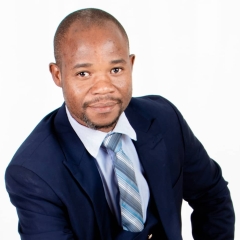 Delicious Mathuthu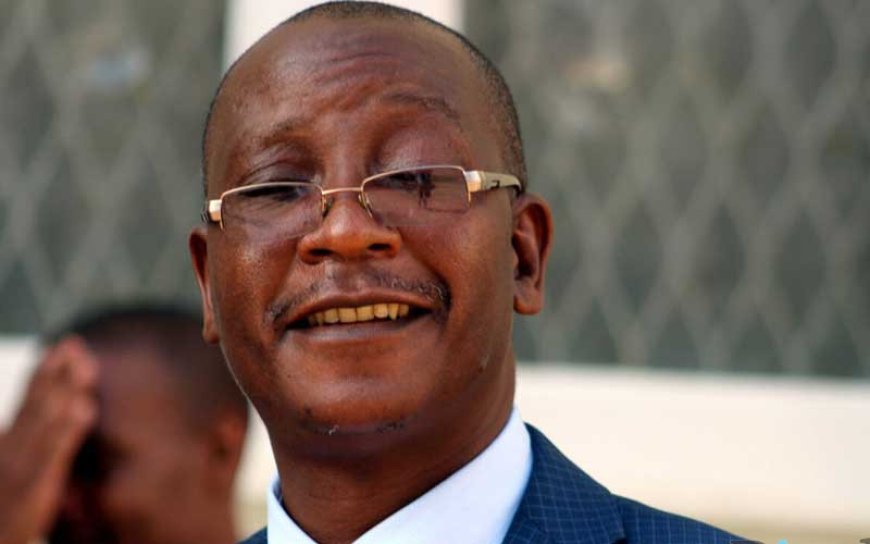
Harare — The Government of Zimbabwe has taken decisive steps to address gaps in the legal framework governing intersex persons, convening a high-level stakeholder meeting in Harare this week as part of ongoing research and consultations triggered by a landmark High Court application.
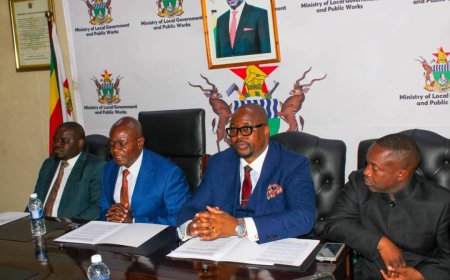
Justice, Legal and Parliamentary Affairs Minister Ziyambi Ziyambi; Public Service, Labour and Social Welfare Minister Edgar Moyo and Health and Child Care Minister Dr. Douglas Mombeshora were part of a breakfast meeting organised by the Ministry of Justice at the Holiday Inn Hotel recently.
Officials, legal experts, healthcare professionals, development partners, civil society organisations and persons with lived experience examined barriers faced by intersex Zimbabweans in accessing identity documents, education, healthcare, employment and other essential services.
Minister Ziyambi made clear that the process was initiated in direct response to litigation.
“Basically what we have done is we have received a court challenge regarding this issue (intersex) and we referred it to the Attorney General,” he said.
“After that we decided as a Ministry that we need to undertake research," he said.
He noted that while the Constitution recognises two sexes, Government systems must respond to lived realities in which some citizens do not fit neatly into the binary classifications used in official documentation and processes.
The research, conducted by the Law Development Commission with support from the United Nations Development Programme, will inform recommendations to be submitted to Cabinet.
The court application, filed under case number HCH4743/25 in September 2025, was brought by seven applicants, including two minors represented by their legal guardians, together with the Intersex Community of Zimbabwe and the Health Law and Policy Consortium.
The applicants seek a declaration compelling the State to recognise intersex persons as a distinct legal category, introduce appropriate sex markers on birth certificates, national identity cards and passports, establish clear procedures for amending sex markers on existing documents and protect intersex minors from non-consensual, non-essential surgeries.
Intersex Community of Zimbabwe Director, Kudakwashe Murisa, described the application as historic.
“This case is historic and for the first time, the Zimbabwean legal system is being challenged to recognise the rights of intersex individuals as equal human beings under the constitution,” Murisa said.
“This case is not just about one individual. It is about an entire community that has been made invisible for too long," he said.
Zimbabwe Permanent Secretary for Information, Publicity and Broadcasting Services, Nick Mangwana, has sought to clarify both the background to the consultations and the nature of intersex variations.
"Zimbabwe’s consultations on intersex recognition were primarily triggered by a landmark constitutional court challenge filed in September 2025.
"Seven applicants, including two minors, petitioned the state for legal recognition, demanding an ‘I’ sex marker on identity documents and a ban on non-consensual surgeries on intersex minors," Secretary Mangwana said.
"The case exposed a critical gap in Zimbabwe’s legal framework, which only recognises binary male/female categories, leaving intersex individuals without official identity,” he stated.
He added that Justice Minister Ziyambi Ziyambi acknowledged the court challenge and initiated research and high-level consultations alongside the Attorney-General.
Additional motivations included alignment with United Nations recommendations, the African Commission on Human and Peoples’ Rights Resolution 552 on intersex rights and Zimbabwe’s National Development Strategy commitment to inclusive governance.
“Ultimately, the court case served as the decisive catalyst, compelling the government to address this issue. Should Govt defy court judgements? Absolutely not. Not when being led by a constitutionalist!!” Mangwana said.
In a separate clarification, Mangwana defined the term carefully.
“Intersex is an umbrella term for people born with reproductive anatomy, hormones, chromosomes or sex traits that do not fit the typical definition of strictly male or female.
"These variations can show up at birth, during puberty or later in life," he said.
He characterised the condition in short as a disability.
Officials at the Holiday Inn meeting said the condition is not a lifestyle choice, nor is it synonymous with sexual orientation or gender identity.
Participants highlighted practical difficulties arising from the Births and Deaths Registration Act and related statutes, which provide only for male and female markers, resulting in mismatched documentation that has locked some intersex persons out of schooling, banking, formal employment and voting.
The current process builds on earlier Government initiatives. In mid-2025 the Ministry of Justice launched a legal reform exercise aligned with President Mnangagwa’s vision of leaving no one and no place behind under the National Development Strategy.
That work drew on Zimbabwe’s acceptance of Universal Periodic Review recommendations calling for protection of intersex persons from non-consensual medical procedures and other human rights violations, as well as the earlier mentioned Resolution 552 of the African Commission.
Government maintains that any eventual legislative and policy measures will be grounded in research, broad consultation and constitutional principles.
Recommendations emerging from the Law Development Commission’s work and the stakeholder engagements are expected to address documentation systems, medical protocols that prioritise informed consent and the deferral of non-essential interventions on minors, and institutional responsibilities for implementation.