Ex-PAC Chair Calls for Uganda-Style Accountability in Zimbabwe
By Delicious Mathuthu — Former Public Accounts Committee Chairperson, Advocate Brian Dube, says Zimbabwe should strengthen enforcement and follow-up mechanisms to ensure Parliamentary investigations into public spending irregularities lead to appropriate action.
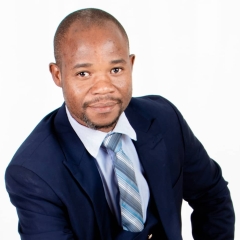 Delicious Mathuthu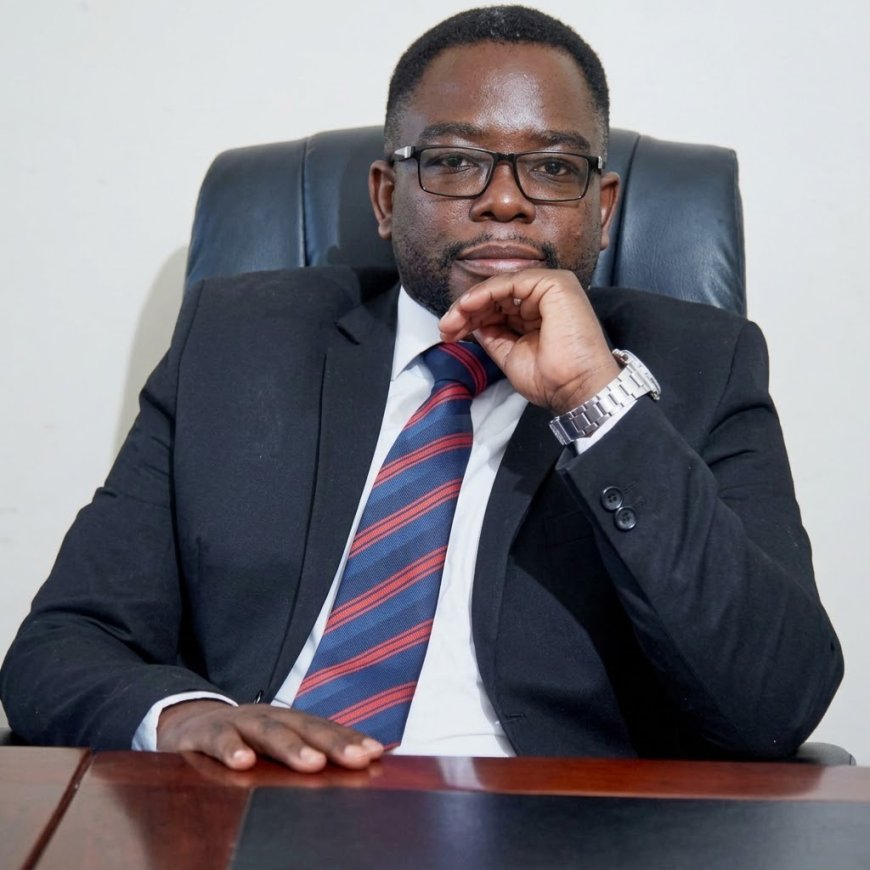
Gweru — Former Parliament Public Accounts Committee (PAC) Chairperson and former Gweru Urban legislator, Advocate Brian Dube, has called on Zimbabwe to adopt Uganda-style parliamentary accountability, where police support oversight processes to ensure that financial misconduct exposed by legislators leads to action.
Advocate Dube made the call during a Transparency International Zimbabwe (TIZ) governance dialogue in Gweru, where participants raised concerns about weak follow-up mechanisms, delayed financial reporting and gaps in public finance oversight.
He argued that parliamentary hearings should produce tangible consequences rather than end with exposure of financial irregularities, urging Zimbabwe to consider how Uganda links scrutiny with law enforcement.
He explained that the committee chairperson could alert police officers when individuals appearing before the committee needed to be investigated, allowing law enforcement authorities to take appropriate action.
"I believe we need to expand powers of Parliament. If you go to Uganda, when the Public Accounts Committee is sitting and interviewing individuals during their sessions, the police will be just outside the room and they will be getting continuous updates.
"And they can be told by the Chairperson of the Public Accounts Committee that these guys that we have in this room are your customers,” Advocate Dube said.
He said Zimbabwe needed to strengthen its own accountability mechanisms like Uganda to ensure that parliamentary oversight did not become an exercise in raising concerns without follow-through.
"So when they are coming out of the committee room of Parliament, they are going to a place of safety awaiting prosecution.
"In Uganda there is no issue, you leave the committee room, straight into the police vehicle, into the cells then tomorrow morning at court.
"So we need also to see how we can empower ourselves so that our things are not just a talk show” Advocate Dube said.
The discussion also highlighted concerns about government procurement, with participants citing cases in which contractors allegedly failed to fulfil obligations to one Ministry before securing further tenders from other government departments.
Advocate Dube cited an example of a contractor who allegedly failed to deliver vehicles to the Ministry of Agriculture before securing a tender to supply about 13 vehicles to the Ministry of Information, where the contractor reportedly also failed to fulfil the obligation.
He said the same contractor was subsequently awarded another vehicle-supply tender by the Ministry of Energy, highlighting the need for a central database through which government departments could check suppliers’ performance before awarding contracts.
“If there was an open access digital online system, you can easily pick these up,” he said.
Advocate Dube also called for public expenditure information to be published through such regularly updated digital platforms, moving away from static old document reports and manual accounting systems that he said made it difficult to track spending and audits.
The capacity of the Office of the Auditor-General (OAG) came under scrutiny, with Advocate Dube citing staff shortages and inadequate equipment that have forced the institution to outsource some audits to private practitioners.
He warned that disputes involving outsourced auditors could complicate accountability.
One example he raised at the meeting concerned a state enterprise that reportedly challenged an audit report by citing a business and personal conflict involving the private accountant engaged to conduct the audit.
Participants questioned whether findings in the Auditor-General’s reports were consistently followed by investigations and prosecutions where warranted.
They called for stronger mechanisms to track the Auditor General's findings and ensure that concerns over public expenditure received appropriate attention and action.
The dialogue also called for simplified national budgets in all 16 official languages to make public spending information more accessible to ordinary citizens.
Participants also said accessible budget summaries would help communities understand government allocations and spending priorities, strengthening public participation in financial oversight.
Participants argued that improved access to financial information, stronger audit follow-up and more effective Parliamentary oversight were necessary to enhance public accountability and protect citizens who depend on public services.