Victorian Families Turn to Community Food Hubs as Grocery Costs Rise
By Harry Taruva — Divvy has expanded to 45 neighbourhood food hubs across Victoria, attracting almost 1,400 households in its first year as families seek affordable fresh produce. The community food network says its fruit and vegetables cost 35 to 38% less than comparable supermarket produce, while supporting local growers and connecting communities.
 Harry Taruva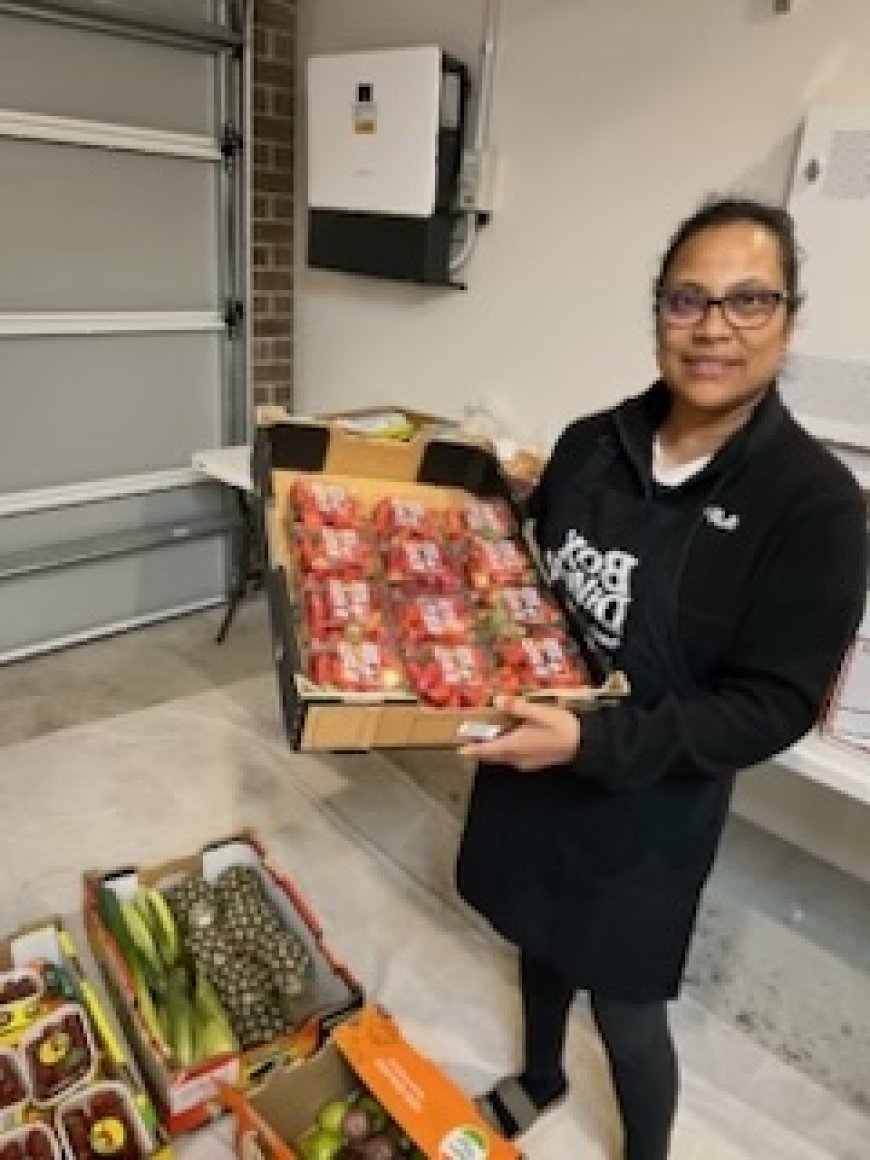
Melbourne — A community food network has expanded to 45 neighbourhood hubs across Victoria in its first year, attracting almost 1,400 households as families seek affordable fresh produce amid rising grocery costs.
Box Divvy, which connects households with local growers through community-run collection points, says its Victorian network now sources produce from about 85 growers, more than 90% of them based in the state.
The organisation’s price comparisons indicate that its fresh fruit and vegetables cost about 35 to 38% less than comparable produce at major supermarkets, although the savings depend on the products compared.
In Lang Lang, a small town in Gippsland, resident Josique Armoogum launched a hub in May after becoming concerned about the limited local choice of fresh produce.
Four months later, the hub had attracted 38 families.
“Thirty-eight families don’t have to go out of town to get fresh produce anymore. Lang Lang is a small town with only one local supermarket, so Box Divvy has been life changing for us,” Armoogum said.
She said members had changed their shopping habits, with some reporting that the fruit and vegetables lasted longer.
The hub has also become a meeting point where residents exchange recipes, share surplus garden produce and introduce children to the weekly collection routine.
Armoogum has since encouraged two members to become hub organisers, helping establish a second hub in Lang Lang and another in nearby Poowong.
For Armoogum, access to fresh food has taken on added significance following her breast cancer diagnosis in 2022.
Now in remission, she said preparing meals at home and choosing fresh ingredients had become priorities.
“The last four years have been extremely hard. Now, what is on my plate and what I’m feeding my body is a priority.
“Ninety per cent of my meals are home cooked and the one thing I won’t trade is fresh produce," she said.
Box Divvy co-founder, Jayne Travers-Drapes, said the Victorian expansion reflected interest in local food production, sustainable shopping and supporting growers, while giving households another option for managing food budgets.
“People want to support local growers and reduce unnecessary packaging, but they also need to feed their families affordably,” Travers-Drapes said.
“The growth we’ve seen over the past year suggests those things don’t have to be mutually exclusive," he said
Under the model, residents known as Hubsters run neighbourhood collection points.
Members select produce and other available items online each week, with orders delivered to their local hub for collection.
The organisation says the model is designed to reduce costs, unnecessary packaging and food waste while strengthening links between consumers and local suppliers.
Beyond grocery shopping, the network is also contributing to research into ways of increasing vegetable consumption in rural and regional communities.
Box Divvy is partnering with Deakin University’s Institute for Physical Activity and Nutrition on the Veg4Me Plus One Serve Study, which will provide participants with weekly vegetable boxes and access to the Veg4Me app.
Researchers will examine whether the approach helps participants increase their daily vegetable intake.
Associate Professor Katherine Livingstone of Deakin University, said affordability, convenience and access could prevent people from eating the recommended amount of vegetables.
“Most Australians know vegetables are good for them, but knowing what we should eat and being able to put that into practice are two different things,” Livingstone said.
The study will focus on young adults aged 18 to 35 in rural and regional Victoria.
It forms part of a broader national initiative aimed at increasing vegetable consumption by one serve per person per day by 2030.
The project is funded through Hort Innovation Frontiers, with co-investment from Deakin University, the George Institute and the University of Sydney, alongside contributions from the Australian Government.
Box Divvy said a further 14 Victorian hubs were in development, with four expected to open in the coming weeks.
Across New South Wales, Victoria, the Australian Capital Territory and Queensland, the organisation reports 427 hubs and more than 16,000 members.
It operates as a community food co-operative without membership fees, relying on regular household orders to coordinate deliveries and keep costs down.