
























South African Navi Pillay Awarded 2026 Nobel Peace Prize
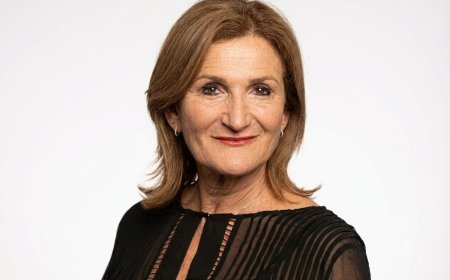
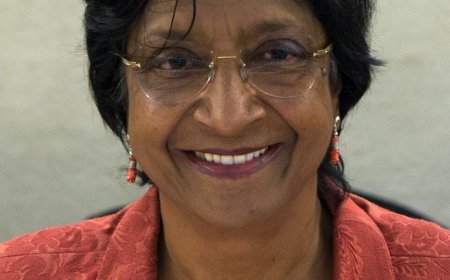
South African jurist, Navanethem "Navi" Pillay, former United Nations High Commissioner for Human Rights, has been awarded the 2026 Nobel Peace Prize for her lifelong efforts to promote peace, prosecute war crimes and strengthen international law, including landmark work on Rwanda, the ICC and the Gaza inquiry.

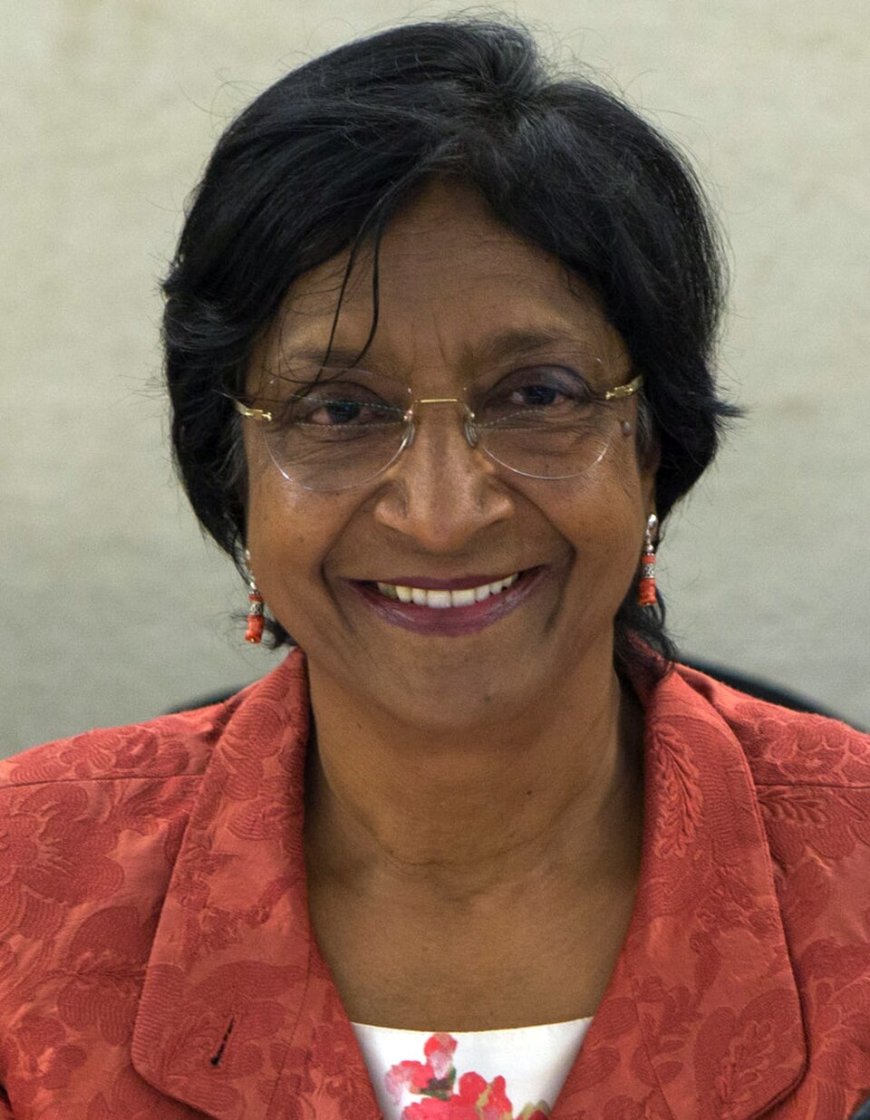
Oslo — South African jurist, Navanethem “Navi” Pillay, the former United Nations High Commissioner for Human Rights and a longtime champion of international justice, has been awarded the 2026 Nobel Peace Prize for her efforts to promote peace and international law.
The Norwegian Nobel Committee announced the decision on Friday in Oslo, recognising the 85-year-old judge “for her efforts to promote peace and international law.”
Committee chair Jørgen Watne Frydnes described Pillay as instrumental in ensuring that war crimes, crimes against humanity and genocide are prosecuted, and praised her judicial rigor, personal integrity and considerable courage.
Her work, the committee said, has helped pave the way for a more comprehensive global legal order and brought hope to victims of violence and conflict.
Pillay received the news while attending a conference in Courtroom 600 of Nuremberg’s Palace of Justice in Germany, the historic site of the post-World War II trials of Nazi leaders.
Reports say she initially reacted with disbelief, telling those around her that it “must be a joke,” before thanking the gathering for their applause.
In a light-hearted moment, she joked that if they clapped more she might share the prize with United States President, Donald Trump, a reference to last year’s laureate, Venezuelan opposition leader María Corina Machado, who presented her medal to Trump earlier this year.
The prize, worth 12 million Swedish kronor, approximately $1.2 million, will be formally presented in Oslo on December 10, the anniversary of Alfred Nobel’s death.
Pillay is the fifth South African to receive the Nobel Peace Prize, following Albert Luthuli, Nelson Mandela, F.W. de Klerk and Archbishop Desmond Tutu.
She becomes the 21st woman to win the award.
Born on September 23, 1941, in Durban to a family of Indian Tamil descent, her grandparents had arrived as indentured labourers Pillay grew up under South Africa’s apartheid system.
She overcame profound racial and gender barriers to become a pioneering lawyer.
In 1967 she founded her own law firm, becoming the first non-white woman to open a practice in what was then Natal Province.
She defended anti-apartheid activists, including political prisoners and challenged discriminatory prison conditions, often at personal risk.
After studying at Harvard University, where she earned a Doctor of Juridical Science Degree in 1988, she was appointed to the High Court of South Africa in 1995 as the first woman of color to serve on that bench.
Pillay’s international career has centered on holding perpetrators of mass atrocities accountable.
She served as a judge and later president of the International Criminal Tribunal for Rwanda (ICTR), where her influence helped establish that rape and sexual violence can constitute crimes against humanity and genocide, a precedent that reshaped international criminal law.
She later sat as a judge on the International Criminal Court (ICC) before resigning in 2008 to become United Nations (UN) High Commissioner for Human Rights, a post she held until 2014.
In recent years she has served as an ad hoc judge on the International Court of Justice (ICJ) in the case accusing Myanmar of genocide against the Rohingya.
From 2021 to 2025 she chaired the UN Independent International Commission of Inquiry on the Occupied Palestinian Territory, including East Jerusalem and Israel.
That commission concluded last year that Israel was responsible for genocide in Gaza with specific intent to destroy Palestinians there, and that certain Israeli leaders had incited the commission of genocide, a finding Israel has firmly rejected.
The Nobel Committee did not single out any one case in its formal citation, instead pointing to Pillay’s consistent defense of universal legal principles across decades.
At a time when armed conflicts are rising and international courts and judges face political pressure, the committee said the award serves as a reminder that the ability to resolve disputes without violence depends on the international rule of law. “Peace requires justice,” the committee stated.
Pillay dedicated the prize to survivors of international crimes and to those who have worked for accountability, often at great personal cost.
South African President, Cyril Ramaphosa, welcomed the honour, noting her contributions to peace, human dignity and hope both in South Africa and globally.
UN Secretary-General, António Guterres, praised her for demonstrating that “the force of law must prevail over the law of force.”
The award has however drawn sharp criticism from Israel, whose Prime Minister’s office accused the Nobel Committee of having “lost its moral compass.”
The decision also comes amid heightened tensions surrounding international justice institutions, including U.S. criticism of the ICC.
Pillay previously received the 2025 Sydney Peace Prize for a lifetime of advocating fundamental human rights, peace with justice and the rights of women in the face of growing impunity for atrocity crimes.
In her response to the Nobel announcement, Pillay said a core belief of her career is that political leaders have a legal obligation to protect human rights and refrain from war.
“That is an obligation I call upon every state to fulfill,” she said.
What's Your Reaction?
 Like
0
Like
0
 Dislike
0
Dislike
0
 Love
0
Love
0
 Funny
0
Funny
0
 Angry
0
Angry
0
 Sad
0
Sad
0
 Wow
0
Wow
0