Zim Journalist Urges Inclusive Digital Payment Reforms
By Dumisani Ndlovu — Gweru based Zimbabwean journalist, Richard Shumba, has urged Zimbabwe to strengthen digital payment systems, improve consumer protection and make electronic transactions more affordable, reliable and accessible following his trip to Kenya on a weeklong training programme on Inclusive Instant Payment Systems (IIPS) organised by the AfricaNenda Foundation in Nairobi.
 Dumisani Ndlovu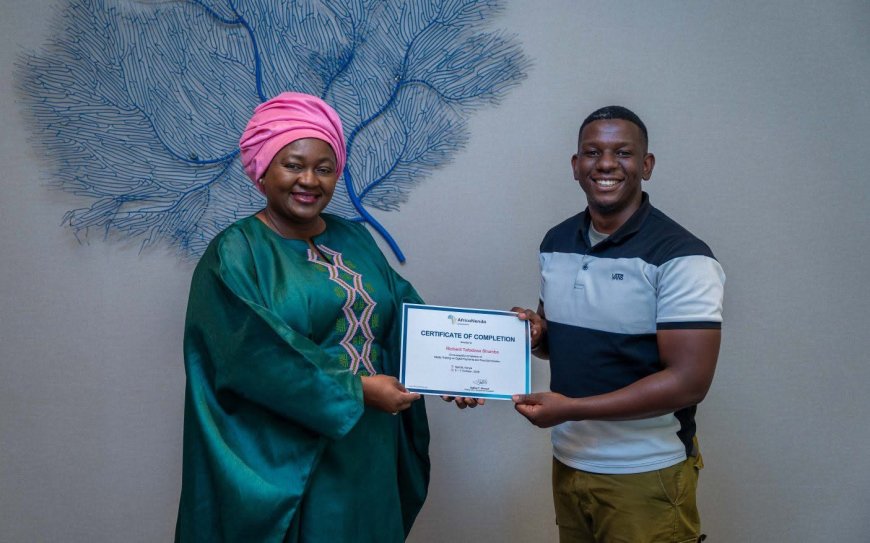
Gweru—Midlands-based journalist Richard Shumba of The Sun Newspaper has urged Zimbabwe to strengthen its digital payment systems, improve consumer protection and remove barriers to financial services to ensure that electronic transactions are affordable, safe and accessible to ordinary citizens.
Shumba was among 18 journalists from 12 African countries selected for a weeklong training programme on Inclusive Instant Payment Systems (IIPS) organised by the AfricaNenda Foundation in Nairobi, Kenya.
He argued that the success of digital finance should not be measured by transaction speed alone.
Instead, true progress depends on whether financial services are affordable, safe, accessible and fair to everyone.
 Richard Shumba (right) participating during the AfricaNenda Foundation Instant Payment Systems (IIPS) training in Kenya.
Reflecting on the experience, Shumba challenged Zimbabwe and the broader continent to reconsider how they evaluate digital finance.
“Are we moving money faster or making financial services work for everyone? This question stayed with me after training with the AfricaNenda Foundation,” Shumba reflected.
“A payment can be instant without being inclusive. Financial systems can grow while leaving people behind," he said.
His message comes as mobile money and electronic payment platforms have become integral to daily commerce, enabling individuals, traders, and businesses to operate without relying exclusively on cash.
Observers say rapid digital growth however does not automatically deliver meaningful inclusion. High transaction charges, frequent network outages, fraud risks and inadequate dispute-resolution mechanisms continue to erode public trust.
Shumba’s appeal is for Zimbabwe to place consumers at the center of digital payment reforms, ensuring technological progress yields tangible benefits for those who depend on it.
Shumba emphasised the vital distinction between simply having access to financial services and being able to use them effectively, bluntly stating that “access isn’t inclusion.”
Figures cited from the Global Findex report indicate that approximately 75% of adults own mobile phones, 58% hold bank or mobile money accounts and 51% actively use digital payments.
Yet, across the continent, an estimated 400 million Africans still lack basic financial access.
While current metrics show the growing reach of digital finance, account ownership alone fails to capture whether citizens can afford to transact, access funds reliably or resolve issues when transactions fail.
In Zimbabwe, small-scale traders, informal businesses and ordinary consumers require payment services that are both dependable and cost-effective.
A mobile money account provides entry to the digital economy, but excessive charges, network disruptions, or a lack of fraud reporting knowledge can prevent users from realizing its full benefits.
Shumba stresses that Zimbabwe must evaluate financial inclusion by looking beyond registered accounts to assess how frequently and effectively people navigate digital services in their daily lives.
Inclusive Instant Payment Systems (IIPS) are designed to facilitate near-real-time transactions around the clock while promoting fair access for service providers, inclusive governance and robust consumer safeguards.
Shumba pointed out that while standard Instant Payment Systems process payments 24/7 in real time, “speed is only the beginning.”
True inclusion requires deep interaction of systems, seamlessly connecting to enable peer-to-peer (P2P), person-to-business (P2B), government-to-person (G2P) and business-to-business (B2B) payments.
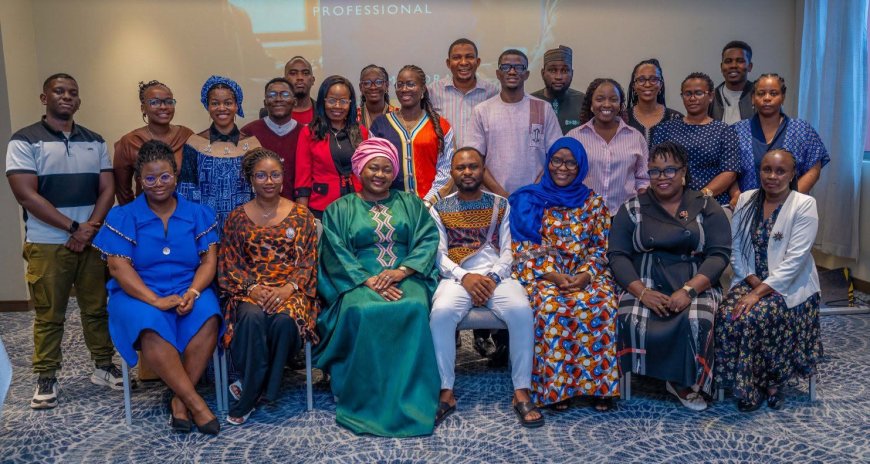 Participants who took part in the Nairobi AfricaNenda Foundation training.
Shumba said efficiency must be matched by affordability and institutional accountability.
A transaction completed in seconds offers little value if a customer incurs exorbitant fees, suffers unexplained deductions or struggles to recover funds sent in error.
Payment reforms must address the entire user journey, from initiating a transfer to resolving potential disputes.
As electronic payments expand, protecting users against digital financial risks becomes paramount.
Shumba highlighted rising threats such as impersonation, SIM-swap fraud and artificial intelligence-enabled phishing schemes targeting digital finance users.
Focusing heavily on consumer protection, he raised fundamental questions about industry accountability.
“Who bears the losses? How quickly are victims reimbursed? Do safeguards work? Registered accounts aren't necessarily active users. Growth isn't inclusion?" He asked.