Zimbabwe Targets US$20b Foreign Currency Inflows in 2026
President Emmerson Mnangagwa says Zimbabwe recorded US$10.7 billion in foreign currency inflows in the first half of 2026 and expects the figure to reach about US$20 billion by year-end.
 Kwedu News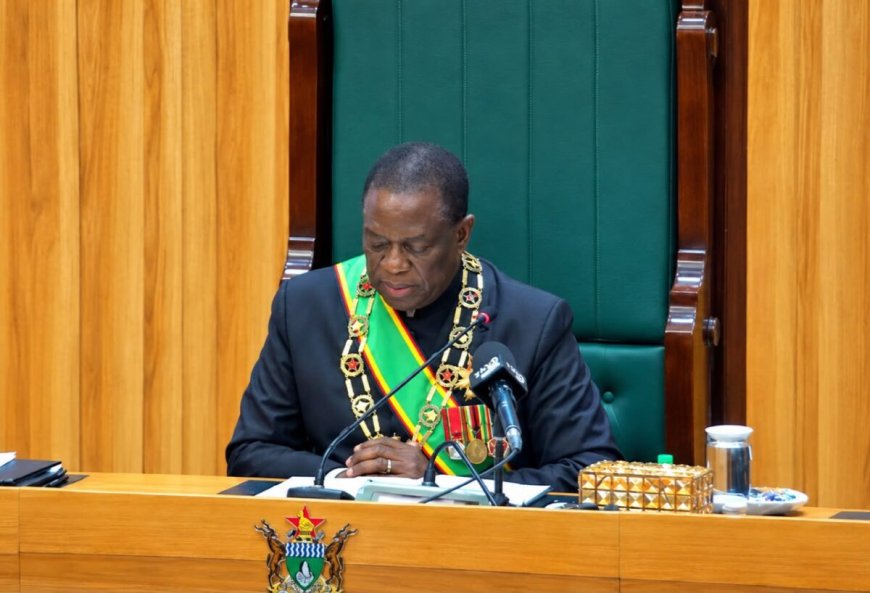
Harare — President Emmerson Mnangagwa has unveiled an ambitious economic and infrastructure programme for the Fourth Session of the Tenth Parliament, saying Zimbabwe expects foreign currency inflows to reach about US$20 billion by the end of 2026.
Addressing Parliament at the New Parliament Building on Tuesday, President Mnangagwa said the country had achieved sustained macro-economic stability, with inflation falling to single-digit levels since January.
He said foreign currency inflows had reached US$10.7 billion in the first half of the year and were expected to almost double by year-end.
President Mnangagwa said "Zimbabwe is open for business", citing what he described as gains in price, currency and exchange-rate stability.
The President said agriculture had grown by 27.9% and contributed 2.2 percentage points to overall GDP growth of 8.3%, while Government was preparing for projected below-normal rainfall across the Southern African Development Community region.
A six-pillar drought resilience plan will focus on strengthening the strategic grain reserve, climate-smart production, agricultural financing, livestock mitigation, early warning systems and community preparedness, he said.
In his address, he said mining remains another major pillar of the Government's economic strategy, seeking to intensify mineral exploration and develop bankable projects for investment.
President Mnangagwa highlighted the production of Africa's first locally produced lithium sulphate and said additional processing plants were being established, alongside investments in iron and steel.
He also said formalising, financing and equipping small-scale gold miners would remain a priority as Government pushes mineral beneficiation and value addition.
He said the manufacturing sector is also expected to benefit from regulatory reforms after Government reviewed licences, permits, levies, fees and other requirements across 13 sectors.
The measures, President Mnangagwa said, are intended to improve the ease of doing business, strengthen local industry and accelerate provincial industrialisation.
Infrastructure development will form another major component of the Parliamentary programme, with Government targeting sections of several major highways during the Fourth Session.
These include the Harare-Beitbridge Road, Harare-Kanyemba, Harare-Nyamapanda, Bulawayo-Victoria Falls, Harare-Chirundu and Kwekwe-Nkayi-Lupane roads.
Government also intends to complete the Mabvuku Interchange, he said.
Rail infrastructure is also on the agenda, following the April 2026 agreement between Zimbabwe and Zambia for a 311-kilometre railway link between Kafue and Lion's Den.
The rehabilitation of the 614-kilometre Chicualacuala-Plumtree railway line is expected to be completed by August 2027 under a US$12 billion tripartite agreement involving Zimbabwe, Mozambique and Botswana, President Mnangagwa said.
On energy, President Mnangagwa said frequent load-shedding was now a thing of the past, with supplies from Kariba and Hwange being supplemented by independent power producers, captive plants, rooftop solar and net-metering.
He said the rural electrification programme was also being accelerated through grid extensions and mini-grids targeting public institutions.
The Government is also targeting expansion of air transport, with the Kariba Airport upgrade planned during the parliamentary session and two additional international airlines expected to begin flying into Zimbabwe in 2027.
Cargo facilities at Victoria Falls and J.M. Nkomo International Airports are also set for expansion.
President Mnangagwa said the programme was aimed at sustaining investment, expanding economic opportunities and improving livelihoods.
“With less than four years remaining, until 2030, we have achieved unprecedented milestones,” he said, while acknowledging that “the journey continues, much work lies ahead.”
He called on Parliament, business, communities, traditional leaders, women and young people to work together to accelerate the country's development programme.
“I call upon all of us; the elected leaders of our nation, along with players across sectors of the economy, entrepreneurs, women, young people, Chiefs, traditional leaders and communities at large, to confidently march on, shoulder-to-shoulder,” President Mnangagwa said.